
How AI is Changing the Way Digital Nomads Work and Travel
AI is changing the way digital nomads work and travel faster than anyone expected. Tools like ChatGPT, Claude, and Midjourney have compressed tasks that used to take hours into minutes: writing, coding, designing, researching. For nomads specifically, AI handles the boring stuff: visa research, lease translation, itinerary planning, client email drafts. A 2024 survey by Buffer found that 73% of remote workers already use AI tools daily. The result? Nomads can deliver more in fewer hours, stretch their travel budget further, and spend more time actually living. Which is the whole point. When your entire work life moves into AI assistants, the hunger for real human connection gets louder. Food, shared tables, and community aren't getting replaced by any of this. If anything, they're becoming more valuable.
Wait, so AI is actually making the nomad life easier?
Yes. And no. Mostly yes, with some caveats that'll make you feel things.
Let's start with the useful stuff. If you freelance, consult, or run any kind of remote business, you've probably already noticed that AI has quietly eaten a chunk of your to-do list. The work that used to fill your afternoon takes twenty minutes now. Summarizing a 40-page client report, writing five versions of the same cold email, debugging the CSS your developer sent at midnight.
That compression has a real effect on nomad finances. When you can deliver more value in fewer hours, you either earn more or work less. For a lot of nomads, it's a bit of both.
According to Nomad List data from 2024, the average digital nomad earns between $60,000 and $120,000 USD per year. With AI tools cutting administrative overhead by 30-40% (McKinsey, 2023), that's a meaningful chunk of time freed up. Time you could spend, hypothetically, eating tlayudas in Oaxaca at 1pm on a Wednesday.
What AI tools are digital nomads actually using?
The most useful ones probably aren't the flashy ones.
For work:
For travel logistics:
The visa research piece is underrated. Anyone who's tried to decode a government immigration website in a foreign language knows that reading it feels like solving a riddle written by a bureaucrat who personally disliked you. AI doesn't fix the rules, but it translates the chaos into plain English in about thirty seconds.
Is AI replacing digital nomad jobs?
Some jobs that nomads historically did well are getting squeezed: entry-level copywriting, basic graphic design, transcription, data entry, simple translations. The market is shifting. Rates for certain work have dropped because clients can generate a first draft with ChatGPT and ask a human to refine it, instead of starting from scratch.
The nomads doing well right now tend to be the ones working with AI rather than competing against it. Strategy, creative direction, complex client relationships, writing with real personality and taste. Stuff that requires judgment, nuance, or trust.
A 2023 Goldman Sachs report estimated that AI could automate tasks accounting for 18% of global work hours. That's real. But the same report noted that new roles emerge for every disrupted one. Someone has to prompt these tools. Someone has to audit the output. Someone has to decide what not to do with AI.
what it actually costs to live and work as a nomad in 2026
What does AI genuinely suck at?
AI is good at producing content that sounds correct and feels professional. It's terrible at sounding like a real human who has opinions and tastes and had a weird morning.
You can tell when something was written by AI because it's too smooth. Too coherent. No weird digressions. No jokes that land slightly off. No moment where the writer goes "anyway, I'm getting sidetracked, the point is..."
This matters for nomads doing personal brand work, content creation, community management, or anything relationship-driven. Clients and audiences are getting better at spotting the AI polish, and they don't love it. The premium is shifting toward people who sound like themselves.
AI cannot recreate what happens at a dinner table when fifteen people from different countries are cooking together, someone burns the sofrito, someone else saves it with an improvised herb situation, and the whole thing becomes a story that gets told for the rest of the month. That's fully outside the feature set.
why nomads are rethinking where they stay
So where does community fit in when AI is automating everything?
This is the part we care about most, so bear with us being slightly biased.
When work becomes more automated, the texture of a day can start to flatten. You can get good at optimizing your output and feel weirdly empty at the end of it. Especially if your "office" is a laptop in a room you found on Airbnb and your "lunch break" is eating leftovers alone while checking Slack.
There's real research on this. A 2021 Harvard study found that social isolation increases mortality risk by 29%. Loneliness is a documented problem for remote workers, and nomads in particular. You move often. You don't build the kind of slow-accumulating friendships that come from seeing the same people every week for years.
What you can build, if you're intentional about it, is intensity. The kind of friendship that forms fast because you're cooking together every day, sharing a table every night, having a mezcal at 11pm on a Tuesday because someone suggested it and it seemed right. Those friendships tend to stick.
what Casa Basilico is actually about
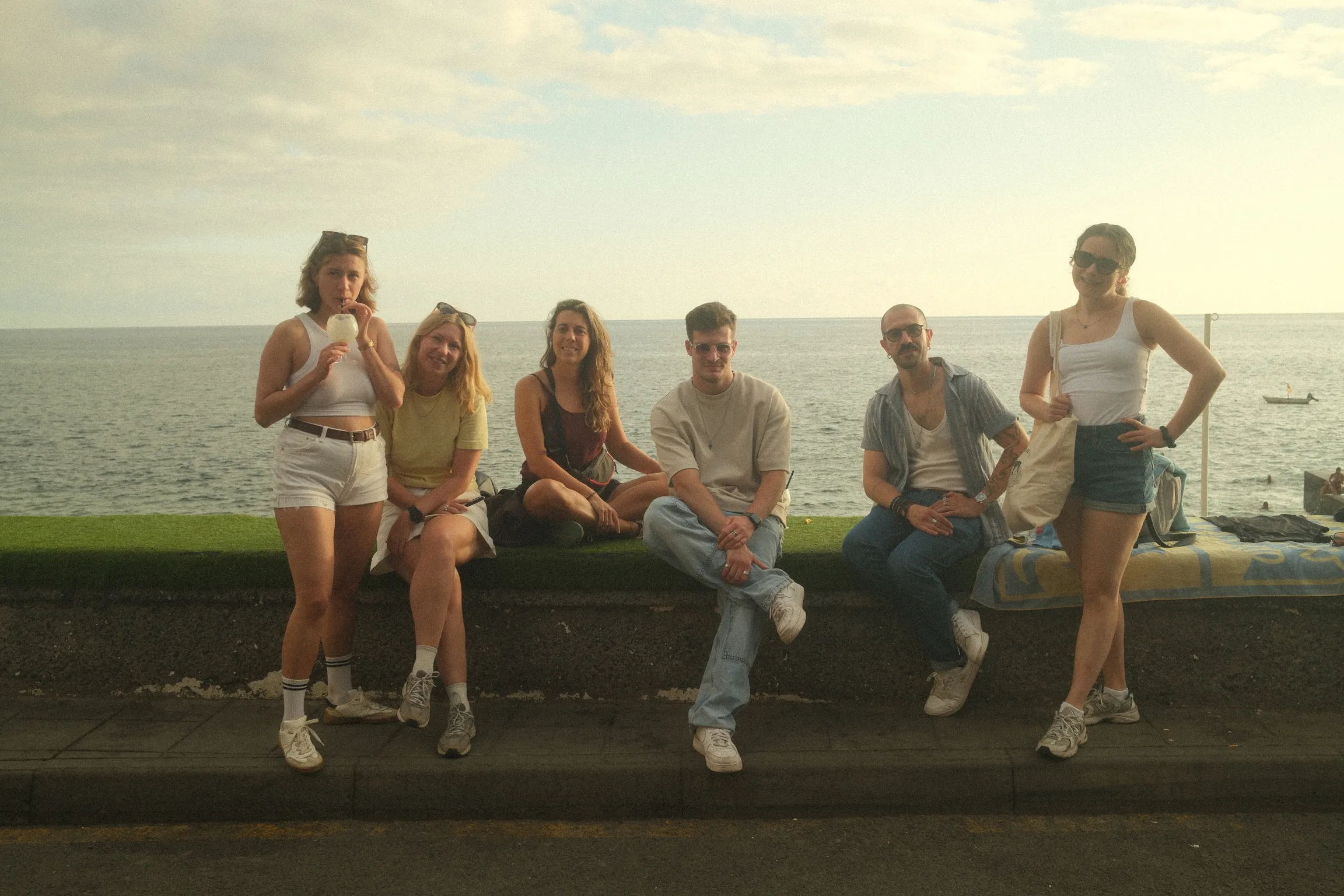
This is what we've seen across 180+ nomads in five chapters. People who come expecting a nice apartment with good WiFi leave having made friends they're still texting two years later. The catalyst is almost always food. People open up at tables. They trade recipes, childhood memories, embarrassing work stories. AI doesn't accelerate that. Time does. Proximity does. A good tlayuda does.
Can AI help you find a better coliving space?
Yes, it turns out. It's pretty good at the first filter.
Describe exactly what you're looking for: location, vibe, budget, community type. You can have a useful shortlist in ten minutes. AI tools can cross-reference options across price, amenities, community focus, and how spaces describe themselves online.
best coliving spaces for digital nomads in 2026
The limitation is that AI can only synthesize what's been written. It can't tell you whether the community actually cooks together or just coexists politely. It can't tell you if the hosts are fun to be around or just good at writing a nice listing. It can't tell you if someone at that coliving last month made a friend they're still texting.
For that, you talk to people. Or you read reviews written by actual humans with actual opinions. (Hi.)
What's the actual future of the AI digital nomad?
Nobody knows. Anyone who sounds fully confident is selling something.
Our rough read: AI raises the floor for everyone. Basic competence gets cheaper. The ceiling is where the interesting work lives: stuff that requires humanity, creativity, relationships, and taste. For nomads who've built those skills, the next few years look pretty good.
The risk is for people doing rote, automatable work who haven't noticed the floor rising. If that's you, the time to pivot is now, not once the rates have already dropped.
The lifestyle side of nomadism isn't going anywhere. If AI keeps creating more remote-friendly jobs and compressing work hours, slow travel should get more accessible, not less. More time to explore. More time to eat good food. More time to sit at a table with people you didn't know three weeks ago and somehow already want to keep in your life.
FAQ
Is AI going to replace digital nomads?
Not the interesting ones. AI replaces repetitive tasks, not judgment. If your job is pure execution of a predictable process, yes, that's at risk. If your job requires creativity, relationships, nuance, or genuine taste, you're probably fine. The move is to pivot toward the work that's harder to automate before the market forces your hand.
What AI tools should I use as a digital nomad?
Start with what actually solves friction. ChatGPT or Claude for writing and research. GitHub Copilot if you code. Otter.ai for meeting transcription. Notion AI for keeping your notes organized across time zones. Don't over-tool it. Two or three things used well beat twelve things you barely open.
Will AI change where digital nomads choose to go?
Indirectly, maybe. If AI keeps compressing work hours, nomads gain flexibility about location and duration. Slow travel, staying a full month or longer in one place, becomes more viable when you're not chained to a specific billable hour count every week.
Does AI help with finding coliving spaces?
Useful for a first shortlist, yes. Describe what you want and narrow down fast. But the stuff that matters you find out from reviews and real conversations: whether the community is real, whether you'll make genuine friends, whether the host is the kind of person who cooks for 30 people on a random Tuesday.
Is living in a coliving better for deep work than working solo?
For most people, yes. Having a dedicated coworking setup, a consistent daily rhythm, and other people working nearby recreates the social accountability of an office without the commute or the bad coffee. It's harder to spend the morning doomscrolling when your housemates are already at their laptops.
We're running our Oaxaca 2026 chapter right now. Tacos, mezcal, real WiFi, and people you'll actually want to cook with at 7pm.
Come be weird with us. Grab your spot here before someone else does. 🌿

Spreading love through cooking & community.
© 2026 CasaBasilico OÜ (16850261)
All rights reserved.
Design & Branding by ahgoos.com
info@casabasilico.com