
10 Best Beach Towns for Remote Workers in 2026
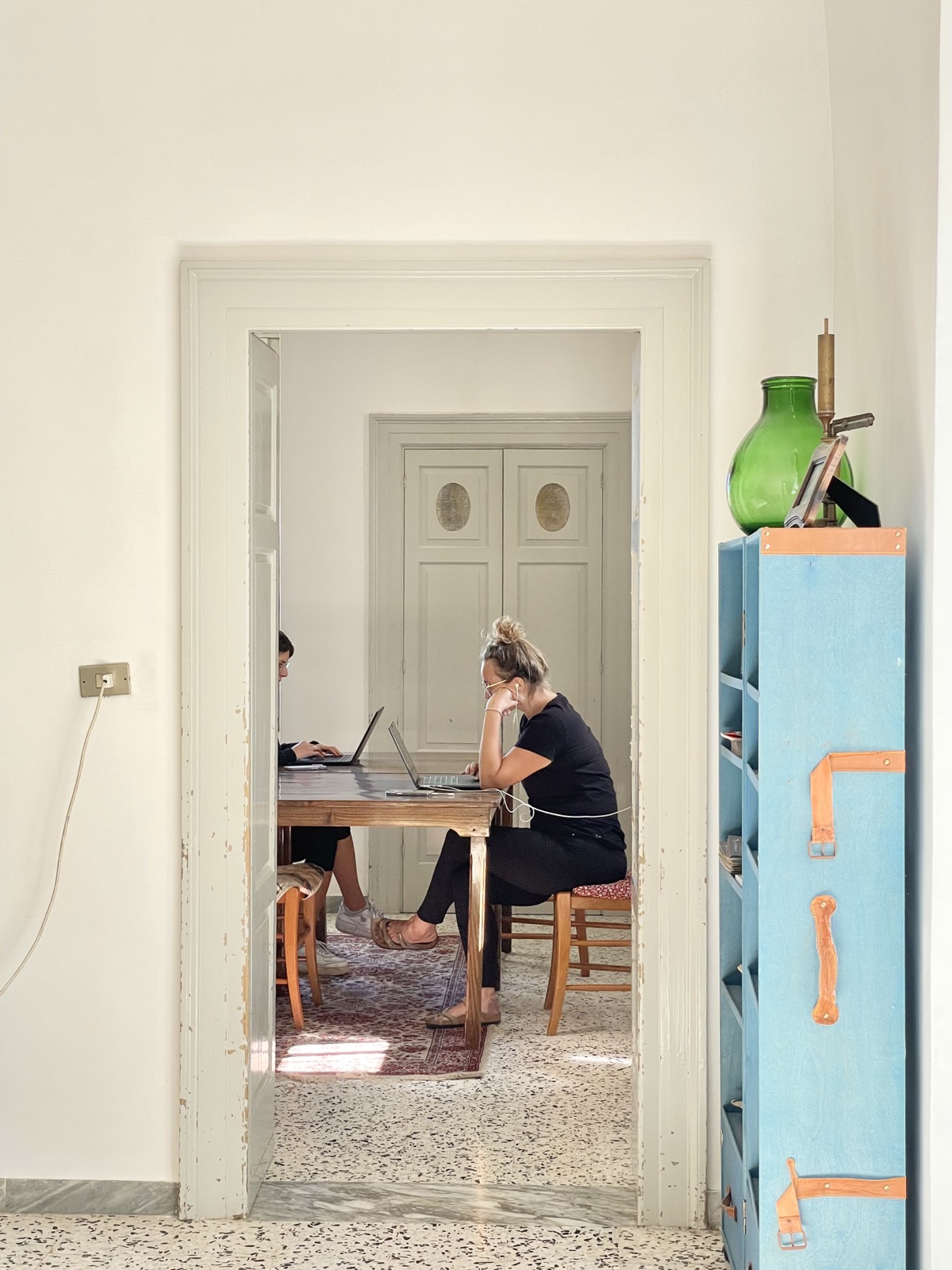
The best beach towns for remote workers in 2026 are Las Palmas (Gran Canaria), Funchal (Madeira), Pipa (Brazil), Tarifa (Spain), Taghazout (Morocco), Playa del Carmen (Mexico), Canggu (Bali), Penang (Malaysia), Split (Croatia), and Ericeira (Portugal). Monthly costs range from €700 in Taghazout to €2,000 in Madeira. All ten have fiber internet above 50 Mbps in coworking spaces, digital nomad visa pathways or generous tourist allowances, and food scenes worth staying for. We've run coliving chapters in Las Palmas, Madeira, Pipa, and Tarifa since 2024, which means this isn't assembled from other people's listicles. The difference between a good remote work beach town and a beautiful disappointment usually comes down to three things: can you run a video call without your face going abstract, is the community visible enough to not eat dinner alone every night, and does the food give you something to look forward to after 6pm? Every town on this list passes.
What actually separates a great beach town from a pretty trap?
A beach town can be photogenic and quietly miserable to live in. The Instagram-worthy cliffside villa with no supermarket, no coworking, and residential wifi that drops every time someone in the building makes coffee is a real category of mistake.
The good ones share four things:
Internet above 50 Mbps. That's the floor for comfortable remote work. Below it and you're explaining connection issues to clients more often than you'd like. Above 100 Mbps and you stop thinking about it entirely, which is the whole point.
Monthly costs that make sense. Under €1,500 is comfortable. Under €1,000 is remarkable. Over €2,000 starts requiring personal justification unless you know exactly why you're there.
A real local food scene. We run a foodie coliving. This criterion is on every list we make. A destination where the best dinner is a tourist restaurant doing passable approximations of local food is a destination that goes flat by week three regardless of the view.
Enough people to have dinner plans. Massively underrated. A town with 50 active nomads beats an isolated paradise for most people every time.
The 10 best beach towns for remote workers in 2026
1. Las Palmas de Gran Canaria, Spain 🇪🇸
Las Palmas wins by just quietly working. There's no single dramatic selling point and no dramatic deal-breaker either. A 3km urban beach, 22°C year-round, fiber at 200 to 300 Mbps, and city infrastructure that means nothing is an adventure in the bad sense.
Playa de Las Canteras is protected by a natural reef. The water is calm. It is inside the city, not a commute from it. You can swim before your standup and be in a coworking space within ten minutes. This sounds simple because it is, and that simplicity is the point.
Monthly costs run €1,100 to €1,700 for a private room. Spain's Digital Nomad Visa covers non-EU workers (minimum income around €2,334/month as of 2025). The nomad community is well-established and has been for years.
We ran a chapter here in 2024. People who came for a month left already looking up flights back. The papas arrugadas with mojo verde at Mercado del Puerto had something to do with it.
Full Las Palmas coliving guide
Quick stats: 200 to 300 Mbps | €1,100 to €1,700/month | UTC+0
2. Funchal, Madeira, Portugal 🇵🇹
Madeira was one of the first countries to build actual digital nomad infrastructure rather than just accepting the ones who showed up. NOS and MEO fiber across most of Funchal runs 300 to 600 Mbps. The Digital Nomad Village in Ponta do Sol launched in 2021 as the first of its kind in Europe.
What that village can't give you is the levada walks through cloud forest above the city, the espetada cooked over bay laurel charcoal in a restaurant on the road to Câmara de Lobos, or the poncha in a bar where locals have been drinking since before the nomad crowd arrived.
Monthly costs: €1,400 to €2,000. Portugal's D8 Digital Nomad Visa handles longer legal stays (minimum income €3,040/month per AIMA, Portugal's immigration authority). UTC+0 year-round since Madeira doesn't observe daylight saving, which makes it excellent for London-based teams and slightly unusual for everyone else.
We ran a chapter here in 2025. Several people cried when it ended. We're not going to elaborate on that.
Quick stats: 300 to 600 Mbps | €1,400 to €2,000/month | UTC+0
3. Pipa, Brazil 🇧🇷
Pipa is a small beach village in Rio Grande do Norte with cliffs, multiple beaches facing different directions, and a pace that does something genuinely good to your nervous system after about ten days. People arrive for a month. Some never fully leave.
The internet improved since 2022. Vivo fiber reaches most of the village at 80 to 150 Mbps. Some accommodation still uses fixed wireless; confirm speeds before committing to a place. Coworking is cheap at R$400-R$800/month (around €70 to €150).
Monthly costs: €700 to €1,100. In Brazil. That's not a typo. The cost-to-quality ratio is hard to justify ignoring.
The food. Açaí from places that have been doing exactly this for 30 years. Moqueca de camarão from proper restaurants with no interest in the tourist version. Tapioca crepes from street vendors for €0.40. Fresh fruit at breakfast that makes supermarket fruit feel like a bureaucratic substitute for the real thing.
We've run two chapters here; January 2024 and January 2026. People who planned one month and stayed two were not the exception.
UTC-3. The honest challenge is Europe calls. Early starts in Brazil cover UK morning meetings. US East Coast overlaps fine from midday. US West Coast is where it gets creative.
Quick stats: 80 to 150 Mbps fiber | €700 to €1,100/month | UTC-3
4. Tarifa, Spain 🇪🇸
The windiest point in Europe. Whether the wind is the whole point or the main problem depends entirely on whether you kitesurf. If you don't: it's still a medieval town at the southern tip of Spain looking directly at Morocco across 14km of water, with a local food scene that punches above its size and free tapas with every drink.
That last part bears repeating. In Andalusia, ordering a beer means a plate of food arrives alongside it at no extra cost. This is a policy that seems financially unsustainable and has been running for generations. Don't question it.
Monthly costs: €1,100 to €1,500. Internet runs 50 to 100 Mbps on fiber throughout the town. The nomad community is smaller than Madeira or Canggu, which is a feature if large nomad bubbles make you feel like you're at a work conference that happens to have an ocean view.
On a clear day from the Mirador del Estrecho, you can see Morocco. This is a strange thing to think about during your Tuesday standup and we recommend it.
Quick stats: 50 to 100 Mbps | €1,100 to €1,500/month | UTC+1
5. Taghazout, Morocco 🇲🇦
€700 to €1,000 per month. That's the opening argument and it's nearly sufficient on its own.
This surf village north of Agadir has built real coworking infrastructure over the last three years. Anchor Point is one of the better right-hand point breaks on the Atlantic. Multiple coworking spaces sit within walking distance of the beach, which is remarkable for a village this size. Fixed wireless at coworking spaces regularly hits 100+ Mbps. Residential internet is more variable, so a coworking membership at €80 to €120/month is worth budgeting in.
Same timezone as London in winter (UTC+0). If you're working European hours, the overlap is completely clean.
The food: harira soup with dates and bread on a cool evening is one of those combinations you don't see coming. Fresh brochettes from grill stations near the beach. Msemen flatbread. Argan oil on everything, and it turns out everything is better with argan oil. Mint tea arrives within 30 seconds of sitting down anywhere.
Morocco has no formal digital nomad visa yet. Most Western passport holders get 90 days, and enforcement is relaxed for remote workers.
Quick stats: 100+ Mbps at coworking | €700 to €1,000/month | UTC+0 (winter)
6. Playa del Carmen, Mexico 🇲🇽
Playa sits between Cancún (a theme park pretending to be a city) and Tulum (which has become expensive enough to require a specific reason to be there). Playa is the functional middle: real city infrastructure, a residential neighborhood that exists beyond the tourist strip, and cenotes and ruins within an hour when Wednesday afternoon demands something different.
Telmex fiber covers most of the city at 50 to 100 Mbps. Monthly costs: €900 to €1,500. US Central Time (UTC-6) means American teams get normal business hours. European calls require early starts or late afternoons but it's manageable.
Mexico allows 180-day tourist stays for most Western passports on arrival. Worth asking immigration specifically for the maximum when you land.
The food requires walking away from Quinta Avenida. Once you do: cochinita pibil from proper taquerías, ceviche from the mercado, tacos al pastor that will permanently recalibrate your standards for every other version you encounter afterward. The street food scene here is genuinely world-class.
Casa Basilico Oaxaca chapter; Mexico 2026
Quick stats: 50 to 100 Mbps | €900 to €1,500/month | UTC-6
7. Canggu, Bali, Indonesia 🇮🇩
Canggu has been declared dead in nomad think-pieces since 2019 and keeps outlasting all of them. The coworking infrastructure here is the strongest on this list. Dojo Bali runs 1 Gbps fiber with regular programming. Outpost has multiple locations with reliable backup power. The support structure has matured alongside the community for 15 years: visa agents, accountants who understand location-independent income, all of it.
Monthly costs: €1,200 to €2,000 for a private room in a decent area. Traffic is the real problem. It is not getting solved. Budget extra commute time and mental energy.
The food is the honest reason people keep coming back. Nasi campur from the warung around the corner that has been cooking the same dishes for 20 years. Babi guling on Sundays if you pay attention to where locals actually eat. Sambal that will permanently recalibrate what "spicy" means.
Indonesia's KITAS Digital Nomad Visa allows stays up to 5 years (minimum income: $2,000 USD/month per Indonesia's immigration regulations). UTC+8 works well for Australian and Asia-Pacific teams and requires creative scheduling for European ones.
Quick stats: 100 Mbps-1 Gbps at coworking | €1,200 to €2,000/month | UTC+8
8. Penang, Malaysia 🇲🇾
Penang is the most underrated destination on this list and it's not close. George Town is a UNESCO Heritage city with colonial shophouses, fiber internet that quietly outperforms most of Southeast Asia (TIME dotCom and Maxis at 200 to 500 Mbps), and the most serious food culture of any city on here.
Monthly costs: €700 to €1,000. Malaysia is extraordinary value.
The food case for Penang is the strongest single-destination argument on this entire list, and this list includes Brazil and Morocco. Char kway teow from hawker stalls that have been perfecting one dish for 40 years. Asam laksa unlike any other laksa you've had. Nasi kandar at 2am when a deadline is still running. Roti canai for breakfast at €0.40. Locals argue about which hawker makes the best char kway teow with the same passion Italians bring to carbonara. This is the correct approach to food and the results prove it.
90-day visa-free entry for most Western passports. Simple.
Quick stats: 200 to 500 Mbps | €700 to €1,000/month | UTC+8
9. Split, Croatia 🇭🇷
Split is a Mediterranean city built inside a Roman emperor's retirement palace. That's not a metaphor; the old town is literally a UNESCO World Heritage Site because the walls of Diocletian's palace are still standing and people live and run restaurants inside them.
The Dalmatian coast is the genuinely spectacular backdrop. The food and wine are excellent. The digital nomad scene has grown quickly since Croatia launched its digital nomad visa in 2021.
Internet runs 200 to 500 Mbps on fiber. Monthly costs: €1,100 to €1,600. Split is more expensive than it was five years ago, still far cheaper than most of Western Europe.
Croatia's Digital Nomad Visa for non-EU nationals: 1-year stays, minimum income €2,539/month as of 2024. UTC+1 (CET); ideal for European teams, workable for US East Coast with early starts.
May and September are the sweet spots. Warm enough for the beach, manageable crowds, lower accommodation prices than peak summer.
Quick stats: 200 to 500 Mbps | €1,100 to €1,600/month | UTC+1
10. Ericeira, Portugal 🇵🇹
The underdog on this list. Ericeira is a small fishing village 40 minutes north of Lisbon, one of the few UNESCO World Surfing Reserves, and genuinely one of Portugal's best-kept secrets for remote workers.
You get the atmosphere and pace of a small coastal town with Lisbon's entire infrastructure an hour away when you need it. Fiber via NOS or MEO hits 200 to 500 Mbps. Monthly costs: €900 to €1,400.
The coworking scene is small but built specifically around the remote work crowd rather than retrofitted from traditional office space. The village has enough going on; surf, local restaurants, weekend day trips to Sintra or Lisbon; that cabin fever isn't a risk.
Portugal's D8 visa applies here too. UTC+0, which keeps Portugal aligned with the UK (despite sharing a border with Spain, which is UTC+1; a geographical quirk that confuses everyone once and then makes sense).
Quick stats: 200 to 500 Mbps | €900 to €1,400/month | UTC+0
Which beach town is actually right for you?
Quick breakdown by what matters most:
The honest version: people spend weeks agonizing over which destination is objectively best, then arrive somewhere with a solid community and discover the town was almost secondary. The people are the thing. The place is the backdrop.
Coliving vs renting your own apartment; what nobody tells you
FAQ
What internet speed do I actually need for remote work?
25 Mbps upload is the practical minimum for a single video call without embarrassing yourself. 50 Mbps for comfortable all-day work. 100 Mbps if multiple people in the same accommodation need calls at the same time. Madeira, Las Palmas, Penang, and Split are the most consistently fast on this list. Taghazout has variable residential speeds but coworking spaces there solve the problem. Budget a coworking membership and stop thinking about it.
Which beach towns are cheapest in 2026?
Taghazout (Morocco) and Penang (Malaysia) both land under €1,000/month for a comfortable life. Pipa, Brazil follows at €700 to €1,100. If you want cheap AND full EU infrastructure with no visa math: Tarifa, Spain. It's the cheapest livable beach town in mainland Europe.
Do I need a digital nomad visa?
Depends on passport and duration. Most Western passport holders get 90 days in Schengen without a visa, which covers Spain, Croatia, and Portugal. For longer stays: Spain's Digital Nomad Visa, Portugal's D8, and Croatia's Digital Nomad Visa all exist with income requirements in the €2,000 to €3,000/month range. Outside Europe, Indonesia, Malaysia, Mexico, and Brazil all have options. Check current requirements directly with the relevant immigration authority; these change faster than any blog post.
Is coliving actually better than renting your own place?
Solo is cheaper per square meter. Coliving is better if you're new to the destination, don't have friends already there, or have ever arrived somewhere amazing and found yourself eating dinner alone for two weeks because building a social life from scratch takes energy that a full workday already used up. The time cost of isolation doesn't appear in any budget spreadsheet. Do coliving first, rent solo once you know what you actually need.
What's the best beach town for someone doing this for the first time?
Las Palmas or Madeira if you're European. Playa del Carmen if you're American. Both have sorted infrastructure, English spoken widely, and communities big enough that you won't be the only person figuring things out. Once you've done one month, you'll have a clearer sense of which of the more interesting options actually fits.
We've hosted 180+ remote workers across Spain, Portugal, Brazil, and Mexico since 2024. The next chapter is Oaxaca; technically inland, but the coast is three hours away and the mezcal is available immediately.
Good spots go fast and that's not a sales line, it's just what happens. Come to Oaxaca with us.
Reading about Italy? We're moving there in September.
Puglia chapter, Sep-Oct 2026. Trulli houses, burrata for days, and new friends around one big table. Spots are going.
Show me Puglia 🇮🇹
Spreading love through cooking & community.
© 2026 CasaBasilico OÜ (16850261)
All rights reserved.
Design & Branding by ahgoos.com
info@casabasilico.com