
The Ultimate Guide to Coliving in Las Palmas with Casa Basilico

Las Palmas de Gran Canaria is one of the best cities in Europe for digital nomads who want warm weather, fast internet, and a real city to live in rather than a purpose-built resort. Sitting on the northeast tip of Gran Canaria, the city offers year-round temperatures between 18-26°C, fiber connections that routinely hit 300+ Mbps, and a cost of living that clocks in at €1,100-1,700 per month all-in. The neighborhoods of Las Canteras, Triana, and Vegueta have different characters but all work well for remote workers. For coliving, Las Palmas has become one of the most popular destinations in Europe because it combines urban infrastructure, beach access, and a growing nomad community in one place. Casa Basilico ran their first European chapter here in 2024, bringing 20+ remote workers together for a month of communal cooking, shared coworking, and entirely too much mojo verde.
There's a recurring pattern in every nomad forum and Slack channel: someone asks "where should I go in Europe this winter?" and within three replies, someone says Las Palmas. Then another person confirms it. Then a third chimes in saying they went for a month and accidentally stayed three.
Las Palmas earns its reputation without trying.
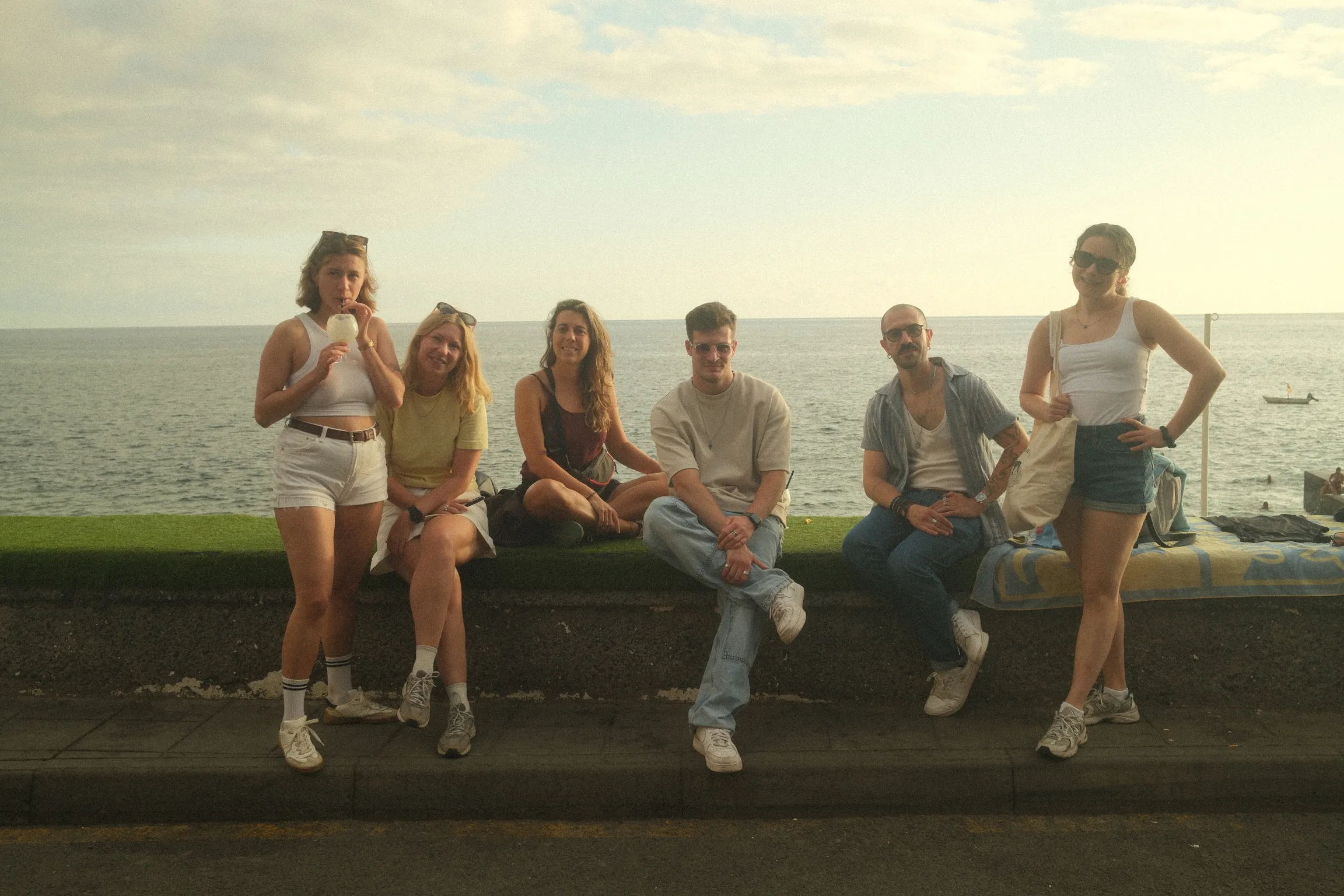
We know because we took a whole house there. In early 2024, Casa Basilico's first European chapter brought together remote workers from across the world to live, cook, and work together in Las Palmas de Gran Canaria for a month. What follows is everything we learned, everything we ate, and everything you need to know before booking your own ticket.
Why do digital nomads keep choosing Las Palmas?
It's one of the few places in the world where you can have a good life without either burning through your savings or compromising on quality of living.
Las Palmas is a real city. Spain's eighth largest, with around 380,000 people. It's not a resort with a coworking space bolted on. It has traffic, local markets, politics, neighborhoods with distinct personalities, a university, a port, a football team. You can live here like a local rather than like a tourist, which is what most nomads actually want after their first few months of hostel life.
The weather is the obvious draw. The Canary Islands sit at roughly the same latitude as the Sahara, which means year-round warmth. The Atlantic moderates the temperatures so it never gets brutal. Winters are mild and sunny. Summers are warm but not roasting. The islands average around 300 sunny days per year. (Source: Turismo de Gran Canaria.) The locals call it "the city of eternal spring," and for once the tourism brochure isn't lying.
What the brochure doesn't tell you: the Sahara wind occasionally rolls in and dumps dust on everything. Locals call it the calima. It turns the sky orange and your laptop needs a wipe afterward. It happens a few times a year, lasts two or three days, and then it's gone. Worth knowing.
The timezone also works. Gran Canaria runs on WET/WEST, same as the UK and Portugal. That puts you comfortably within range of Central European colleagues and close enough to the US East Coast for late afternoon calls if needed. No 5am alarms to catch a standup.
One more thing that rarely gets mentioned: the nomad community here is good. Las Palmas has been a nomad hub long enough that the infrastructure has developed around it. Coworkings know what remote workers need. Landlords understand month-to-month rentals. The city has absorbed the nomad wave without turning weird about it.
Which neighborhood should you actually live in?
Las Palmas has clearly defined neighborhoods, and they're not all created equal for remote work life.
Las Canteras is where most nomads land and many stay. The main urban beach (3km of calm, reef-protected Atlantic water) runs through the heart of the neighborhood. You're surrounded by restaurants, cafes, small supermarkets, surf schools, and a solid concentration of coliving spaces and coworking options. It's walkable, sociable, and international without being touristy in a bad way. Rents are higher than elsewhere in the city but still reasonable by European standards. This is where our 2024 chapter was based.
Triana is the historic shopping district in central Las Palmas. Quieter than Las Canteras at night, more local in character, with good transport connections. Rents are cheaper. Worth considering if you want to be surrounded by locals rather than other nomads and you don't need the beach five minutes away.
Vegueta is the old town. Colonial architecture, genuinely beautiful streets, a proper market. Quieter, more authentic, further from the beach. Works well if you like your evenings calm and your surroundings with some history. It's a neighborhood for people who are there to work and explore rather than to socialize every night.
Mesa y López is the city's main commercial area. Practical rather than charming. Fine for a longer stay with your own apartment but lacks the character of the other three.
For most nomads, and certainly for coliving, Las Canteras is the obvious choice. You can walk to the beach before your morning standup, work at a proper coworking, and have dinner somewhere good without needing a taxi. We know because we picked it ourselves.
What does a month in Las Palmas actually cost?
This depends heavily on your accommodation situation. Let's be honest about the numbers.
Accommodation:
Food:
Eating local is cheap. Canarian restaurants serve three-course menus del día for €10-14. Groceries at a Mercadona or HiperDino are affordable. If you eat out every meal at places targeting tourists, you'll spend more. Budget €300-500/month for food depending on your habits. If you're in a coliving with communal cooking built in (like ours), that number drops.
Transport:
Las Palmas has decent local buses, called guaguas, and the city center is walkable. A monthly bus pass costs around €30. Many people rent bikes or e-scooters. If you're not making regular trips to the south of the island, you don't need a car.
Coworking:
Hot desk memberships range from €80-150/month depending on the space. Day passes are typically €15-25 if you don't want a monthly commitment.
Coworking + everything else:
Gym (€25-40/month), occasional trips around the island (cheap), drinks and socializing (your call, no judgment from us).
Realistic monthly budget:
One thing most people don't know before arriving: the Canary Islands have a reduced VAT rate called IGIC, set at 7% versus mainland Spain's 21%. That keeps prices slightly lower than you'd expect for a Spanish city. You'll notice it in the supermarket before you notice it anywhere else.
How to budget for a month abroad
Is the internet actually good enough for remote work?
Yes. Next question.
Longer version: Las Palmas has solid internet infrastructure. Fiber is widely available across the city, and speeds of 300-600 Mbps symmetric are common in residential apartments and coworking spaces. Mobile data coverage from Movistar, Orange, and Vodafone is reliable for backup.
Coworking spaces in Las Palmas treat internet connectivity as a basic requirement rather than a selling point, which is how it should be. Speeds are tested, backup connections exist, and support actually picks up the phone.
In coliving situations, the WiFi quality depends on the setup of the specific property. One thing worth checking before you book: where is the router relative to your room? We learned this the hard way during our 2024 chapter when one side of the house was on 400 Mbps and the other was trying to compress video through a concrete wall.
Practical backup: get a local SIM on arrival. Movistar has the best coverage on the islands. A month of data with a generous cap costs €10-20. Treat it as insurance, not primary connection, and you'll never have a bad video call day.
Where do you work when you're not on the beach?
Clarifying note: working on the beach is mostly aspirational. Sand in the keyboard, sun on the screen. The beach is for lunch, not for your daily standup.
Las Palmas has a good coworking scene for a city its size. A few worth knowing:
Las Palmas Workstation: One of the most established spaces, good infrastructure, strong community of remote workers and local freelancers. Located in the Las Canteras area, which means you can walk from the office to the beach in minutes.
Coworking Las Palmas: Solid, reliable, well-equipped. Tends to attract a mix of local startups and visiting nomads. Good event programming if you want to meet people beyond your coliving house.
Hacker Space Las Palmas: More tech-focused community, regular meetups and workshops. Specifically useful if you're in software development and want to connect with the local tech scene.
Beyond dedicated coworkings, the city has good cafes that work fine for focused hours. Canarian café culture is genuine. You won't get side-eyed for ordering a cortado and opening your laptop, and the coffee is actually good.
One underrated advantage of coliving: you have a workspace at home (a real one, not a kitchen table), plus the option to head out when you want a change of scene. Having both options without committing fully to either matters more for productivity than most people expect.
What's the food scene like?
This is the section we've been waiting to write.
Canarian cuisine is underrated, specific, and good. It's not like mainland Spanish food. It's its own thing, shaped by the islands' history as a trading crossroads between Europe, Africa, and the Americas. The ingredients are different. The techniques are different. The flavor profiles are different.
Papas arrugadas con mojo: The baseline of Canarian cooking and one of the most deceptively simple dishes in Spain. Small potatoes cooked in heavily salted water until the skin wrinkles and the outside crystallizes. Served with two mojo sauces: mojo rojo (red, made with dried peppers and garlic) and mojo verde (green, made with coriander, garlic, and olive oil). Sounds simple. It is. It's excellent. You will eat this many times. By week three of our 2024 chapter, guests were making mojo verde from scratch without being asked.
Sancocho canario: A traditional stew of salted fish (usually cherne or corvina), served with wrinkled potatoes and mojo. Hearty, local, the kind of food that makes sense after a long day. Not the most photogenic dish. Tastes better than it photographs.
Gofio: Ground toasted grain, used in everything from bread to stews to desserts. Canarian staple that mainland Spaniards sometimes look at sideways. Try the gofio escaldado (a thick mousse-style preparation) if you see it on a menu. Someone in our chapter made gofio cookies at one point. They were better than they had any right to be.
Queso de flor: Local cheese from the north of Gran Canaria, semi-cured with a mild, slightly floral flavor. Good with everything. Buy it at the market.
Mercado de Vegueta: The main market in the old town, the best place to buy fresh produce and understand what locals actually eat and cook. Go on a Saturday morning. Get the cheese. Get the honey. Get papas for cooking later. Budget more time than you think you need because you'll stay longer than you plan.
Seafood: The Atlantic is right there, and the local fish is excellent. Vieja (parrotfish) is a Canarian staple you won't find many other places. Order it at a local restaurant, not a tourist trap, and you'll understand why islanders don't talk about leaving.
Why communal cooking is the best part of coliving
What's coliving in Las Palmas actually like?
Las Palmas has enough coliving options that the quality varies significantly. Some are purpose-built with good infrastructure, community programming, and fast WiFi throughout the building. Others are regular apartments with "coliving" in the name and very little to distinguish them from a flatshare with people you found on the internet.
The best coliving experiences in Las Palmas happen when a few things align: the location is walkable (you want beach access and the city center, not a 20-minute bus ride from anything), the WiFi is actually good across the whole property, there's proper shared space (a kitchen that works as a kitchen, a living room that isn't a hallway with furniture), and the group has some coherence rather than a random collection of people in transit.
Community doesn't happen automatically just because people share a building. It happens when people cook together, when there's something to actually do together, when the group has enough shared context to have real conversations past the surface level. Casa Basilico's model is built around exactly this. The communal cooking is the mechanism by which people actually get to know each other.
By the end of the 2024 Las Palmas chapter, people who'd arrived not knowing anyone were leaving with friendships that continued afterward. Some visited each other in their home countries. A couple (not Fabio and Juls, just to be clear, we are famously not a couple, please read the FAQ on our website) started dating. The mojo verde brought them together. We take full credit.
What surprised us most about Las Palmas: the city has enough going on that you don't need to manufacture activities. A house full of people who want to explore has no shortage of options. Markets, surf sessions, day trips to the interior, wine-dark beaches, walks through Vegueta at golden hour, evening meals that extend into long discussions. The city does the heavy lifting.
When's the best time to go?
Any time.
The peak tourist season runs December through February, when Europeans flee the cold. Flights are more expensive, accommodation books out faster, and the city is busier. For coliving specifically, this is also when the nomad community is at its densest, which has its own advantages: more events, more community, more people for spontaneous dinners.
Spring (March to May) is excellent. Weather is already warm, crowds have thinned, prices drop, and the city returns to a more local rhythm. If you can choose freely, spring is our recommendation.
Summer (June to August) is warm but tempered by the trade winds, which keep it comfortable rather than punishing. The busy period shifts to family tourism, so the nomad-specific spaces feel less crowded. Fewer nomads can mean a quieter experience or an easier time finding accommodation. Depends what you want from the month.
Autumn (September to November) is increasingly popular with remote workers. Good weather, recovering supply of short-term accommodation, and the best light of the year for anyone who photographs anything. September in Las Palmas is genuinely lovely.
If you're coming with Casa Basilico, the chapter dates are what they are. We pick them for reasons. Trust the process.
See upcoming Casa Basilico chapters
Living in Las Palmas for a month changes how you think about cities. It's not a postcard. It's a real place with working weeks, local politics, and people arguing about parking. It also has a 3km beach in the middle of it, 300 sunny days a year, and the best wrinkled potatoes you will eat in your life.
If you want to do it with a group of people who actually get along, who cook together and explore together, who turn a month abroad into something worth talking about two years later, that's what we do.
Frequently Asked Questions
Do I need to speak Spanish to live in Las Palmas?
Not really. English is widely spoken in the nomad-heavy neighborhoods like Las Canteras, and service industries have adapted to the international crowd over the years. That said, a few words of Spanish make daily life smoother and locals genuinely appreciate the effort. Ordering your coffee in Spanish takes thirty seconds to learn and pays off immediately.
How long should I stay in Las Palmas?
A month minimum to get past the tourist phase and actually feel like you live there. Two months is ideal if you want to build a real routine, make local connections, and explore beyond the city. A week is a holiday. A month is an experience. Both are fine, but they're different things.
Is Las Palmas safe?
Yes, by the standards of any European city. Normal urban awareness applies: don't leave a laptop visible in a parked car, keep an eye on your bag in crowded areas, don't flash expensive gear somewhere unfamiliar. The Las Canteras area is safe, well-lit, and busy most evenings. Petty theft exists as it does anywhere, but it's not a city where you'll feel unsafe.
Can I come with a partner or friend?
Absolutely. Las Palmas works well for pairs. In a coliving context, shared accommodation is generally designed for individuals, so couples typically take a private room. If you and a friend want separate rooms and to join a coliving group, that's straightforward. Some people come in pairs and some come solo and the mix usually works well.
What's the visa situation for non-EU citizens?
Gran Canaria is part of Spain, which is part of the Schengen Area. EU citizens can stay indefinitely. Non-EU citizens can stay up to 90 days within any 180-day period without a visa. For longer stays, Spain's Digital Nomad Visa allows remote workers to live legally in Spain for up to a year, renewable up to five. It requires proof of remote income and a minimum threshold of around €2,334 per month as of 2024, though you should verify current requirements with the Spanish consulate before applying. (Source: Spanish Ministry of Foreign Affairs, 2024.)
Ready to stop reading guides and actually go? See what we have coming up →

Spreading love through cooking & community.
© 2026 CasaBasilico OÜ (16850261)
All rights reserved.
Design & Branding by ahgoos.com
info@casabasilico.com