
The Ultimate Guide to Coliving in Madeira with Casa Basilico

Madeira is one of the best places in Europe to do a coliving stint. The Portuguese island sits 1,000 km southwest of Lisbon in the Atlantic, with year-round temperatures of 18-24°C, fiber internet across Funchal, and a food scene that seriously outperforms its reputation. A realistic monthly budget runs €1,400-€2,200, covering accommodation, food, coworking access, and enough poncha to make the levada walks feel earned. The main working neighborhood is Funchal, with residential areas like Santa Luzia and São Gonçalo offering good internet, walkability, and proximity to local life. The time zone (UTC+0/+1) works well for remote workers serving European and US East Coast clients. For a structured coliving experience, Casa Basilico ran a chapter in Madeira in 2025 with 15-20 participants, daily communal dinners, and weekly island experiences. This guide covers everything: costs, neighborhoods, food, visas, best timing, and what it's actually like to spend a month here.
Why does everyone keep talking about Madeira?
Blame the internet, honestly. Madeira got put on the digital nomad map around 2021 when Startup Madeira launched the Digital Nomads Madeira Islands program, one of the first government-backed nomad village initiatives in the world. The result: a flood of remote workers, a healthy surge of coliving spaces in Funchal, and Nomad List consistently ranking the island in the top 20 destinations globally.
The nomad buzz has settled, the pop-up nomad village closed, and what's left is actually better. The infrastructure built around that 2021 moment stuck around: solid coworking spaces, established nomad communities, a mature accommodation network. The Instagram crowds mostly moved on to the next "hidden gem" (Tbilisi, then Chiang Mai again, then wherever). The people who stay in Madeira now actually want to be there.
According to Nomad List, Funchal scores a 4.8/5 for internet speed, 4.5/5 for safety, and 4.6/5 for coffee. That last metric matters more than people admit when you're deciding where to spend a month of your life.
The climate does a lot of heavy lifting too. Madeira sits at a latitude where it's never properly cold and never brutally hot. Average temperatures range from 18°C in winter to 24°C in summer. The north coast catches more rain and clouds; the south stays drier and sunnier. If you're setting up a coliving chapter, you want the south side. Trust us on this.
What's it actually like to live and work there?
Let's cut through the "hidden gem" language everyone uses for Madeira. It's not hidden. It has direct flights from 30+ European cities and a functioning tourist infrastructure. It's an island that rewards people who stay longer than a week.
Day-to-day life in Funchal moves at a pace that's slow enough to feel human but fast enough that you don't go insane. There are hills everywhere. Serious hills, the kind that make your calves hurt for two weeks and your Instagram feed suspiciously full of staircase photos. Most of the coliving action happens in the Zona Velha (Old Town), the Santa Maria area, and the residential neighborhoods climbing up above the city center.
Internet is excellent. NOS and MEO provide fiber across the main residential and commercial zones. Most coworking spaces clock 200-500 Mbps down. During our 2025 Casa Basilico chapter, we ran video calls, cloud collaboration, and the inevitable 11pm Zoom with someone in California without a single outage. Four weeks. Zero issues.
The time zone is UTC+0 in winter and UTC+1 (WEST) in summer. That puts you in clean overlap with London, Central Europe, and the US East Coast, one of the more practical positions if you work across time zones. everything you need to know about working remotely from coliving chapters
The city is walkable in a way that rewards commitment. After a week you know which bakery has the best pastel de nata before noon, which corner has the smoothest cobblestones for pulling a wheeled suitcase, and exactly how many steps it takes to get from the Old Town to the cable car. It becomes yours quickly.
How much does coliving in Madeira actually cost?
Madeira is cheaper than London and more expensive than Southeast Asia. It's not the cheapest place in Europe, but it's not Lisbon 2022 prices either.
If you join a Casa Basilico chapter: accommodation, daily family dinners, coworking access, and weekly experiences sorted in one flat fee. Check current chapter pricing at our join page. Pricing varies by room type and how early you book.
If you're going completely solo and building your own setup:
Total realistic monthly budget: €1,400-€2,200, depending on your accommodation standard and how many poncha-fueled evenings you decide to have.
For comparison, the same lifestyle in Barcelona or Lisbon would cost 30-40% more. Madeira still carries that underpriced-for-quality feeling, though it's been correcting slowly since 2021 and will keep doing so. Now is still a good time.
Where should you actually stay in Madeira?
Madeira has a few zones worth knowing before you book anything:
Funchal city center and Old Town (Zona Velha): Where most nomads end up. Walkable, cafes everywhere, close to the marina and the night market. Can feel touristy during high season. Great for social energy, less great if you want quiet mornings.
Santa Luzia and São Gonçalo: Residential neighborhoods just above the city center. Quieter, more local feel, still a 15-minute walk to everything. Where Casa Basilico typically sets up. Enough altitude for ocean views, enough distance from the tourist zone to feel like you actually live there.
Monte and Babosas: Up in the clouds, literally. Beautiful in a misty, dramatic way. Cold at night. Good if you want the forest hermit experience while remaining 10 minutes from the city by cable car. Not ideal for a coliving chapter where you want easy access to coworking and community.
Paul do Mar and Jardim do Mar: West coast surf villages. A completely different island from Funchal. If you surf, you've already booked a flat there. If you don't, visit for a weekend but don't base yourself there without a car.
For a coliving month, Funchal and the residential neighborhoods immediately above it are the sweet spot. Walkable, good internet infrastructure, proximity to other nomads, access to local life without being in the middle of the tourist zone. The views from up there are stupid good.
What's the food situation? (The most important section)
This is where Madeira surprises people. Portuguese food is already good. Madeiran food has its own distinct identity that doesn't get the international press it deserves.
Espetada: Beef skewers on bay laurel sticks, cooked over open flame. Get these at a proper espetada restaurant up in the mountains, not in a tourist restaurant on the Funchal waterfront. The difference is not subtle.
Bolo do caco: Sweet potato flatbread served warm with garlic butter. This is the greatest bread in the Atlantic. We will die on this hill (and have, multiple times, while hiking a levada from it).
Peixe espada (black scabbardfish): A deep-sea fish that looks alarming in photographs and tastes magnificent on a plate. Usually served with banana, which sounds completely wrong and is absolutely right. Order it.
Atlantic tuna: Fresh bluefin tuna prepared simply: grilled with olive oil, lemon, and salt. One of those meals you'll reference in conversations for years. "Have you had the tuna in Madeira?" You'll become that person.
Poncha: The local drink. Aguardente (sugarcane spirit) mixed with honey, lemon, and orange juice. Deceptively smooth going in. More than three is a commitment that your levada walk the next morning will hold you accountable for.
During a Casa Basilico chapter in Madeira, the communal dinners are where this comes alive. We cook together every evening. Bolo do caco from scratch. Someone's attempt at peixe espada. Poncha ratios that get less precise as the evening progresses. The kitchen is the chapter as much as any coworking desk.
how communal cooking works at Casa Basilico
Is Madeira safe? What about visas?
Safety: Yes. Funchal is one of the safer cities in southern Europe. The main hazard is rolling an ankle on cobblestones while looking at the ocean instead of your feet. Petty theft exists at very low rates compared to Lisbon, Barcelona, or Rome. Nomad List gives safety a 4.5/5. That matches our own experience running a chapter there.
Visas:
EU / EEA / Swiss citizens: no visa needed. Move in, unpack your laptop.
UK citizens: Portugal's temporary stay rules allow 90 days in any 180-day window. For longer stays, look into Portugal's D8 Digital Nomad Visa.
US, Canadian, Australian, and New Zealand citizens: same 90-day Schengen rule. Portugal's D8 Digital Nomad Visa was created specifically for remote workers earning above approximately €3,480/month gross (four times the Portuguese minimum wage as of 2024). You can apply from your home country or from within Portugal. Processing time varies; budget two to three months.
For a one-month Casa Basilico chapter, most nationalities can attend on a standard tourist entry. If you're planning an extended stay in Portugal after the chapter, look into the D8 properly. We're not visa lawyers; get actual legal advice for your specific situation.
How does a Casa Basilico Madeira chapter actually work?
We ran our Madeira chapter in 2025.
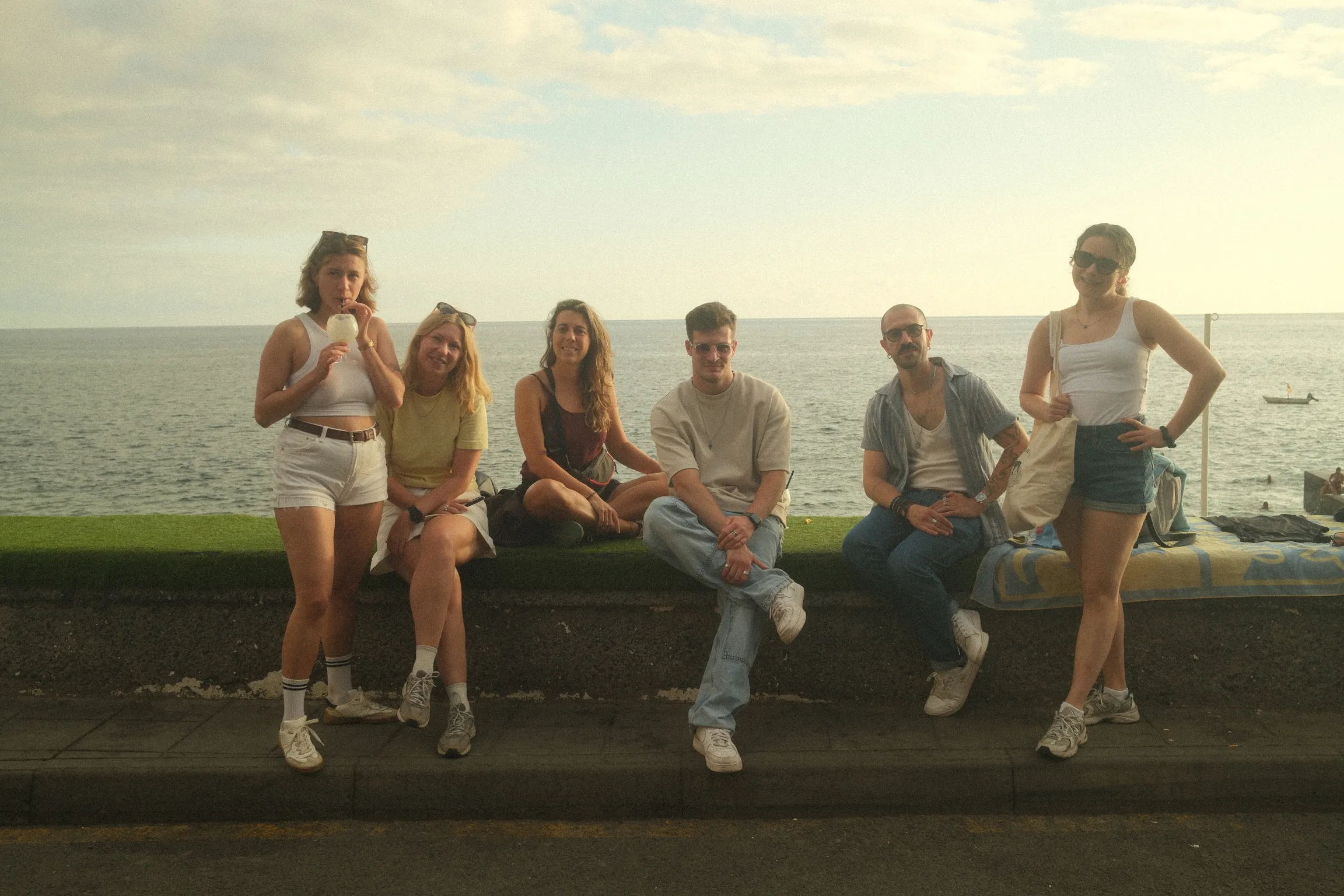
You join 15-20 people from across Europe and beyond who are working remotely and want more than a desk and a WiFi password. Accommodation is sorted, dinners are cooked together (not catered), and the community that forms is an actual community rather than a polite collection of people awkwardly sharing a kitchen.
Weeks have a rhythm: mornings for work, afternoons for exploring, evenings for cooking and eating together. Weekends have organized experiences: boat trips, hikes to peaks above the cloud line, surf day trips to the west coast.
Madeira works especially well for this format for a few reasons:
The island is small enough to genuinely explore in a month. You won't leave feeling like you barely scratched the surface. You'll leave feeling like you actually know a place.
The local food scene gives communal cooking serious raw material. Markets, fresh fish, local produce. It's not hard to cook well there.
The landscape variety is dramatic in a way that doesn't require hours of travel. Levada walks through laurisilva forest, dramatic cliffs, the city, the mountains. All accessible from a Funchal base.
The existing nomad community means you can meet people outside the chapter too. There are events, coworking communities, and regular social meetups running independently of any specific coliving operator.
see all Casa Basilico chapters past and upcoming
How does Madeira compare to other coliving destinations?
We've run chapters in Madeira (Portugal), Las Palmas (Canary Islands), Tarifa (Spain), and Brazil (Pipa). Each has a distinct energy:
Las Palmas is bigger, more urban, stronger surf scene. More anonymous in the way any larger city is. Good for people who want city infrastructure with Atlantic climate.
Tarifa is wind, kite surfing, and end-of-the-world atmosphere on the southern tip of Europe. Smaller chapter, tighter community. Distinct vibe.
Brazil (Pipa) is the most dramatically beautiful and the most logistically complex. Cliffs, jungle, sunsets that make people stop mid-sentence. Social energy that goes late. Getting there requires a connection.
Madeira sits between all of these. Natural drama comparable to Brazil without the intercontinental flight. European infrastructure on par with the Canaries, but with more distinct local character. Green in a way that the Canary Islands are not. The food is better than all of them.
If your priorities are wild nature, genuine local cuisine, solid internet infrastructure, and a place that feels different from mainland Europe, Madeira is hard to beat for a one-month chapter. why coliving works better than solo nomad life
When's the best time for a Madeira coliving chapter?
Madeira's climate means there's no truly bad window, but there are better ones:
February to April: Post-carnival, before peak summer tourist traffic. February's Funchal carnival is one of the best in Europe, worth timing a chapter around. Flowers start blooming across the island. Levadas are at their most lush.
September to November: Summer crowds gone, temperatures still warm at 21-23°C, accommodation prices lower. Local life resumes its normal pace. Some of the best hiking conditions of the year.
July to August: Popular, more expensive, and more crowded. Still beautiful; just busier everywhere. Book early if you want a summer chapter.
December to January: Funchal's Christmas lights are famous for a reason and the atmosphere in December is festive. Can be rainy on the north coast. The south stays more manageable.
We typically run Madeira chapters in the spring or autumn windows. Work rhythm focuses better without peak tourist infrastructure. Access to the island beyond the main tourist circuits is easier. The chapter participants tend to be more committed to the full experience when the chapter is in these windows.
Frequently Asked Questions
Do I need to speak Portuguese to live in Madeira for a month?
No. English is widely spoken in Funchal, particularly among younger locals and anyone working in tech, hospitality, or the coliving scene. That said, learning five words before you arrive (obrigado, com licença, uma poncha por favor) will make locals noticeably more pleased to interact with you. Basic effort has an outsized return on investment in Portugal.
Can I bring my partner to a Casa Basilico chapter?
Couples are welcome. We design chapters for solo joiners and couples. We don't currently run family chapters with kids, but that's something we watch for the future. Check the specific chapter page for the current setup and room configurations.
How fast is the internet really?
During our 2025 Madeira chapter we had 300-500 Mbps fiber in the accommodation. Coworking backup averaged 200 Mbps. Four weeks, zero outages. This is well above the southern Europe average and handles video calls, cloud collaboration, large file uploads, and the inevitable person who's live-streaming their gaming setup back home.
Is this right for someone doing their first coliving experience?
Yes, and often more valuable for first-timers than it is for veterans. You arrive with a built-in community, sorted accommodation, and a group of people who've done versions of this before. No awkward "how do I meet people" phase. No figuring out the neighborhood alone. If Madeira is your first coliving experience, you'll leave wondering why you waited this long.
What's not included in the chapter price?
Flights, personal travel you organize during the chapter (day hikes, boat rentals, west coast surf trips), personal groceries for breakfasts and lunches, and your own poncha tab. We cover dinner every evening, communal and cooked together. What you do with your mornings is between you and the Atlantic.
The next Madeira chapter fills up faster than we'd like. If you want in, get on the list early.

Spreading love through cooking & community.
© 2026 CasaBasilico OÜ (16850261)
All rights reserved.
Design & Branding by ahgoos.com
info@casabasilico.com