
The Ultimate Guide to Coliving in Oaxaca with Casa Basilico
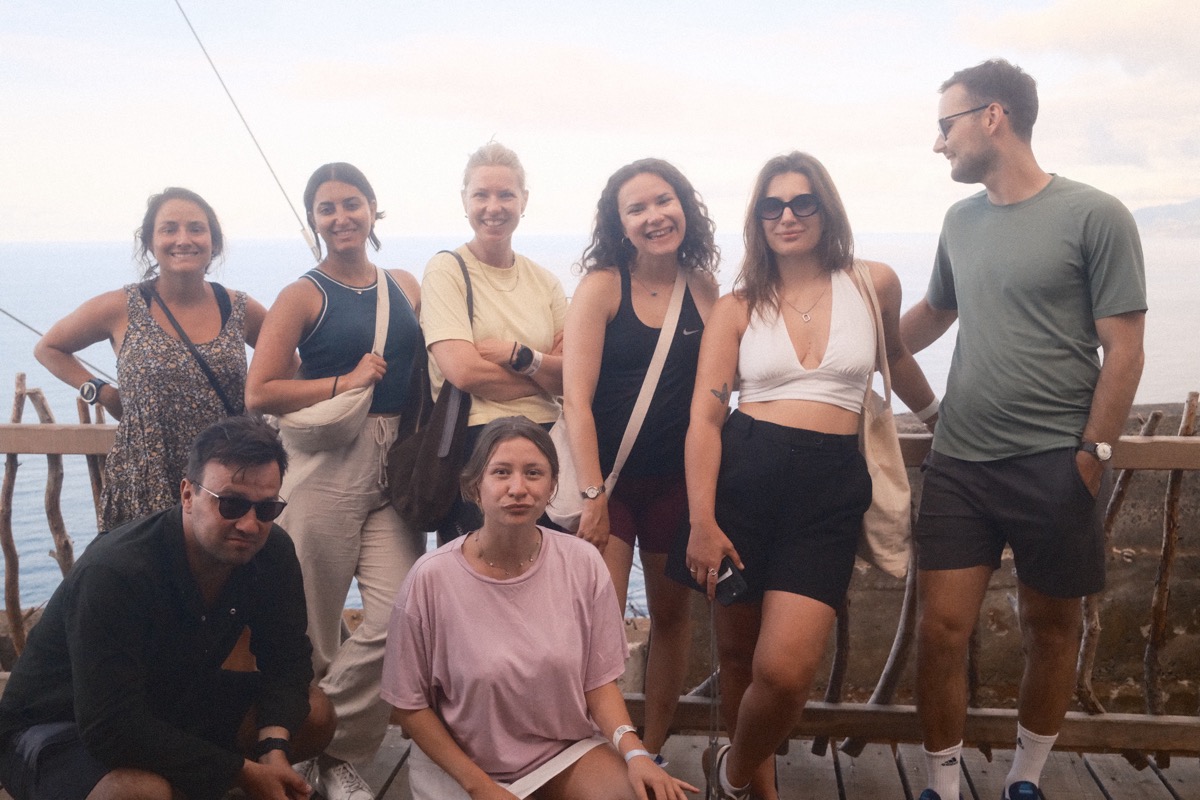
Oaxaca is one of those places that ruins you, in the best possible way. You arrive thinking you'll stay a week. Three months later you're arguing with locals about which tlayuda spot does it better and scheduling your mornings around the market at Mercado Benito Juárez. For digital nomads who want to slow down, eat well, and actually connect with a city rather than skim across the surface of it, Oaxaca might be the best choice in Mexico right now.
The short version: Coliving in Oaxaca means solid internet for video calls, a monthly cost of living between $1,200 and $1,800 USD all-in, and a food scene that competes with the best on the planet. Mexico's culinary tradition earned UNESCO Intangible Cultural Heritage status in 2010, and Oaxacan cuisine is its most celebrated regional expression. Seven distinct mole varieties, pre-Hispanic drinks at open-air markets, mezcal producers who have been at it for generations. The best neighborhoods for remote workers are Jalatlaco, El Centro, and Reforma, all walkable, safe, and full of cafés that double as coworking spaces. Mexico grants most nationalities 180 days on arrival at no cost, which is more than enough to actually slow down. The climate sits at 1,550 meters above sea level: warm days and cool evenings year-round, no humidity. Casa Basilico runs a coliving chapter in Oaxaca in 2026. You should be in it.
Okay. Here's the longer version, for people who make decisions with more than a blockquote.
Why do digital nomads keep ending up in Oaxaca?
Because Oaxaca is different from the usual nomad circuit.
Most Mexican cities that pull in remote workers, think Mexico City, Playa del Carmen, Tulum, offer the expected package: fast internet, English menus, a coworking with cold brew on tap. They're comfortable. They're also kind of interchangeable if you squint.
Oaxaca is not interchangeable. It has a distinct indigenous culture rooted in Zapotec and Mixtec traditions, a food scene that UNESCO recognized as part of Mexico's Intangible Cultural Heritage in 2010, and a pace that forces you to actually be present. The markets aren't tourist attractions, they're the social infrastructure. The mezcal is local and served at room temperature by people who will explain the whole production process if you ask with any genuine curiosity. The mole takes three days to make. You taste that.
The nomad community in Oaxaca has grown fast, especially since 2021, but it hasn't swamped the city the way it has in Tulum. You'll find coworking spaces, coliving houses, and expat-friendly cafés alongside neighborhoods that are entirely local. That balance is rare and worth protecting.
There's also the altitude. Sitting at 1,550 meters above sea level, the city has a climate that most Europeans and North Americans find borderline perfect: warm but never humid, cool evenings, no need for AC most of the year. Compared to Playa del Carmen in July, it's a different universe.
And then there's the food.
Mamma mia, the food.
Seven moles. Chapulines with lime and salt as a bar snack (yes, crickets, yes, you should try them, no, you won't regret it). Tlayudas the size of your forearm. Tetela. Memela. Tejate, the pre-Hispanic cacao and corn drink that has no equivalent anywhere in the world. If you care even a little bit about what you eat, Oaxaca becomes a permanent reference point. Years later you'll be somewhere eating a disappointing bowl of pasta and thinking about a $3 tlayuda from Mercado 20 de Noviembre with a kind of longing that feels disproportionate and absolutely correct.
What does a foodie coliving actually look like?
Is Oaxaca actually good for remote work? What's the internet situation?
Yes, with caveats worth knowing upfront.
Oaxaca City has improved its connectivity over the last few years. Most dedicated coworking spaces and coliving houses now offer fiber or cable internet ranging from 50 to 150 Mbps symmetrical, which is more than enough for video calls, file transfers, and the kind of multi-tab chaos most remote workers operate in daily.
The caveats: some older colonial buildings in El Centro have weaker infrastructure. Beautiful rooms, dodgy Wi-Fi, classic trade-off. Always test the connection before committing to an accommodation. If your work involves heavy uploads, you're running a remote team on eight hours of Zoom, or you need redundancy built into your setup, confirm specs directly with wherever you're staying rather than assuming.
Dedicated coworking spaces are solid options. Makers Oaxaca and CoWork Oaxaca are well established with reliable connections, printing access, and quiet that makes deep work possible. Several cafés around Jalatlaco and the Parque El Llano area also offer strong Wi-Fi, though they're better suited for focused solo mornings than full days with back-to-back calls.
Mobile coverage in the city center is good. Telcel and AT&T Mexico both offer SIM cards that are easy to pick up at the airport or any OXXO convenience store and give you a reliable backup on days when the fixed line decides to take a personal day.
One thing to plan around: Oaxaca runs on UTC-6 (Central Standard Time, or UTC-5 during daylight saving). That puts it 1 to 3 hours behind the US East Coast and 6 to 8 hours behind most of Europe. US-based remote workers will find the overlap comfortable. Europeans working with European clients will need to flex their schedule slightly, front-loading calls in the Oaxacan morning. Plenty of nomads make it work. You adjust, you get to eat lunch at 2pm at the market, it balances out.
How to actually stay productive while traveling long-term
How much does it cost to live in Oaxaca for a month?
Oaxaca is one of the more affordable cities on the Mexican nomad circuit. Not a sacrifice play either: you spend less and eat better than most European cities, which is its own kind of miracle.
According to Numbeo data (2025), the average cost of living for a single person in Oaxaca without rent runs around $600 to $800 USD per month for a comfortable lifestyle. Add accommodation:
Budget mode (around $1,000 to $1,300/month):
Comfortable mode (around $1,500 to $2,000/month):
Compare that to Lisbon or Barcelona, where a decent private room alone often starts at $900 to $1,200, and Oaxaca becomes an obvious move for anyone who doesn't need to be in Europe for a specific reason. Your money goes further. The food is, by most objective standards, better. And you don't have to do an hour-long metro commute to reach anything interesting.
The Mexican peso fluctuates against USD and EUR, so keep an eye on exchange rates if you're paid in either. At current rates, things are in your favor. ATM access in the city center is reliable, and Wise or Revolut work fine for day-to-day spending.
Full coliving cost breakdown: what you actually pay vs. what you expected
Which neighborhood should you stay in?
This is the question everyone asks, and nobody answers cleanly because the right answer depends on what kind of person you are. So here it is by personality type.
Jalatlaco: for aesthetes and light sleepers.
Jalatlaco is a small colonial neighborhood just east of El Centro with cobblestone streets, painted facades, and the kind of quiet that makes you feel like you've stepped sideways into a different century. It's walkable, beautiful, and gets you close to good coffee without being inside the noise. Great for focused work mornings and long evening walks. Not great if you want to stumble downstairs to a night market at midnight. If you're the type who curates your surroundings and does your best thinking in quiet streets, this is your base.
El Centro: for people who want to be in the middle of everything.
The historic center is where the Zócalo, the markets, the churches, and most of the major restaurants and mezcalerías live. Noisy during the day, especially on weekends. But everything is walkable and the energy is constant. If you thrive on proximity to action and don't mind noise as the price of admission, this is your neighborhood. You'll see things from your window that other nomads pay tour operators to experience.
Reforma: for a local experience without tourist density.
Reforma sits further out than El Centro, quieter, with a mix of families, local businesses, and cafés that don't have English menus. It's the neighborhood where you'll accidentally become a regular somewhere and learn the names of the staff within two weeks. Good for longer stays where you want to actually live somewhere rather than just sleep between activities.
For coliving specifically, Jalatlaco and El Centro tend to work best as a base. Proximity to coworking options, good walkability, and enough going on that evenings take care of themselves. Most Casa Basilico chapters aim to put you in a neighborhood where you can walk to the things that matter without planning a logistics operation every morning.
What's coliving in Oaxaca actually like, day to day?
A good day, when the setup is right, looks like this.
You wake up. There's already coffee happening in the shared kitchen because someone had a 7am call with a client in London and made a full pot out of courtesy. By 9am, half the house is either working in the common area or has walked to a café in Jalatlaco. By 1pm, someone says "tlayuda run?" and everyone closes their laptops.
You walk fifteen minutes to Mercado 20 de Noviembre. You eat something that costs less than $5 and is better than dinner at most restaurants you could name back home. Someone discovers the chapulines stall. There is a group debate about mezcal at lunch, which is technically 2pm. No one is back at their desk before 3:30pm because the walk home involved stopping at a shop that was selling something interesting.
The afternoon is productive because the morning was social. Evenings are flexible but often involve cooking together, finding a mezcalería, or wandering into whatever the city decided to do that week. Oaxaca has a relentless event calendar: local festivals, art openings, market nights, spontaneous street parties that materialize without warning. The Guelaguetza in July is the biggest, but the calendar never fully empties.
This is the core difference between coliving and renting an apartment alone. The apartment rental is mostly you, four walls, Rappi deliveries, and a narrative you tell yourself about experiencing Mexico while not experiencing Mexico. The coliving gives you built-in community without forcing you to perform sociability when you need to work.
Casa Basilico leans hard into the food side of this. We organize dinners, market mornings, mezcal workshops where someone actually explains the agave varietals, and cooking sessions that teach you something you'll use for the rest of your life. The coworking setup is there when you need it. The community is there when you want it. And if you need eight hours of uninterrupted deep work, nobody will bother you about it.
Is Oaxaca safe for digital nomads?
Oaxaca State and Oaxaca City are not the same thing, and the distinction matters a lot here.
Oaxaca City, and specifically the areas where digital nomads stay, Jalatlaco, El Centro, Reforma, has a low rate of serious crime against tourists and expats. Petty theft exists, as it does in every city on the planet, so standard urban awareness applies: don't walk around flashing expensive camera gear, stay aware in crowded market spaces, use Uber or registered taxis rather than flagging random cars late at night.
Solo travel is common and well established. Women traveling alone consistently report feeling safe in the city, particularly in the main nomad neighborhoods, though the usual urban caution that applies anywhere still applies here.
The surrounding state has a more varied security picture, particularly for road travel into rural areas. Popular day trips like Hierve el Agua, Monte Albán, and the Sierra Juárez are well-established tourist routes and generally fine. For anything involving longer rural drives or inter-state road travel, it's worth checking current advisories and going with locals or organized groups rather than renting a car and improvising.
The US State Department rates Oaxaca State at Level 2 (Exercise Increased Caution) as of 2025, the same rating applied to a large number of popular international destinations including parts of France. It's worth reading in full context rather than treating it as a red flag.
Oaxaca City is as safe as many mid-sized European cities for digital nomads, and the community of nomads and long-stay expats there has grown to the point where you'll have no shortage of local knowledge to draw on once you arrive.
What about visas and how long can you actually stay?
Great news for most of the nationalities reading this: Mexico issues a Forma Migratoria Múltiple (FMM) to tourists on arrival at no cost, and the maximum stay is 180 days. You declare your intended length of stay to the immigration officer and they stamp accordingly. In practice, many people get 30 to 90 days unless they specifically ask for more and can articulate their plans.
Mexico does not currently have a formal digital nomad visa, unlike Portugal, Spain, or Costa Rica. But the 180-day tourist allowance is generous enough that most nomads treat it as one. Working remotely for clients or employers based outside Mexico is a grey area that thousands of nomads operate in without issue. You cannot legally work for a Mexican company on a tourist card.
If you need longer than 180 days, the Temporal Resident Visa is the legitimate route. This is applied for in advance through a Mexican consulate in your home country and requires proof of income above a certain threshold (updated periodically by the INM). It grants one year initially, renewable annually, with a path to permanent residency after four years.
EU, US, Canadian, UK, Australian, and most LATAM nationals all receive the 180-day allowance without a separate visa. Check the current list with the Instituto Nacional de Migración (INM) or your nearest Mexican consulate if you're uncertain about your specific passport.
Digital nomad visa guide: which countries actually make it easy
The Casa Basilico Oaxaca Chapter 2026
Oaxaca was on our list for a long time before we pulled the trigger on it. The food alone justified the chapter. Add the climate, the culture, the cost, and the fact that it's interesting without being exhausting, and it became obvious. What took longest was finding the right house.
We're bringing a Casa Basilico chapter to Oaxaca in 2026. In practice:
We keep groups small on purpose. Smaller groups mean better dinners. Better dinners mean actual conversations. Actual conversations mean you leave with people you'll stay in touch with, not just Instagram followers you haven't talked to since the chapter ended.
We've run chapters in Brazil, Las Palmas, Madeira, and Tarifa. Each one has its own character. Oaxaca is going to be heavy on food, light on Instagram aesthetics, and exactly as disorganized as the city itself requires. We're not promising perfection. We're promising it'll be worth your month.
We run tiered pricing: Tier 0 is for alumni and waitlist members (discount code TIER0-MEX), Tier 1 is for early birds (discount code TIER1-MEX), full price after that. Rooms go before the full price ever opens, usually. That's not a sales line, it's just what happens.
Come to Oaxaca with us 🌿
If you've made it to the end of this article, you've already spent more time thinking about Oaxaca than most people who've been there. That's a sign.
The chapter is small. The food is going to be ridiculous. The mezcal workshop is going to teach you something you'll be showing off to people for years. And Oaxaca itself will do the rest.
Reserve your spot for the Oaxaca chapter before someone who reads faster takes it.
Ciao for now. See you in Mexico. ❤️
FAQ: Coliving in Oaxaca
Is Oaxaca worth it for digital nomads, or is it overhyped?
Not overhyped. If anything it's underhyped relative to what it actually offers. Oaxaca hasn't yet hit the saturation point of Bali or Playa del Carmen, the food is in a completely different league from most nomad destinations, and the cost of living remains genuinely low without being a compromise. The main trade-offs are slightly more complex flight logistics (usually a connection through Mexico City or Guadalajara) and internet quality that requires more vetting than a major metro. For nomads who care about quality of life over pure convenience, it's hard to beat.
What's the best time of year to do a coliving in Oaxaca?
Oaxaca has a dry season from October through May and a rainy season from June through September. The rain during the wet season is mostly afternoon showers, not all-day downpours, and the city turns beautifully green. July brings the Guelaguetza festival, which is worth experiencing, but also more crowds and higher prices. The best windows for coliving are October through December (post-rains, pre-Christmas rush) and February through April (dry, cool, largely local crowd). Both are excellent. Casa Basilico picks chapter timing based on what makes the experience best, not what's most convenient to market.
Can I extend my Mexican tourist stamp once I'm already inside the country?
Not straightforwardly. The FMM extension process through INM exists on paper but is difficult in practice, and it doesn't take you beyond the 180-day maximum. The best approach is to request the full 180 days at the border on arrival. If you want more than 180 days legally, a Temporal Resident Visa is the right path and needs to be arranged before you travel, through a Mexican consulate in your home country.
Is Oaxacan food as extraordinary as people say, or is that just hype?
Even more extraordinary than people say. Mexico's culinary tradition earned UNESCO Intangible Cultural Heritage status in 2010, and Oaxacan cuisine is consistently cited as its most complex regional expression. Seven distinct mole varieties, each with a different flavor profile and production method. Traditional markets that have operated continuously for centuries. Mezcal producers using agave varietals that you won't find outside the region. A cooking culture that takes its time and shows it in every dish. A month in Oaxaca will recalibrate your standards in ways you'll be grateful for and slightly inconvenienced by for years afterward.
Will I actually meet people, or is coliving just a fancy word for a shared apartment?
If you're staying in a Casa Basilico chapter, the community is built into the structure: shared dinners, market visits, workshops, and a house where people actually talk to each other. If you're going solo, Oaxaca has a well-established nomad and expat scene concentrated around coworking spaces, certain cafés, and a handful of mezcalerías where familiar faces accumulate fast. The city is small enough that you run into the same people repeatedly, which is exactly the kind of low-friction repetition that turns strangers into friends. It's not isolating unless you actively try to make it so.

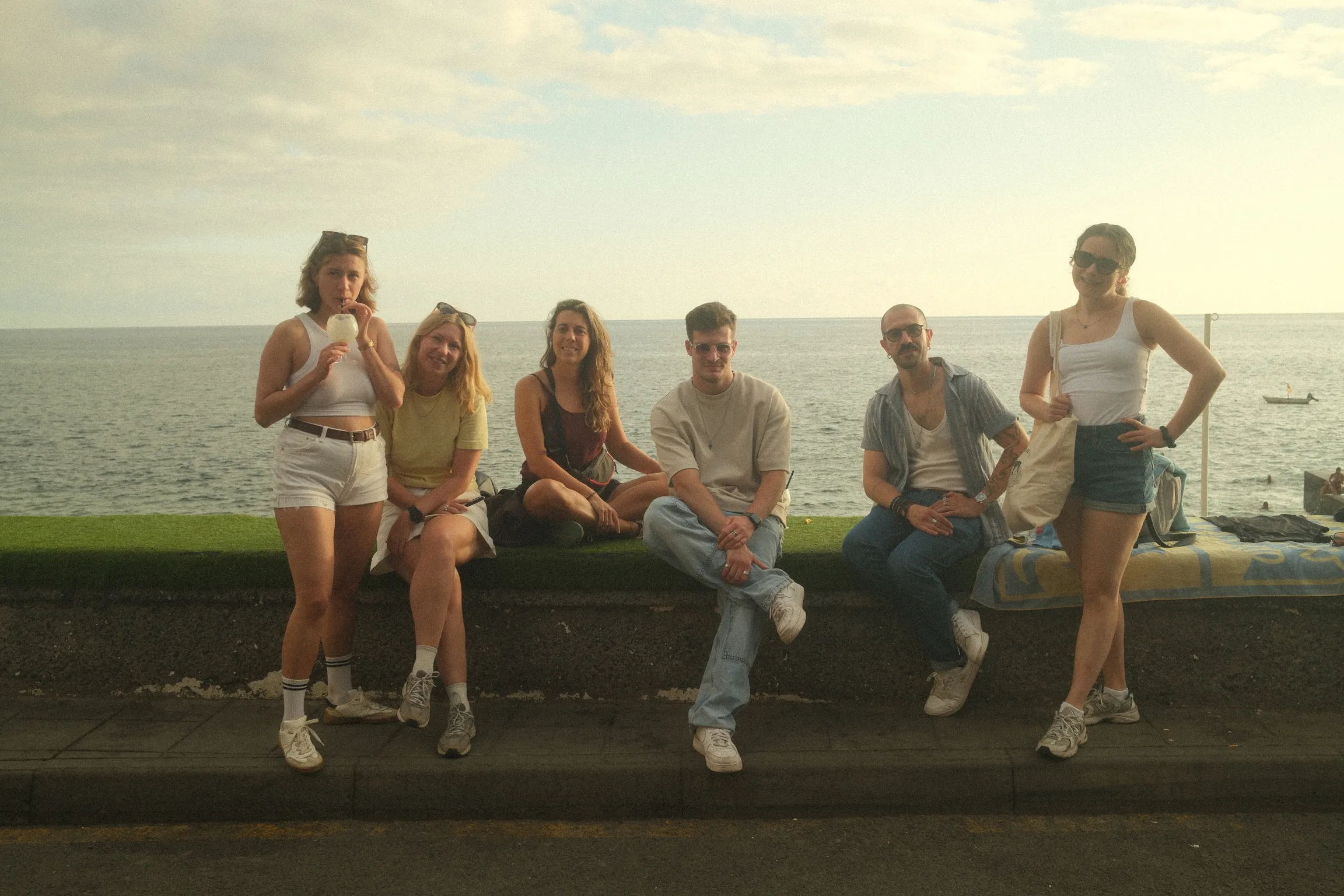
Spreading love through cooking & community.
© 2026 CasaBasilico OÜ (16850261)
All rights reserved.
Design & Branding by ahgoos.com
info@casabasilico.com