
Coliving in Pipa, Brazil with Casa Basilico
Pipa, Brazil is one of the best places in the world for a coliving month. This small beach town in Rio Grande do Norte sits on dramatic cliffs above turquoise Atlantic water, with natural tide pools, warm weather year-round, and a cost of living that makes sense for most nomad budgets. A month of coliving in Pipa runs between €600 and €1,500 depending on room type and what's included. Casa Basilico has run chapters in Pipa since 2024, bringing together groups of 15 to 25 remote workers for month-long stays built around communal cooking, coworking, beach days, and the occasional caipirinha evening that turns into a sunrise situation. Pipa works for coliving because it's small enough to feel like a real community, connected enough to work comfortably, and has food so good you'll forget you came here to work. This guide covers the neighborhoods, costs, internet, food, activities, and what a Casa Basilico chapter here actually looks like.
Why Does Everybody Keep Talking About Pipa?
It started quietly. Pipa got on the nomad radar because it has everything the big Brazilian cities have in terms of vibe and food, without the things that make you nervous at night. It's a small town. The main strip is maybe 500 meters long, there are two main beaches, a handful of streets, and everyone knows everyone after a week.
What it does have: cliffs so dramatic they look fake, a beach (Praia do Amor) with a natural pool at low tide that you'll photograph eighteen times and still not do justice, dolphins you can watch from the clifftops if you wake up before noon, and a food scene that punches way above its weight for a village of 3,000 people.
According to Numbeo's 2025 cost of living data, Rio Grande do Norte is among the most affordable states in Brazil for expatriates. Average monthly costs for a single person outside accommodation run approximately R$2,500 to R$3,500 (roughly €450 to €630 at current exchange rates). Pipa skews slightly higher than inland towns because of tourism, but it's still way cheaper than Florianópolis, São Paulo, or any European destination you're comparing it to.
The digital nomad community noticed. A lot of nomads who came for two weeks in 2022 are still showing up every January.
What Makes Pipa Good for a Coliving Month (and What Doesn't)?
Let's be real about both sides.
What works:
The size is the thing. Pipa is small enough that your whole coliving group will accidentally end up at the same açaí spot by day three. You don't need to plan activities because you'll naturally converge. That shared texture of daily life is harder to create in a city. In Lisbon or Mexico City, a coliving group can scatter. In Pipa, you'll bump into your housemates at every beach, every bar, every taco stand. That's how coliving should feel.
The weather is absurdly good for most of the year. Pipa sits in the northeast of Brazil, where the climate is hot and dry from September through February. Average temperatures hover around 27 to 30°C year-round (World Meteorological Organization data). You can work mornings, hit the beach by 2pm, eat like a king at dinner, and do it again tomorrow. For a month.
The food. Madonna. It gets its own section.
What doesn't work:
Internet is the honest caveat. Pipa is not a tech hub. Most restaurants and cafés have wifi that handles calls and regular work just fine, but don't plan on uploading a 10GB file from a hammock bar. For reliable work, you want a house with its own dedicated fiber connection. Casa Basilico chapters always include this in the setup because we've learned the lesson the fun way.
Getting there is a journey. The nearest airports are Recife (REC) or Natal (NAT). From Natal, it's about 75km south, roughly 1.5 hours by car. There's no direct flight from Europe to Natal on most routes, so you're usually connecting through Lisbon, São Paulo, or Recife. Budget at least 18 to 24 hours of travel from most of Europe.
Where Should You Actually Stay in Pipa?
Pipa has a few distinct zones, and where you land shapes your whole experience.
Centro (the main village): The main strip with restaurants, bars, shops, and the path down to Praia do Centro. Loud at night on weekends, quieter during the week. Good for socializing, less ideal if you want quiet mornings for deep work.
Tibau do Sul: The municipality that technically contains Pipa, about 5km inland. Calmer, cheaper, more local. Worth knowing if you want to escape tourist pricing on groceries.
The cliffside villas above Praia do Amor: This is where you want to be for a group coliving experience. Large houses have pools, space for communal work and cooking, and sunset views that will ruin you for normal office life. They're 5 to 15 minutes walk from the main strip. Casa Basilico chapters use houses in this zone. You get the space to actually live together without being on top of the bars.
Baía dos Golfinhos area: Quieter northern end. Dolphin spotting from the cliffs. Better for smaller groups or couples who want peace and beauty over proximity to nightlife.
For a coliving month, cliffside villas are the move. You need a real kitchen, living space, and room for people to spread out during work hours. Apartments in Centro work if you're solo, but for a group, you want the villa.
See our Brazil chapter details
Can You Actually Work from Pipa?
Yes. With the right setup.
The town has a handful of coworking options. There are dedicated spaces with day passes and monthly memberships, reasonably fast fiber internet, air conditioning, and enough seats that it doesn't feel crowded. As of early 2026, day passes run around R$60 to R$80 and monthly memberships around R$500 to R$700. Not as cheap as you'd expect in a beach town, but workable.
Most coliving groups, including Casa Basilico chapters, solve this by making sure the house itself has the right infrastructure. That means dedicated fiber (not shared building wifi), a proper work area with desk setups, and the kind of arrangement where you can take a Zoom call at 9am without the background noise of someone making caipirinhas three meters away.
For video calls, the time zone is actually useful. Pipa runs on BRT (UTC-3):
It works for most European and American remote workers with schedule flexibility. And the honest truth is that after two weeks in Pipa, you'll find that flexibility you didn't know you had.
The practical advice: test your internet speed on day one. Get a local SIM (Vivo and Claro have the best coverage in Rio Grande do Norte). Have a backup hotspot plan. Then stop worrying about it and go to the beach.
What Does It Cost to Live in Pipa for a Month?
A realistic breakdown for a coliving month in Pipa:
Total range: roughly €1,000 to €2,100/month depending on lifestyle and room type.
For context, a similar quality of life in Lisbon or Barcelona runs €2,500 to €3,500. Madeira is €1,800 to €2,800. Pipa gives you a beach lifestyle at a price that actually makes sense for most nomad incomes.
The real win is day-to-day food. Eating at local restaurants in Pipa (not the tourist-facing strip places) runs about R$25 to R$50 per meal (€5 to €10). A caipirinha is R$12 to R$20. Fresh fish at the market is embarrassingly cheap compared to anything in Europe. You'll spend money on experiences, not on groceries.
See current chapter pricing and what's included
What's the Food Actually Like? 🍽️
Pipa and the broader Rio Grande do Norte region are criminally underrated on the food map. The local cuisine is northeastern Brazilian, and it hits differently from the churrasco-heavy south or the açaí-everywhere Rio scene. These are dishes built for heat, the coast, and community.
Tapioca: Round griddle-cooked flatbreads made from cassava flour, filled with anything from cheese and ham to carne de sol and coalho cheese. You'll have one for breakfast every morning and you will not stop. Ever.
Carne de sol: Sun-dried salted beef, dried in the coastal breeze. Served with macaxeira (cassava), butter, and green onions. It tastes like the northeast smells: hot, sea-salty, and warm. You'll eat it at least twice a week.
Moqueca: Fish stew cooked in dendê palm oil with coconut milk, tomatoes, peppers, and onions. The northeastern version is close to the Bahian style: rich, fragrant, serious. Get it at any of the seafood places near Praia do Centro. Order it for two and eat it for one.
Fresh fish: Because obviously. Red snapper, grouper, mackerel, shrimp the size of your fist. The fishermen bring the catch up in the morning. By noon it's on someone's grill. You'll think about this fish for the rest of your life when you're back in a city supermarket.
Açaí: Not the Instagram smoothie bowl version. The proper thick dark purple paste, eaten slightly frozen with granola, banana, and honey. R$15 to R$25 a bowl. You'll have one every afternoon whether you planned to or not.
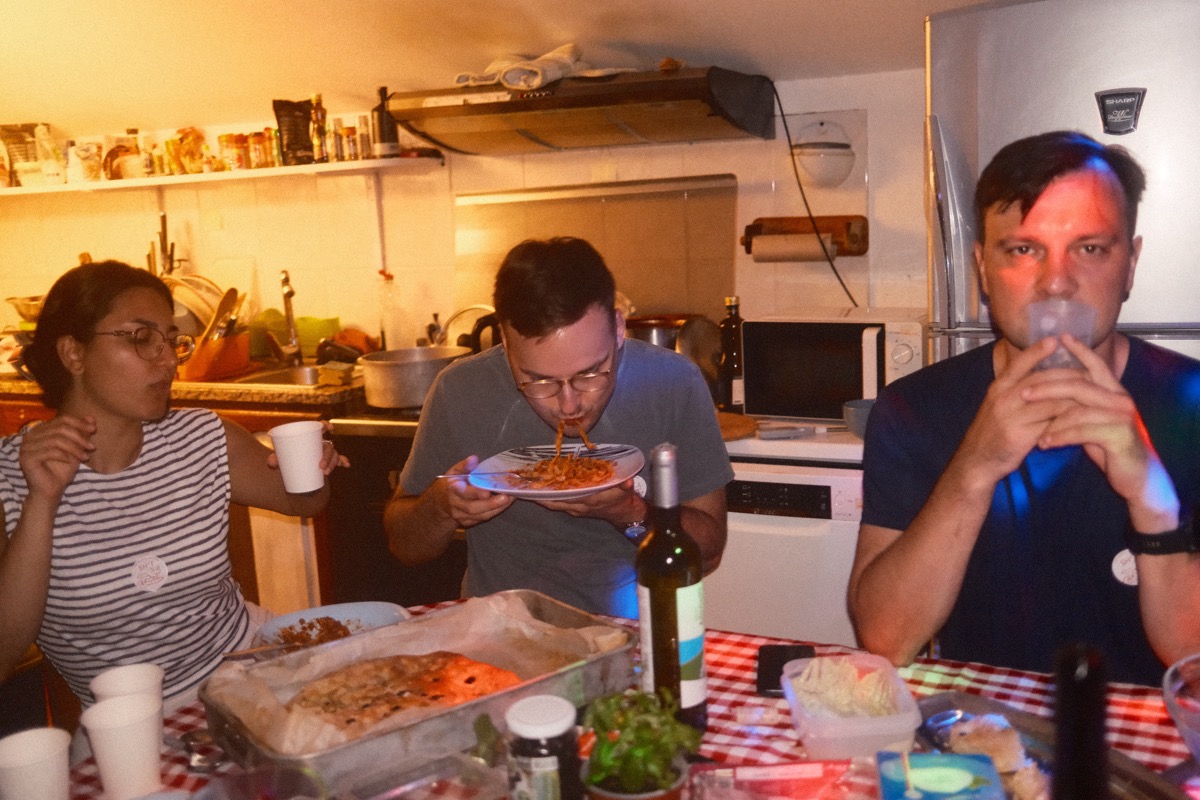
Casa Basilico chapters are built around food. Every chapter includes communal cooking nights where someone from the group cooks for everyone. In Pipa, this turns into competition. Who makes the best moqueca. Whether the Italian contingent can pull off tapioca (spoiler: we're annoyingly good at it). Whether caipirinhas count as a full meal. They don't. But we let it slide.
If you think food is just fuel and eating is mostly transactional, Pipa will fix you.
What we believe about food and community
What Do You Actually Do When You're Not Working?
The common mistake in Pipa is over-planning. You don't need an itinerary. This is what actually happens when you live there for a month:
Week one: Beach every afternoon. You walk the cliff path down to Praia do Amor, find the natural tide pool at low tide, and swim in water so warm it feels fake. You try tapioca for breakfast, eat carne de sol for dinner, and go to sleep at 11pm because you're genuinely tired from being happy.
Week two: You rent a buggy and go further. The sand dunes at Genipabu are about an hour north and they're absurd in the best way. Praia de Sibaúma south of town is quieter and local. You start taking the cliffside trail between Praia do Amor and Baía dos Golfinhos at golden hour because someone in your coliving group showed you the path.
Week three: You've become a regular somewhere. A breakfast tapioca spot, a bar on the strip, a sunset cliffside perch that's become yours. The fisherman who sells directly on the beach knows your name. Someone in the group organizes a boat trip to swim with the dolphins at Baía dos Golfinhos (a real thing you can do for about R$80 per person). You go.
Week four: You're not thinking about leaving, but you know you've squeezed everything out of this place that one month can give. You're tan. You've cooked for 20 people at least twice. You've had conversations on that cliff that you'll remember for years.
That's a Casa Basilico month in Pipa. Not a resort. Not a structured retreat. It's a month of life, compressed and intensified by good people, good food, and a location that strips away everything that doesn't matter.
Is Pipa Safe for Solo Travelers and Digital Nomads?
Yes, with the same awareness you'd apply anywhere unfamiliar.
Pipa is a small tourist town with a lower crime rate than major Brazilian cities. The main precautions are common sense: don't leave valuables unattended on the beach, avoid poorly lit paths at night alone, and use vetted taxis or apps after dark (Uber has limited coverage outside the main strip; local taxi numbers are more reliable).
The town has a visible tourist infrastructure, and locals are overwhelmingly friendly and used to foreigners. Women traveling solo report feeling comfortable here. The community aspect of a coliving stay helps enormously because you're never truly alone when you're part of a group. Someone always knows where you are.
For context, Pipa's safety profile is similar to a European beach resort town. Not zero risk, but not a place requiring significant anxiety or preparation beyond normal travel awareness.
What's a Casa Basilico Pipa Chapter Actually Like?
We've done Pipa twice. January 2024 and January 2026.
The first chapter taught us that Pipa works best as a January destination. The weather is at its driest and most reliable. The town is alive enough that everything is open, but not so packed that you're elbow-to-elbow on every beach. The light in January is golden in a way that the photographers in our group spent their whole month chasing.
A typical day:
Morning starts loose. Whoever's awake first makes coffee. Sometimes this turns into an impromptu communal breakfast. Sometimes people graze in shifts. By 9am, the house settles into a work rhythm. The fiber is solid. Calls happen. Things get shipped. The first couple of days people test the setup; by day three, everyone's found their groove.
Lunch usually pulls people together. Someone makes rice and beans (we've always had a Brazilian member in the group who shows everyone how it's actually done), or a few people walk to a local spot. This is the social anchor of the day.
The afternoon is yours. Beach, explore, extend your work block if you're on a deadline, take a nap. No judgment. We mean it.
Evening starts when someone opens the first beer. From there: aperitivo, someone starts cooking or proposes a restaurant, and dinner happens communally. Always. This is where the real conversations happen.
Twice a week, we do a proper group cooking night. In Pipa, this means someone teaches the group something Brazilian. Moqueca, acarajé, tapioca with five different fillings, brigadeiro for dessert. We've had guests who arrived not knowing how to cook and left the chapter with four dishes they'll make for the rest of their lives. That's not an exaggeration.
It works in Pipa the same way it works everywhere we go: put good people in a beautiful place with good food and get out of the way. The community builds itself. We just make sure the house is right, the food is plentiful, and the caipirinhas are cold.
180+ remote workers have lived in Casa Basilico chapters since 2024. The ones who've done Pipa are the loudest about coming back.
FAQ: Coliving in Pipa, Brazil
Is January the best month for a coliving stay in Pipa?
January is the sweet spot. It falls in the dry season (roughly August to January in the northeast), meaning reliable sunshine and low humidity. The town is active but not overwhelmed. If you can only do one month in Pipa, do January. February and March work too, though the tail end of the carnaval season brings more crowds and higher prices.
Do I need to speak Portuguese to live in Pipa for a month?
Not at all, though a few basic phrases make life warmer. The main strip has enough English speakers to manage. Local markets and residential areas are where your Google Translate gets a workout. Casa Basilico chapters always have Portuguese speakers in the group (we've had Brazilian members on almost every chapter) who become unofficial translators and cultural guides. You'll pick up basic phrases in the first week without trying.
What's the internet situation like for remote work?
Patchy in public spaces, solid in a well-set-up house or villa. Casa Basilico chapters always include dedicated fiber in the accommodation. If you're going independently, confirm that your rental has fiber (not shared building wifi) and test on arrival. A local SIM from Vivo or Claro is your backup plan. For most remote work, including daily video calls, Pipa is workable.
How do I get from the airport to Pipa?
Fly into Natal (NAT) or Recife (REC). From Natal, it's about 75km south, roughly 1.5 hours by car. From Recife, it's about 280km north, around 3.5 to 4 hours. Transfer services run about R$150 to R$250 (€28 to €45) per person from Natal. Book in advance. Casa Basilico chapters coordinate group airport pickups so no one's navigating the arrival alone.
What's included in a Casa Basilico Pipa chapter?
Accommodation in a cliffside villa (shared or private room), all communal cooking events (roughly 3 to 4 per week), organized group activities and day trips, coworking setup with dedicated fiber internet, and community coordination. What's not included: flights, travel insurance, personal food and drinks outside group meals. See the full breakdown on the chapter page.
The next Pipa chapter will fill before most people know it exists. If you want early access before we announce publicly, get on the list.

Spreading love through cooking & community.
© 2026 CasaBasilico OÜ (16850261)
All rights reserved.
Design & Branding by ahgoos.com
info@casabasilico.com