
The future of coliving: what's next for the industry

Coliving is moving away from "desk + bed" bundles toward full lifestyle experiences. The industry is worth around $13 billion in 2024 and projected to reach $65 billion by 2033 (Allied Market Research). It's splitting into two distinct directions: mega-operators building hotel-scale managed buildings in major cities, and small-batch community-first experiences that feel more like a dinner party than a real estate product. The latter is growing fastest among remote workers who've already done Bali and Lisbon and want something more intentional. Key trends shaping the next five years: pop-up and rotating formats that follow seasons, niche communities built around shared identity rather than shared WiFi, a geographic shift toward Latin America and Eastern Europe for value-seekers, and the slow-nomad movement trading rapid city-hopping for month-long roots. Corporate remote work policies are now permanent in most tech sectors. Demand isn't going anywhere.
Is coliving actually growing, or is the hype dying down?
Let's kill the suspense: it's growing. A lot.
The global coliving market was valued at $13.03 billion in 2024. Allied Market Research projects it hits $65.4 billion by 2033; a compound annual growth rate of 17.4%. For context, that's faster than the hotel industry, faster than traditional coworking, and faster than most asset classes that don't involve someone selling you a JPEG.
The fuel for this is remote work, which isn't going anywhere. Gallup's 2024 State of the Workplace found that 28% of fully remote workers have no plans to return to an office, ever. Buffer's State of Remote Work 2024 found that 98% of remote workers want to continue working remotely for the rest of their careers, at least part of the time.
When you don't need an office, you don't need to live next to one. And when you don't need to live next to one, why not spend a month in Oaxaca or Pipa, Brazil instead?
The demand is real. What's changing is what people actually want from a coliving experience.
coliving vs coworking; what's the actual difference
Why are people looking for something different?
Because the first generation of coliving was "Airbnb but with a coworking space bolted on."
That worked for a while. But guests caught on quickly: paying €1,200/month for a shared room in a converted apartment building with 80 strangers, three pod-style desks, and a "community dinner" on Wednesdays doesn't feel like a community. It feels like a hostel charging hotel prices.
The people who've been nomading for more than two years; and there are a lot of them; have done the generic version. They've been to Selina. They've done the 90-day visa run through Southeast Asia. They know the difference between a place that performs community and a place that actually has it.
What they're looking for now is more intentional. Smaller groups. Shared identity, not just shared geography. People who want the same things out of their month. People who'll become actual friends, not just acquaintances you nod at in the corridor.
That's why niche is winning.
What does "niche coliving" actually mean?
A coliving built around something specific; not just "remote workers who want WiFi."
Surfing coliving. Art residencies. Parent-friendly coliving. Wellness-focused programs. And yes, foodie coliving. (That's us. Hi 🍝)
The premise is simple: when you share not just a house but an identity, the community forms faster and sticks harder. You don't have to manufacture connection when everyone around the table already cares about the same things.
We've seen this play out across six chapters and 180+ guests. The people who click fastest aren't always the ones who are most similar professionally. They're the ones who share a love of eating well, cooking together, and finding the best local market in a city they've never been to.
how Casa Basilico works and who we are
Niche coliving is the logical evolution of an industry that started with "co-living = cheaper rent with desks" and is growing toward "co-living = shared experience with specific people who get it."
Is the pop-up format the future, or are permanent bases winning?
Both. But for different people.
Big operators are going the permanent route; large managed buildings in London, Lisbon, Berlin, and Singapore. It's the investment-friendly model. Predictable revenue, real estate assets, scale. Operators like The Collective, Common, and Quarters built this playbook.
Then there's the opposite: pop-up, rotating coliving experiences that chase seasons and novelty. No fixed base. A new city, a new house, a new group every chapter.
pop-up vs fixed coliving; pros, cons, and who each one is for
The pop-up format is winning with a very specific type of nomad: the one who's past the "I just want a good desk" phase and into the "I want a memorable experience with actual humans" phase. They don't want to sign a 12-month lease at a co-living building in Lisbon. They want three or four genuinely good months, in genuinely good places, with genuinely good people.
That's a harder product to build. But the people who find it tend not to leave. Our returning guest rate sits at around 40%. That's not marketing; that's people coming back because something real happened.
Where is coliving expanding geographically?
The next frontier is Latin America and Eastern Europe. Both for the same reason: value.
Western Europe coliving runs €1,500-€3,000/month. Latin America; Brazil, Mexico, Colombia, Argentina; delivers comparable community quality at €900-€1,800/month, often with better weather, better food, and a much higher "wait, I actually live here?" quotient.
Eastern Europe is the European budget alternative. Georgia (Tbilisi especially) has quietly become a major digital nomad hub. Albania, Montenegro, Serbia. Countries where €1,000/month still makes you feel like royalty and visa requirements are straightforward.
Southeast Asia remains strong; Bali, Chiang Mai, and Kuala Lumpur are coliving classics for real reasons; but prices have risen post-COVID. Bali especially has seen costs nearly double since 2022 as demand outpaced supply.
best destinations for remote workers month by month
The operators who follow the value curve, who can build community in less obvious destinations before everyone else catches up, will have a serious advantage over the next five years.
How is the slow nomad movement changing coliving demand?
"Slow nomading" is the rebranding of something that always made sense: staying somewhere long enough to actually experience it.
The original digital nomad fantasy was rapid hopping; new country every three weeks, laptop bag always packed, Instagram full of airport lounges. That fantasy aged poorly. Constant movement is exhausting, expensive, and lonely. It turns out that changing cities every ten days means you're always the new person, always rebuilding from zero, always optimizing logistics instead of living.
The slow nomad movement is the correction. Stay one month minimum. Learn the neighborhood. Cook local food. Build actual routines. Make actual friends.
This directly benefits coliving operators who do minimum monthly stays. Our model is one month minimum; not because of some arbitrary policy, but because we've learned that community doesn't form in ten days. It forms over dinners, over shared cooking disasters, over the third time you get lost in the same neighborhood together.
Data backs this up. According to Nomad List, the average digital nomad now stays in a destination for 51 days; up from 28 days in 2019. The trend is moving toward longer stays, and coliving experiences designed around that length are the primary beneficiary.
What role does food play in the future of coliving?
Bigger than anyone expected. Including us, and we built our whole thing around it.
When we started Casa Basilico, "foodie coliving" felt like a niche within a niche. Would enough people pay specifically for a coliving experience centered on food? The answer was yes; and the reason goes deeper than just enjoying a good meal.
Food is the fastest community-builder on the planet. Share a table, share a meal, share the cooking; and you skip three months of polite awkwardness. We've watched people who arrived as strangers become genuinely close over a carbonara in the first week. We've seen someone who "doesn't really cook" end up running a group pasta night by week two.
The broader industry is catching on. More operators are investing in communal kitchens, culinary programming, and local food experiences as core offering, not optional extras. The insight that food is community infrastructure is spreading.
The future operators who nail the food experience; not as a differentiator, but as a design principle; will own the most loyal segments of this market.
Is coliving becoming more mainstream or staying niche?
Both ends are growing in opposite directions.
The mainstream end is being absorbed into the rental market. In cities like London, Berlin, and Tokyo, coliving is increasingly just "managed shared housing"; rebranded, slightly better-designed apartments with some light social programming. That segment will grow and eventually merge with the broader short-term rental market. Fine for what it is.
The niche, experience-first end is going the opposite direction: smaller, more intentional, harder to get into, higher value per month. These are the operators building waitlists and communities, not just filling beds.
Neither is wrong. They're just serving different needs at different price points.
If you want predictable accommodation in a city you already know, the mainstream product works. If you want your month somewhere new to actually change something; the people you meet, the way you think about work, what you want next; you need the other thing.
We're firmly in the second camp. Not because we decided to be niche strategically, but because the guests who found us told us what they needed. We just kept building it.
What will coliving look like in 2030?
A few confident predictions:
The big players get bigger. Institutional capital will keep consolidating the "managed building" segment. Think WeWork for living; branded, consistent, global. Fine for what it is.
The indie operators get more distinct. Small operators who survive the next five years will do so by being genuinely unreplicable; specific communities, specific vibes, experiences that larger players can't manufacture at scale. The Casa Basilico of 2030 isn't trying to be The Collective. It's doing the thing The Collective can't.
AI doesn't replace community. Every trend piece about coliving mentions "AI matchmaking" for roommates. Sure. But the meals, the late conversations, the shared adventures can't be algorithmically produced. The operators who remember this will outlast the ones who forget it.
Latin America becomes the dominant nomad region. Better value, better weather, better food, stronger community infrastructure. The shift is already underway.
Pop-up format grows. As nomads become more experienced, they want curated experiences, not just addresses. The chapter model; time-limited, community-first, location-specific; is better at delivering that than any permanent building.
We're genuinely excited about all of it. And, fine, a little smug; because we've been doing the thing everyone's now calling "the future" since our first chapter in Las Palmas in 2024.
Come find out what the future of coliving tastes like
We're not building the future of coliving in a boardroom or a trend report. We're building it in kitchens in Mexico and beach towns in Brazil, one chapter at a time, with groups of people who showed up as strangers and left as something closer to family.
If you want to be part of the next one; apply here and let's make it happen. ❤️
See also: Coliving Supply And Demand
FAQ
How big is the coliving market right now?
The global coliving market was valued at approximately $13 billion in 2024. Allied Market Research projects it reaches $65.4 billion by 2033, growing at a compound annual rate of 17.4%. For comparison, the global hotel industry grew at around 4-5% annually over the same period.
What's the difference between pop-up coliving and traditional coliving?
Traditional coliving means fixed buildings in major cities; you move in, you have a desk and a bed, maybe a community dinner on Wednesdays. Pop-up coliving is time-limited and location-rotating: you join a specific group of people for a specific chapter in a specific place. The experience is more curated and more intense; and tends to produce stronger community as a result.
Is coliving cheaper than renting an apartment?
In major Western European cities, quality coliving is usually comparable to renting a furnished apartment once you factor in utilities, WiFi, and coworking access. In Latin America and Eastern Europe, coliving can be cheaper than equivalent renting; with community included at no extra charge.
What is the slow nomad movement?
Slow nomading means staying in one destination for a month or more instead of hopping every few weeks. Data from Nomad List shows the average nomad stay has grown from 28 days in 2019 to 51 days today. Slower is better for work, wellbeing, and actually experiencing a place rather than just passing through it.
Is coliving right for people who aren't "social" or "community" types?
Honestly, most of our guests say exactly this before they arrive. Most of them are wrong. You don't have to be a social butterfly; you just have to be willing to share a table for dinner. The rest tends to happen on its own when you're around the right group of people.

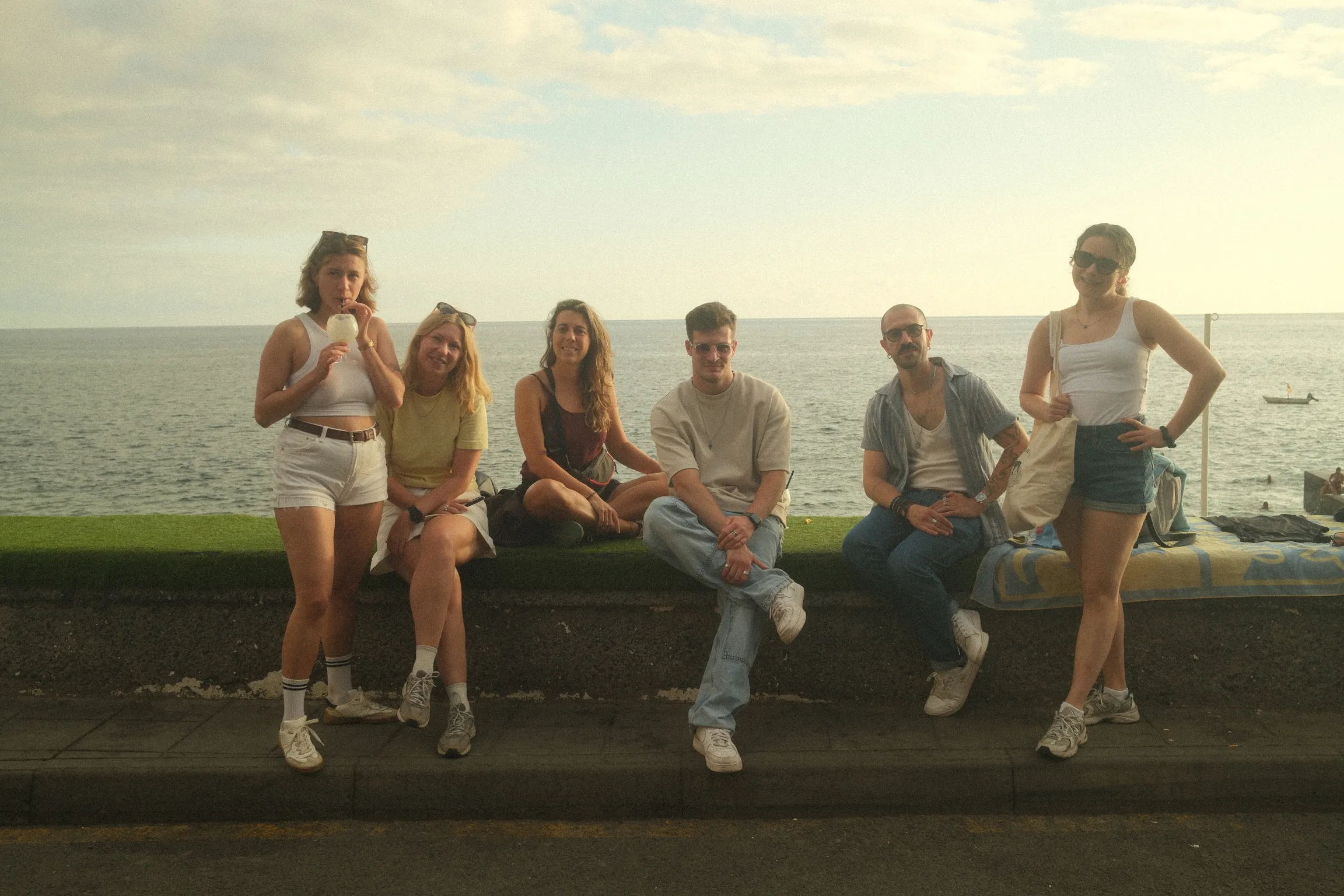
Spreading love through cooking & community.
© 2026 CasaBasilico OÜ (16850261)
All rights reserved.
Design & Branding by ahgoos.com
info@casabasilico.com