
We've Hosted 200+ Nomads: Here's What We Learned
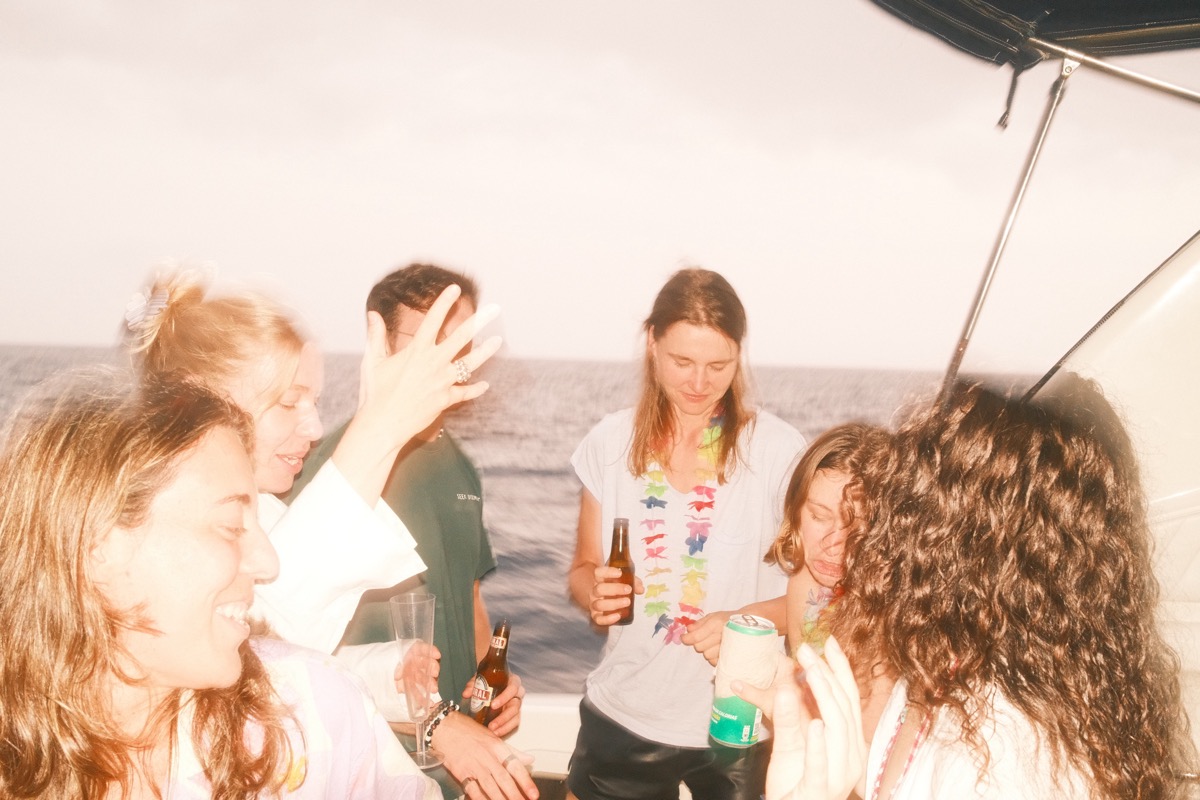
After five chapters, four countries, and 200+ digital nomads through our doors: most people don't know what they need until they find it. They book a coliving for the WiFi and the flexible lease. They stay for the pasta and the 2am conversations that somehow fix their career plans. What we learned is that community builds in the kitchen, around a shared pot of something that smells incredible. Loneliness is the epidemic in remote work, and the people who show up at our door are often running from it without knowing that's what they're doing. The food isn't a perk. It's the technology. And the nomads who thrive in our chapters aren't the ones with the best laptops. They're the ones who show up for dinner.
We started Casa Basilico because Fabio wanted an excuse to cook for large groups of people and Juls wanted somewhere interesting to live for a few months. That's honestly most of the founding story. We didn't have a grand theory about community or loneliness or the future of remote work. We had a kitchen and a vague idea that people who like good food probably make good housemates.
Five chapters later: Las Palmas, Tarifa, Madeira, Brazil twice, and now Oaxaca. We've watched 200+ people walk through our doors with laptops and existential uncertainty, and walk out with friends they still message at weird hours. We've seen proposals (yes, at the dinner table), breakups (also at the dinner table), career pivots, panic attacks, and one guy who arrived not speaking to his dad and left having called him from our kitchen.
We've learned a lot. Most of it we didn't expect.
Who actually shows up at a foodie coliving?
The short answer: not who we expected.
We assumed our guests would be foodie-first nomads who specifically wanted to eat well. And some of them are. But a much bigger slice of the 200+ people we've hosted booked with us because they were lonely, burned out, or somewhere between jobs and needed a soft landing that felt like a home rather than a hotel.
A 2023 Buffer State of Remote Work report found that 21% of remote workers cite loneliness as their biggest struggle, the second biggest challenge after collaboration. Another study from Harvard Business Review found that remote workers feel socially isolated at nearly twice the rate of office workers.
We didn't set out to solve a loneliness crisis. We set out to make good pasta. But the guests kept showing up carrying the same thing in their luggage: a quiet ache for belonging that their Notion dashboard and Slack channels couldn't fix.
What we've seen across all our chapters:
These aren't lonely weirdos. They're normal, successful people who built careers that work but lives that feel strangely thin. Casa Basilico is where they go to remember what thickness feels like.
What do nomads actually need (spoiler: it's not the ergonomic chair)?
We spent a lot of time in our first chapter worrying about the wrong things. We agonised over desk height and monitor availability. We stress-tested the WiFi repeatedly. We put a printer in the coworking space that literally nobody ever used.
What people actually needed:
A reason to stop working. This is the big one. Remote work has dissolved the boundary between "at work" and "not at work," and a disturbing number of our guests arrive working 10-12 hour days not because their jobs demand it but because work fills the void. The best thing we ever did was make dinner non-negotiable. Not as a rule, as a ritual. You could skip it, but the alternative was eating alone in your room while you heard laughter from downstairs. Nobody skipped twice.
Permission to be a beginner. At whatever. We've had senior engineers who'd never made pasta from scratch, founders who couldn't dice an onion, consultants who'd never had a dinner party. There's something weirdly equalising about standing in a kitchen not knowing what you're doing. Your job title doesn't follow you there.
Low-stakes reasons to talk to strangers. The hardest part of meeting new people as an adult isn't the talking, it's finding something to do while talking so you don't have to stare at each other awkwardly. A chopping board fixes this instantly. You can have an entire conversation about your childhood, your biggest professional failure, or why you really left Amsterdam, all while pretending to focus on onions.
Proof that people can still surprise them. We say this gently, but a lot of our guests arrive slightly jaded. They've done the coworking spaces, they've done the digital nomad Facebook groups, they've had enough "what's your ARR?" conversations at coworking cafes to last a lifetime. They're not sure real connection with strangers is still available to them. Then someone teaches them how to make tamales and they revise that assumption.
what coliving actually means in 2026
Why does food keep being the thing?
Because it works, and the science backs us up.
Robin Dunbar (the Oxford professor famous for Dunbar's Number, the idea that humans can maintain stable relationships with about 150 people) also studies how humans form bonds. His research found that shared meals are one of the most consistent triggers for social bonding and the release of endorphins. Not team-building exercises. Not icebreaker games. Not organised activities. Dinner.
More specifically: cooking together, eating together, and cleaning up together. The full ritual. There's something about the whole cycle (the chaos of prep, the communal eating, the mild drudgery of dishes) that mirrors the structure of genuine domestic life in a way that a wine-and-networking event never does. You can't fake domestic life. You can only live it.
We've cooked:
The pattern is the same every time. Cooking something together that takes longer than 20 minutes creates a context where conversation deepens naturally. By the time the food is ready, you know things about the person next to you that you wouldn't have learned in a week of coworking side by side.
why we built a coliving around food
What breaks community before it starts?
This is the stuff nobody talks about in the "we built a beautiful community" blog posts. It doesn't always work.
Guests who check in without checking in. Some people arrive, drop their bags, disappear into their room with headphones, and appear only for checkout. This is fine. They paid for a room and that's their right. But it creates a small gravitational drag on the group. The ones who've watched it happen know what we mean. You can't force community and you shouldn't try, but you can design situations that make isolation feel less comfortable than participation.
Too much organised programming. We've experimented with this. When there are too many scheduled activities, two bad things happen: guests start treating the coliving like a camp where someone else is responsible for their fun, and the spontaneous stuff that actually creates memories gets crowded out. The best chapters we've run have maybe one planned thing a week. Everything else erupts organically. The tamale-making wasn't on the calendar. The salsa dancing in the living room at midnight wasn't on the calendar. The best stuff never is.
Unaddressed frictions. A small thing left to fester becomes a big thing. We learned this in our first chapter and we learned it repeatedly until it stuck. Someone plays music too loud at 7am? You say something warm and direct on day two, not day twelve. Someone's monopolising the kitchen for hours during peak cooking time? You have a five-minute conversation, not a passive-aggressive note. We're not great at conflict naturally (who is?), but hosting 200+ people in close quarters has turned us into reluctant experts in the kind of direct, kind communication that should probably be a secondary school subject.
Guest mix that's too homogeneous. Counterintuitively, chapters where everyone is in tech, everyone is 30, and everyone has the same background tend to be slightly less vibrant. The chapters that crackle have a mix: nationalities, industries, career stages. The freelance photographer and the finance person and the teacher who's trying to figure out what comes next have weirder, richer conversations than three product managers comparing OKR frameworks.
What surprised us most?
Honestly, how quickly it happens.
We expected the bonding to take weeks. You move in with strangers, you're polite and surface-level for a while, then slowly you crack each other open. That's how it works with flatmates. That's how it worked in university.
Casa Basilico chapters don't work like that. The shared kitchen accelerates everything. We've had guests who arrived on a Saturday and by the following Tuesday were having the kind of conversation they told us they hadn't had with anyone in months. Something about the Casa Basilico structure creates a safe context for real honesty faster than most environments: the food, the communal spaces, the fact that everyone is a stranger so nobody has status to protect.
We've seen 48-hour friendships that are still going two years later. Complete strangers at breakfast, inseparable by dinner. People who exchanged numbers on day one and ended up traveling together for a month after the chapter ended.
The science of this isn't mysterious. Psychologist Arthur Aron's research on interpersonal closeness found that mutual vulnerability accelerates connection more than shared experience alone. The famous "36 questions to fall in love" study came out of this work. What we've discovered by accident is that a shared kitchen creates natural conditions for mutual vulnerability: you're bad at something, someone helps you, you laugh about it, you tell them something real about yourself. Repeat fifty times over thirty days. The connections that form aren't shallow.
what the Oaxaca 2026 chapter looks like
The stuff we got completely wrong
In the spirit of honesty:
We underestimated the prep. The first chapter was chaotic in ways that were charming but also stressful. We got better at it. Every chapter now has an Info Hub, a structured arrival process, and about fifteen things we wish we'd known in round one.
We thought the food would scare people. "Foodie coliving" made us worry we'd attract only people who could confidently make risotto. The opposite was true. The cooking component attracts people who want to learn, not people who already know. Most of our guests arrive food-curious, not food-skilled. That turned out to be better.
We thought we'd be doing less work. Ha. Madonna. Running a pop-up coliving is a full-time job wearing the costume of a fun holiday. It's worth it, but anyone thinking about this as a passive income play should close this tab immediately.
We thought we'd get tired of hosting. We haven't. Every chapter we've ended has left us immediately planning the next one. The energy that comes from watching a group of strangers become a group of friends, watching someone's face when they taste something they made themselves for the first time, watching people arrive contracted with stress and leave expanded. It refills something in us every time.
What we'd tell anyone thinking about doing a coliving
Come with the intention of participating, not just inhabiting. There's a huge difference between someone who joins a chapter and someone who passes through one. The people who get the most out of Casa Basilico are the ones who show up at dinner, say yes to the spontaneous plans, offer to help with prep even when they don't need to, and bring something of themselves to the house.
You don't need to be social 24/7. You don't need to be extroverted. Some of our most beloved guests were quiet people who appeared for dinner every night and said three sentences each time. But they were present. They were there. Community doesn't require performance, but it does require showing up.
The nomad life can hollow you out if you're not careful. Accumulating stamps in your passport and coworking cafes in your photos while slowly losing the thread of what you actually care about and who you actually like. We see it in the guests who arrive. We've felt it ourselves. Casa Basilico, at its best, is a place where you remember what you actually like: the food, the laughing, the 2am conversations that matter, the people who will be texting you from across the world two years from now.
Come hungry. For the food and the rest of it.
why slow travel is the secret to actually enjoying nomad life
FAQ
Do I need to be a good cook to join Casa Basilico?
No. Not even a little. We've hosted people who didn't know how to boil water and people who'd been cooking professionally for a decade, and both types had a great time. The kitchen is collaborative. Someone will always show you what to do. The willingness to try is all we ask for.
What's the minimum stay?
One month. This is by design. Short stays don't allow the community to properly form, and the magic we keep talking about in this post doesn't happen over a long weekend. A month is the minimum for the slow-nomad experience to actually work. Many guests stay longer.
What kind of work setups are available?
Every chapter has a dedicated coworking space with solid WiFi (we test obsessively; we know what you need). The setup varies by location, but you'll always have a proper desk, good light, and enough isolation from the kitchen chaos to actually get work done during business hours. After business hours, no promises.
Are chapters good for solo travelers?
Most of our guests arrive solo. It's probably the best solo travel experience available because you land in a ready-made community on day one, no awkward hostel conversations required. The food brings everyone together in a way that makes meeting people natural instead of forced. You won't feel alone for long.
How does Casa Basilico compare to a regular coliving?
The food is the difference, and it's bigger than it sounds. A regular coliving gives you a desk and a room. Casa Basilico gives you a dinner table, and everything that follows from it. If you've read this far, you probably already know which one you're actually looking for.
200+ nomads in, we're still learning. Every chapter teaches us something new, about community, about what people need, about how fast strangers can become family when you give them a good reason to. We're not done experimenting. We're just getting started.
Oaxaca 2026 is filling up. Come find out what chapter six teaches us, and let us cook for you.

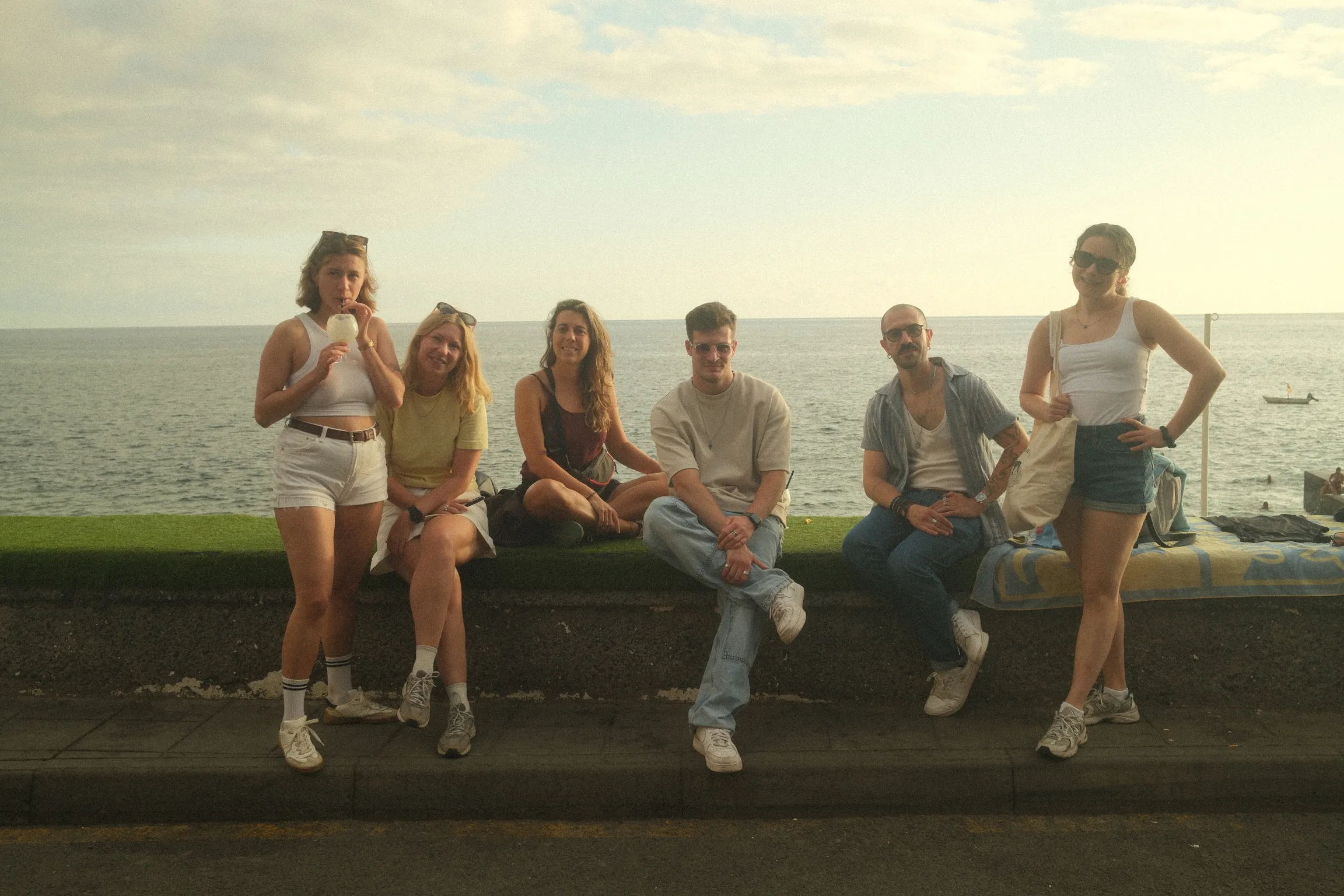
Spreading love through cooking & community.
© 2026 CasaBasilico OÜ (16850261)
All rights reserved.
Design & Branding by ahgoos.com
info@casabasilico.com