
Madeira's Best Surf Spots for Remote Workers
Madeira's Best Surf Spots for Remote Workers
Madeira has year-round surf across a 150km coastline, with spots for every level. Beginners should head to Machico or Porto da Cruz on the calmer east and north coasts. Intermediate surfers will love Ribeira da Janela. Advanced surfers make pilgrimages to Jardim do Mar and Paul do Mar, two of Europe's most respected reef breaks. As a base, Ponta do Sol on the southwest coast puts you within 20-40 minutes of the best waves, with fiber internet fast enough to submit a pull request between sets. The island's Atlantic swell comes mostly from October through April, but the water never drops below 18°C, and surf schools run year-round. If you've been eyeing a month in Madeira that combines proper remote work with learning to surf, it's doable. The island just doesn't advertise itself well on surf maps, which is part of why it still works.
Madeira doesn't market itself as a surf destination. That's why it's good.
You won't find it sandwiched between Bali and the Canaries on the standard nomad surf listicles. The infrastructure isn't flashy. There's no surf camp with a rooftop bar charging €40 for a lesson and posting the same drone shot seventeen times. What Madeira has instead: consistent Atlantic swells, almost no crowds at the good breaks, 300+ days of sun on the south coast, gigabit fiber internet in a village that the Portuguese government turned into a digital nomad hub in 2021, and food that makes you want to cancel your flight home.
For remote workers who surf, or want to learn, it's a strange little paradise that not enough people know about yet.
Which surf spots are best if you're just starting out?
Learning to surf in Madeira is easier than you'd think, given the island's volcanic geology and the cliff-heavy coastline. Know where the geography works in your favour.
Machico is the easiest call for beginners. On the northeast coast, it's sheltered from the dominant northwest swell that batters the exposed west side. The waves here are small, consistent, and forgiving. There's a sandy beach (genuine sand, unusual for Madeira, which is mostly rock and pebble), and Madeira Wind Adventures runs beginner lessons year-round. The town has good restaurants, easy parking, and a relaxed energy. If you've never stood on a board, start here.
Santa Cruz is ten minutes from the airport and has a similar sheltered quality on calm days. Smaller swells, sandy bottom, gentle breaks. Some locals use it as a longboarding spot when conditions are right. Convenient if you're staying in Funchal.
Porto da Cruz on the north coast deserves a mention. More exposed than Machico but with a right-hander that works well for intermediates, and Surf Clube Porto da Cruz teaches beginners when conditions are suitable. The north coast gets more swell, so check the forecast first. The drive there from Ponta do Sol, through the mountains via the old road, takes 45 minutes and is worth doing just for the scenery.
Ribeira da Janela, also on the north coast, has become a quiet favourite for intermediate surfers chasing fewer crowds. The waves are beachier and more accessible, and the area feels like one of those corners of Madeira that tourism has mostly left alone. You might have the water to yourself on a weekday.
One honest note about the north coast: conditions change fast. More rain, more wind, more swell than the south. Beautiful and a bit unpredictable. Check Windguru the evening before rather than just showing up.
Where do intermediate and advanced surfers actually go?
Here Madeira gets serious.
Jardim do Mar is one of the best reef breaks in Europe, and that's not hype. It consistently appears on Europe's top ten wave lists, and when winter swell hits, it draws experienced surfers from across the continent. The wave is a powerful left-hander that breaks over a sharp rock reef about 150m offshore. On a good swell from October through March, it holds six-to-eight-foot faces. The village is tiny and has been fighting development for years to protect the break. In the early 2000s, construction of a sea wall altered the wave and sparked one of Portugal's first organised surf protests. The community here is tight and serious about the ocean.
Don't paddle out at Jardim do Mar as a beginner. It's reef, it's shallow in places, and it gets heavy fast. But watching it on a big day from the cliffside café above the village is worth the drive alone.
Paul do Mar, five minutes along the coast, has a longer and slightly less punishing left that suits intermediate surfers better than Jardim's main break. On smaller days it's a genuine playground. On a big northwest swell, the whole southwest coast fires at once and you'll mostly just watch.
Ponta Preta near Arco da Calheta is another respected break on the southwest coast. A left-hand reef that works best on northwest swell with southwest or north winds. Intermediate to advanced. The consistency varies, but when it's on it's properly good.
Ribeira Brava, on the south coast and close to Ponta do Sol, occasionally produces quality waves when swell wraps around the island. Not the most reliable spot, but worth checking on active swell days if you don't want to drive.
Can you actually combine surfing with remote work in Madeira?
Yes, and it's simpler to pull off than you'd expect.
Ponta do Sol is the base that makes it work. In 2021, the Portuguese government turned it into a digital nomad village: new coworking infrastructure, better connectivity, a community program that brought in several hundred remote workers over two years. The program is over, but the infrastructure and the people stayed. Fiber at 200+ Mbps is standard. The coworking space works. And the network of nomads who made it their home is still largely there.
From Ponta do Sol you can:
- Drive to Jardim do Mar in 20 minutes
- Reach Paul do Mar in 25 minutes
- Get to Porto da Cruz in 45 minutes
- Reach Machico in about 60 minutes via the expressway
The south-facing coast keeps Ponta do Sol sunny and sheltered even when the north is getting battered. Surf in the morning, work through the day, eat a proper dinner. It's undramatic to execute.
The one honest caveat: Madeira is not flat. Renting a car (you should, for the surf spots) means mountain driving. Most people adapt quickly. Some find it exhausting after a few weeks. Worth knowing before you commit to three months.
Our Madeira location page covers the practical side: coworking spots, neighbourhoods, what things actually cost. Worth a read before you decide.
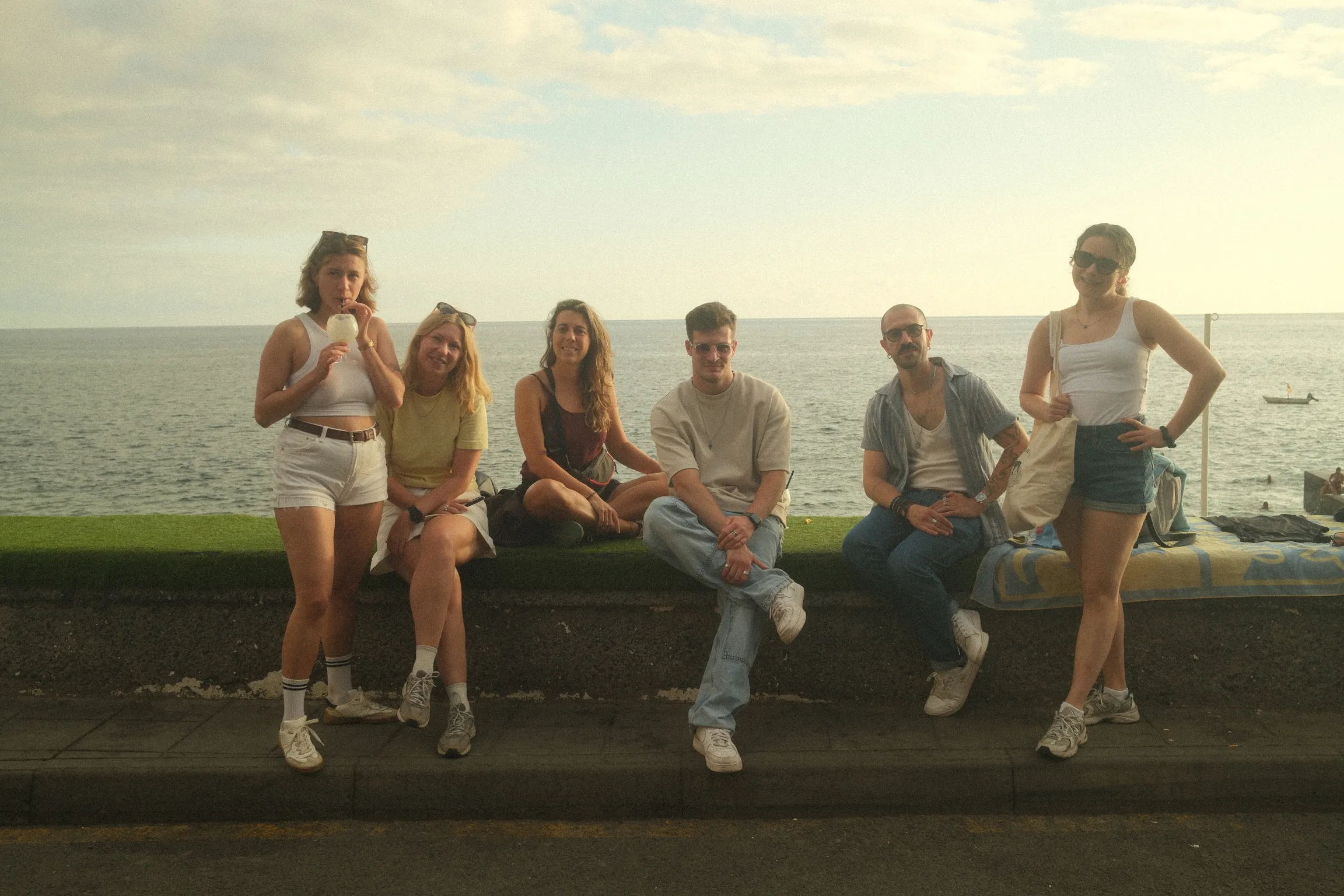
We ran a chapter of Casa Basilico at the Banana House in Ponta do Sol, and the rhythm that emerged was organic: morning waves for the surfers, afternoon coworking sessions, communal dinners that ran long because nobody wanted to leave the table. You don't have to plan it. It just happens when you put the right people in a kitchen. More on that in our piece on what happens when strangers cook together.
Between surf and work, Madeira's levada trails are some of the best walking in Europe, and worth doing at least once. We wrote a full guide to hiking the levadas as a digital nomad if you want the actual good routes, not just the tourist ones.
When is the best time to surf in Madeira?
Depends what you're after.
October through March is swell season. The Atlantic powers up, northwest swells arrive with regularity, and the southwest coast spots come alive. Jardim do Mar and Paul do Mar are at their best. Water temperature sits around 18-20°C, which means at minimum a 3/2mm wetsuit, sometimes a 4/3mm with booties in December and January. The upside: the island is quieter, accommodation is cheaper, and you'll have the breaks mostly to yourself.
April through September is mellower. Swells are smaller and less consistent. The north coast flattens out. But this is when beginners thrive, when Machico and the east coast spots are at their friendliest, and when Madeira is beautiful to be outside in. Water climbs to 22-23°C. A shorty works. The island fills with tourists from June onward, but the surf spots stay uncrowded because most visitors aren't looking for waves.
Madeira's water temperature is one of its quiet advantages. The Atlantic keeps it mild year-round. Even in winter you're not dealing with the conditions of northern Europe. Real swell without suffering for it.
Do you need to bring your own surf equipment?
No. The main surf spots all have rental options nearby, and several surf schools rent boards without requiring a lesson. Expect to pay €20-30 per day for a board and wetsuit. Foam boards for beginners are easy to find. Shortboards are available at shops near Jardim do Mar and Paul do Mar.
If you're travelling with a board bag, Madeira's airport handles them fine. Most airlines charge €40-80 one way for surf equipment depending on route and season. Budget for it if you're bringing a quiver.
What to pack regardless:
- Reef booties if you're surfing the southwest breaks (the rock is sharp)
- Wax, which is harder to find at good prices in smaller villages
- Rashguard for summer sessions
- Sunscreen: the UV index in Madeira hits harder than you expect, including in autumn
Where to stay in Madeira as a surf-focused digital nomad
Ponta do Sol is the obvious answer, and not just because we run a place there. The combination of fast internet, community, proximity to the southwest breaks, and the nomad village infrastructure makes it the most logical base. It's a small village, which means you'll run into the same people at the café and in the water. That's a feature.
Calheta is another solid option, a small resort town with a marina and a sandy beach (imported sand, but nice). Close to Jardim do Mar and Paul do Mar, slightly more polished than Ponta do Sol. A few restaurants worth knowing. Good if you want a quieter scene without the nomad community vibe.
Funchal is the capital and has the most infrastructure but is the furthest from the good waves. Fine for a few days, not ideal as a surf base unless you're renting a car every day and don't mind the drive.
Madeira's food is one of the island's better-kept secrets. Our Madeira food guide covers where to eat without feeling like a tourist.
If you want a month in Madeira with meals sorted, a community of remote workers around you, and surf built into the rhythm of the week, check out our Madeira chapter. We run pop-up coliving stints at the Banana House in Ponta do Sol, and it has a tendency to make a month go by embarrassingly fast.
Come for the waves. Stay for the food.
Madeira doesn't shout. It just delivers, consistently and quietly, without making you feel like you got there too late.
If you want to spend a month somewhere that takes your remote work seriously and your morning surf just as seriously, it's one of the better bets in Europe right now. Not because someone told you to go there. Because it works.
We run pop-up coliving chapters in places worth staying. If Madeira is next on your list, join our waitlist at /join-us and we'll let you know when spots open.
FAQ
Is Madeira good for beginner surfers?
Yes, especially on the east coast at Machico and in sheltered summer conditions. Madeira has several surf schools that run beginner lessons year-round. May through September brings smaller, friendlier waves and warmer water. The important caveat: most Madeira breaks are reef rather than sand, so beginners should stick to the sandier east coast spots, Machico in particular, until they've got some board time under them.
Do you need a car to surf in Madeira?
Honestly, yes. The surf spots are spread across a 150km coastline and public transport doesn't reach most of them reliably. Renting a car for €25-40 per day is worth it. From Ponta do Sol, you can reach most southwest coast breaks in under 30 minutes.
What wetsuit do you need in Madeira?
Summer (May-September): a 2/2mm shorty or even boardshorts/bikini is fine with water reaching 22-23°C. Winter (October-March): a 3/2mm is the minimum; a 4/3mm with booties for December through February when the water dips to around 18°C. Most surf schools rent wetsuits alongside boards.
Is the internet actually good enough to work remotely in Madeira?
Yes. Ponta do Sol has had fiber infrastructure since the digital nomad village program launched in 2021, and speeds of 200+ Mbps are widely available. Funchal and the main south-coast towns are well-connected. More remote north coast spots can be patchier, so check accommodation reviews specifically for connectivity if you're staying off the beaten track.
Can you surf every day in Madeira?
Not if you're chasing quality surf every single session. October through March brings consistent Atlantic swell and the southwest coast fires regularly. In summer it can go flat for days at a time, especially on the south coast. The north coast is more reliably wavy but less predictable in terms of quality. Checking Windguru or Magicseaweed the evening before is standard practice on the island.

Spreading love through cooking & community.
© 2026 CasaBasilico OÜ (16850261)
All rights reserved.
Design & Branding by ahgoos.com
info@casabasilico.com