
Best Coliving in Italy for Digital Nomads
Best Coliving in Italy for Digital Nomads
Let's be real. You didn't start dreaming about coliving in Italy because of fast fiber internet and competitive coworking rates. You started dreaming about it because somewhere between a YouTube video and a plate of cacio e pepe, you thought: what if I just lived here for a while?
Good instinct. Italy is one of the most underrated coliving destinations in Europe — if you know where to go. The mistake most nomads make is defaulting to Rome or Milan, burning through their budget in two weeks, and leaving convinced Italy is too expensive. It's not. You just went to the wrong place.
This guide covers the cities that actually make sense for remote workers, what you'll realistically spend, how the visa situation works, and — because this is us — where to eat while you're there.
Why Italy Works for Coliving
Italy has something most "nomad hotspots" are missing: a real sense of place. You're not living in a bubble of Airbnbs and smoothie bars. You're sharing a neighbourhood with people who've been there for generations, buying your groceries from the same guy who sold them to your host's nonno.
The coliving infrastructure has improved sharply in the past few years. More operators, better spaces, and a government that's finally started taking the digital nomad visa seriously. Internet in urban centres is no longer the joke it used to be — most coliving spaces and coworking hubs sit on 100 Mbps+ fibre.
The catch: Italy rewards slow travel. One month minimum is ideal. Less than three weeks and you're just a tourist with a laptop.
Why Slow Travel Is the Ultimate Nomad Lifestyle
The Best Cities for Coliving in Italy
Bologna — The One Everybody Overlooks
If you ask us where to base yourself for a month in Italy, Bologna wins. University town, red-brick arcades, the best food market in the country (Mercato di Mezzo, we said what we said), and a pace of life that doesn't try to kill you.
The nomad scene here is small but genuinely good. Coworking spaces like Kilowatt and Abilmente are well-run and social. Rents are reasonable by Italian standards. And the food: mamma mia. This is the city that invented mortadella, tortellini, and the ragù the rest of the world incorrectly calls Bolognese. You will not go hungry.
Internet: 50–150 Mbps at most coworking spaces. Fibre available in most apartments.
Best for: Nomads who want a proper Italian life experience without the tourist tax.
Naples — Loud, Cheap, Unforgettable
Naples gets a bad reputation from people who visited for 48 hours and didn't know where to go. Stay a month and you'll understand why it has the most loyal expat community in Italy.
The cost of living runs well below northern Italy. The food scene might be the best in the country (more on this below). The Circumvesuviana line gives you day trips to Pompeii, the Amalfi Coast, and Herculaneum without renting a car.
The honest cons: traffic is chaotic, bureaucracy is a contact sport, and wifi reliability varies more than it should. Come with backup mobile data.
Internet: Variable. 30–100 Mbps in good coworking spaces. Bring a local SIM (Iliad or TIM) as backup.
Best for: Nomads who want intensity, culture, and cheap eats. Not for those who need silence to work.
Puglia (Bari, Lecce, Ostuni) — The Best-Kept Secret
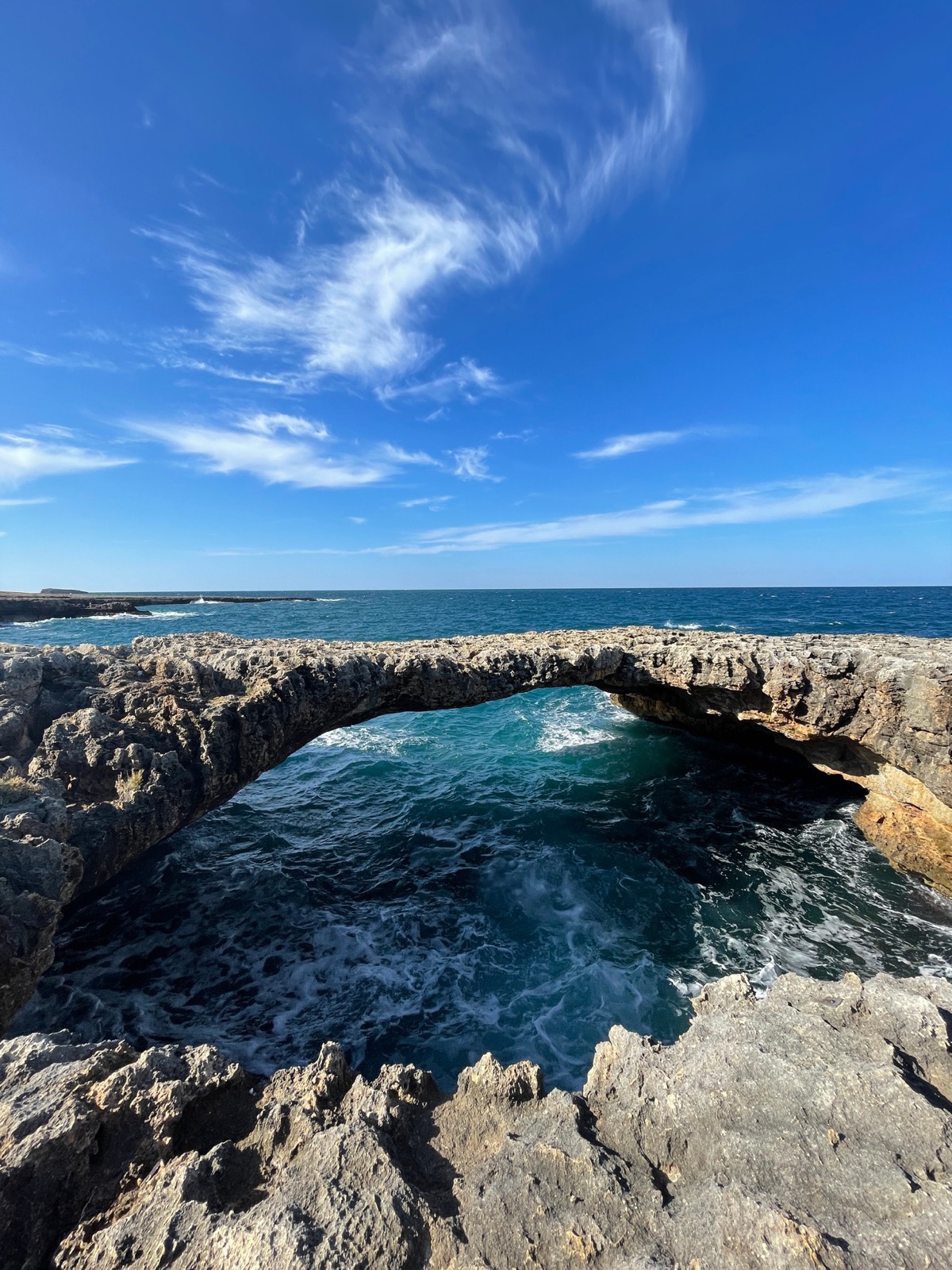
Puglia is the answer when someone asks "where in Italy should I go that isn't overrun?" It's the heel of the boot: long coastlines, whitewashed hill towns, absurdly good olive oil, and a pace of life that recalibrates your relationship with urgency.
Read our full Puglia destination guide for digital nomads
Bari has a growing nomad scene with a handful of decent coworking spaces. Lecce is the baroque jewel of the south — beautiful to live in, genuinely affordable. Ostuni, the "white city," is for when you want the view to be slightly unreasonable.
The coliving infrastructure here is younger than northern Italy's, but it's changing fast. Several pop-up coliving operators run chapters in Puglia precisely because it ticks every box.
Internet: 30–80 Mbps depending on location. More reliable in Bari and Lecce than in smaller towns.
Best for: Nomads who want beauty, food, and genuine slowdown.
Milan — The One That Works (Logistically)
Milan is where Italian infrastructure actually functions. Fast internet, a metro system that runs on time, a proper coworking industry, and direct flights everywhere. It's also expensive, dense, and less Italian-feeling than anywhere else on this list.
If your company is making you hit European timezones hard and you need reliable everything, Milan delivers. If you came to Italy for the slow life, keep reading.
Internet: 100–300 Mbps in coworking spaces. Excellent.
Best for: Nomads on tight work schedules who need reliability over romance.
Florence and Rome — Great Experience, Punishing Budget
They're beautiful. You already know this. The coliving options in both cities are solid and well-run. But you'll spend more than in the south, and you'll share those cities with a lot of people who are not working remotely, who are on holiday, and who are in your way at 9am.
If you're going anyway (fair, no judgment), the Trastevere and Pigneto neighbourhoods in Rome are where the locals actually live. In Florence, look at Oltrarno — it's the side of the river without the tourist crush.
Cost of Living in Italy: City by City
Numbers sourced from Numbeo 2025, representing a solo remote worker living comfortably (coliving fees excluded).
| City | Shared room rent | Food & groceries | Transport | Monthly total |
|---|---|---|---|---|
| Milan | €900–1,400 | €400–500 | €80–100 | €1,500–2,100 |
| Florence | €700–1,100 | €380–450 | €60–80 | €1,200–1,700 |
| Rome | €650–1,000 | €350–450 | €80–100 | €1,150–1,600 |
| Bologna | €550–850 | €320–400 | €50–70 | €970–1,370 |
| Naples | €400–700 | €280–360 | €40–60 | €770–1,170 |
| Bari / Lecce | €350–600 | €260–330 | €30–50 | €680–1,030 |
| Palermo | €300–550 | €240–310 | €25–40 | €600–950 |
The south is genuinely affordable. The north is genuinely not. This isn't a subtle difference.
Coliving operators bundle accommodation, utilities, and coworking into one monthly rate — typically €800–1,500/month depending on city and room type. Often cheaper than renting separately once you factor in setup costs and the tax of figuring it all out alone.
Italy vs. Other European Coliving Destinations
| Factor | Italy (South) | Portugal | Spain | Croatia |
|---|---|---|---|---|
| Monthly total | €900–1,400 | €1,300–1,900 | €1,100–1,800 | €1,000–1,600 |
| Internet | Good in cities | Excellent | Good | Good |
| Digital nomad visa | Yes (2024) | Yes (2022) | Yes (2023) | Yes (2023) |
| Food scene | Exceptional | Very good | Great | Good |
| English spoken | Limited (south) | Good | Moderate | Good |
| Coliving scene | Growing | Mature | Mature | Growing |
Portugal and Spain have simpler visa processes and more established nomad infrastructure. But if food is core to why you travel (and for us, it always is), Italy wins by a distance.
Compare: Croatia digital nomad guide
Italy Digital Nomad Visa — What You Actually Need to Know
Italy launched its Digital Nomad Visa (DNV) in 2024 for non-EU citizens working remotely for companies outside Italy.
Key requirements:
- Minimum income: ~€28,000/year (approx. €2,333/month gross)
- Duration: 1 year, renewable
- Must prove: remote employment or freelance contracts, health insurance, clean criminal record
- Apply via the Italian consulate in your home country, not on arrival
- Processing time: 60–90 days (longer in some consulates)
EU/Schengen citizens: No visa needed. Full freedom of movement. You can stay indefinitely as a registered resident.
Non-EU without the DNV: Standard Schengen rules apply — 90 days in any 180-day period. Enough for a solid coliving stint, but plan around it.
Always verify current requirements at official government sources before booking anything. Visa rules update and this is not legal advice.
Internet Speeds: The Honest Take
Italy's average fixed broadband sits around 80–100 Mbps in cities (Ookla Speedtest 2025). Urban coworking spaces consistently deliver 100–200 Mbps. Problems come when you rent a rural masseria in the Puglia countryside or an apartment in a historic building where the infrastructure is as old as the walls.
What to do: Always ask hosts directly before committing. "Velocità internet?" gets you a number. Anything above 30 Mbps handles video calls fine; above 50 Mbps and you're comfortable.
Mobile data (Vodafone IT, TIM, WindTre) covers cities well and most rural areas decently. A local SIM runs €10–20/month for unlimited data. Worth getting as backup.
The Food Scene (The Actual Reason You're Here)
Let's not pretend this is an afterthought.
Italian food varies more by region than most people realize. Eating in Puglia is not like eating in Bologna, which is not like eating in Naples. Each region is specific, proud, and correct about this.
Bologna/Emilia-Romagna: Ragù (not bolognese; say it correctly), tortellini in brodo, mortadella from the source, Parmigiano-Reggiano from the region next door. The market at the Quadrilatero is worth losing a morning.
Naples/Campania: Neapolitan pizza (the real thing, UNESCO protected, no less), spaghetti alle vongole, sfogliatelle for breakfast, babà soaked in rum. Warning: all pizza elsewhere will taste apologetic after this.
Puglia: Handmade orecchiette, burrata so fresh it's still warm, taralli, focaccia barese with tomatoes that tastes like a personal message from the sun. Sea urchin from the morning market before 9am.
Sicily: Arancini, pasta alla Norma, granita with brioche bun for breakfast, cannoli eaten warm from the fryer at a sagra.
The rule across all of it: eat where Italians eat. If the menu is in four languages and there are laminated photos of dishes, keep walking.
Food Markets Every Digital Nomad Should Visit
What to Look for in an Italian Coliving
Not all coliving is equal. A few things separate the good ones from places that slap "coliving" on a hostel with a printer:
- Community programming — dinners, excursions, shared cooking. This is non-negotiable. A coliving without a communal meal culture in Italy is missing the entire point.
- Real workspace — dedicated desks, not the kitchen table with a sticky note that says "work zone."
- Location sense — you want to be in the neighbourhood, not isolated in a villa 20 minutes from town.
- Month-minimum stays — anything shorter and the community never coheres. You want roots, not a stopover.
At Casa Basilico, every chapter we run is built around food and community first. We cook together, we eat together, we find the good local spots together. It's the whole point.
See where we're running our next chapter
The Bottom Line
Pick the right region for the version of Italy you actually want.
Want affordability and authenticity? Head south. Puglia, Sicily, Naples. Budget stays low, food quality stays high, tourist density stays manageable.
Want convenience and infrastructure? Bologna or Milan. More expensive, fewer friction points.
Want the food to change your life? All of the above. Italy doesn't do bad food. It just does some food more extraordinarily than others.
Come with an appetite. Leave with strong opinions about pasta you'll defend for years.
Cost data sourced from Numbeo 2025. Visa information accurate as of early 2026 — always verify current requirements through official sources before planning your move.
Reading about Italy? We're moving there in September.
Puglia chapter, Sep–Oct 2026. Trulli houses, burrata for days, and new friends around one big table. Spots are going.
Show me Puglia 🇮🇹

Spreading love through cooking & community.
© 2026 CasaBasilico OÜ (16850261)
All rights reserved.
Design & Branding by ahgoos.com
info@casabasilico.com