
Best Coliving in Portugal for Digital Nomads
Best Coliving in Portugal for Digital Nomads
Portugal has been the digital nomad darling for years now. And honestly? The hype is real. You get Atlantic coastline, 300 days of sun in the south, food that will make you cry (in a good way), and a startup scene that actually has soul. If you're thinking about coliving in Portugal, you're not behind the trend. You're just doing your research properly.
We've spent serious time in Portugal across multiple chapters. These are our real notes.
Why Portugal Works for Remote Workers
Let's be direct: Portugal in 2026 is not the bargain it was in 2019. Lisbon especially has gotten expensive, and you'll meet plenty of nomads complaining that "it used to be so much cheaper." True. But it's still cheaper than London, Amsterdam, or Zurich. And it has things none of those cities can offer: 25°C in October, a pastéis de nata on every corner, and a culture that genuinely likes foreigners.
The infrastructure has kept up with demand. Fiber internet is widespread, coworking spaces are excellent, and the flight connections to the rest of Europe are outstanding. You can be in Berlin in 3 hours. You can also not be in Berlin, which is its own kind of gift.
Visa Options for Portugal
Portugal has made things relatively easy for remote workers. Here are your main options:
D8 Digital Nomad Visa (Remote Worker Visa)
The big one. Launched in late 2022, this allows non-EU remote workers to live in Portugal long-term. Requirements:
- Minimum income: ~€3,040/month (4x Portuguese minimum wage)
- Proof of employment or clients outside Portugal
- Health insurance
- Valid for 1 year, renewable, leads to permanent residency after 5 years
Schengen 90-day stay
For US, UK, Canadian, Australian, and most other Western passport holders, you get 90 days in any 180-day period across the whole Schengen area. No visa required. This is how most short-term nomads operate.
NHR Tax Regime (Non-Habitual Resident)
If you're moving to Portugal long-term, look into NHR. It can offer a flat 20% tax rate on Portuguese-source income for 10 years. Not financial advice. Talk to a Portuguese tax advisor before doing anything.
Cost of Living in Portugal
Portugal has a two-tier economy. Lisbon and Porto are proper European cities with European prices. Go 30 minutes outside either city and the budget drops fast.
| Expense | Lisbon | Porto | Madeira | Smaller Towns |
|---|---|---|---|---|
| Private room coliving | €900–1,400/mo | €750–1,100/mo | €700–1,000/mo | €500–800/mo |
| Shared room coliving | €600–900/mo | €500–750/mo | €500–700/mo | €350–550/mo |
| Coffee | €1.20–1.80 | €1–1.50 | €1.20–1.60 | €0.80–1.20 |
| Lunch (tasca) | €8–12 | €7–10 | €7–11 | €6–9 |
| Groceries/week | €50–80 | €45–70 | €50–75 | €40–60 |
| Monthly transport pass | €40 | €30 | varies | car needed |
Sources: Numbeo Portugal 2025, Nomad List Lisbon/Porto 2025, community data
A comfortable but not lavish coliving setup in Lisbon (private room, eating out a few times a week, occasional weekend trip) will run you around €1,800–2,200/month all-in. Porto is noticeably cheaper. Madeira sits somewhere in the middle but gains back on quality of life.
Internet Speeds
Portugal's internet infrastructure is genuinely good. NOS, MEO, and Vodafone PT all offer fiber-to-home packages that consistently deliver what they promise.
| City | Typical Coworking Speed | Coliving Average |
|---|---|---|
| Lisbon | 200–600 Mbps | 100–300 Mbps |
| Porto | 150–500 Mbps | 100–250 Mbps |
| Funchal (Madeira) | 100–300 Mbps | 80–200 Mbps |
| Ericeira | 50–200 Mbps | 50–150 Mbps |
Video calls are fine everywhere. The only place you might get frustrated is in remote rural areas, but if you're doing a coliving stay you'll be in accommodation that has sorted this for you. That's the whole point.
Best Areas for Coliving in Portugal
Lisbon
Lisbon is the obvious choice, for good reasons. The city is beautiful, walkable, and incredibly well-connected. The downside: it's the most expensive option and can feel like a nomad conveyor belt in some neighborhoods.
- Mouraria / Intendente: The old Moorish quarter. More local, less polished, excellent food scene. The Airbnb density is lower here so it still has soul.
- Príncipe Real: Elegant, leafy, great independent cafés. Higher price tag but genuinely lovely to live in.
- Alcântara / LX Factory area: Industrial chic, creative crowd, good coworking scene, 15 minutes to the river.
- Avoid: Bairro Alto if you want to sleep before 3am. Santa Catarina if you want to pay Soho prices for a view.
Porto
Honestly? We love Porto more than Lisbon. It's smaller, grittier, more authentic, and the food is better (we said it). Porto feels like a city that hasn't quite been discovered yet, even though it absolutely has been. The coliving scene is smaller but curated.
- Bonfim: East of the centre, increasingly popular with the nomad crowd, still affordable
- Cedofeita: Indie bookshops, specialty coffee, architecture that will hurt your neck from looking up
- Ribeira: Beautiful but touristy. Fine for a few weeks, gets old fast.
Madeira
Funchal is a proper digital nomad hub now. The island has leaned into it hard. There's even a Madeira Digital Nomads Facebook group with 10,000+ members. The climate is freakishly good (warm all year, no extremes), the hiking is incredible, and the Atlantic views from pretty much everywhere will sort out whatever creative block you're carrying.
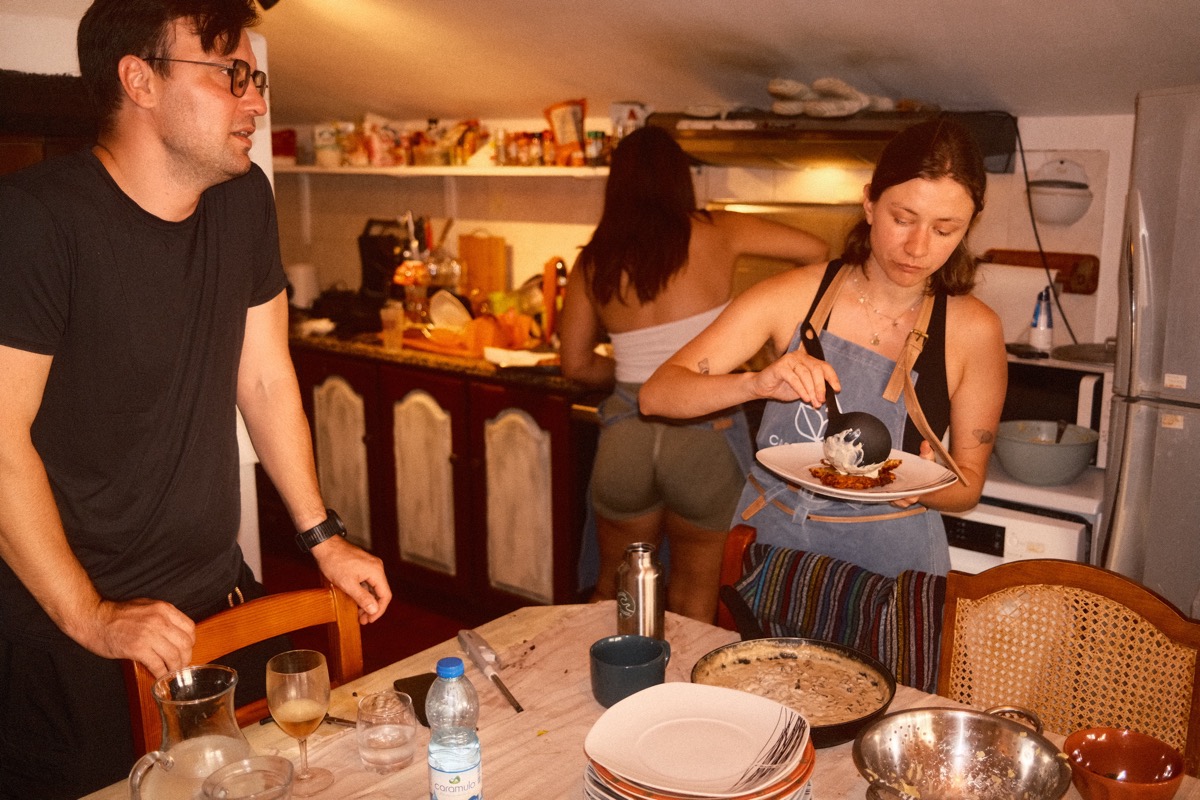
We ran a Casa Basilico chapter in Madeira and it was one of our favourites. The food scene is underrated — espetada (beef on laurel skewers), lapas (limpets with garlic and butter), poncha cocktails at a rural levada bar.
Explore our Madeira coliving chapter
Ericeira
If you surf, Ericeira needs to be on your list. It's a World Surfing Reserve, 45 minutes north of Lisbon, and it has a village vibe that somehow survives despite everyone knowing about it. Smaller coliving options than Lisbon but the community is tighter. Bring a wetsuit — the Atlantic here is not Bali.
The Alentejo (off the beaten track pick)
Évora, Beja, the wine country. Almost nobody comes here for coliving and that's exactly why it's interesting. Dirt cheap, incredibly beautiful, zero nightlife. If you're deep in a project and want zero distractions and exceptional wine at €4/bottle, this is your move.
The Food Scene
Look, we run a foodie coliving. We're not going to pretend food isn't a huge part of why you pick a destination. And Portugal is outstanding.
Things you will eat too much of:
- Pastel de nata — the custard tart. Pastéis de Belém in Lisbon is the tourist version and it's still worth the queue. But find a local pastelaria that makes them fresh and never go back.
- Bacalhau — salt cod in 365 variations. The one with cream and fried potato (bacalhau com natas) will make you forget you have a flight to catch.
- Bifanas — pork sandwich. Simple, perfect, costs €2.50 at a proper tasca.
- Francesinha — Porto only. A sandwich filled with meats, covered in melted cheese, drowned in a tomato-beer sauce. One per visit. Maybe two.
- Queijo da Serra — mountain cheese from the Serra da Estrela. Soft enough to eat with a spoon. We're not joking.
- Seafood in general: gooseneck barnacles (percebes), clams (ameijoas à Bulhão Pato), grilled fish at a beach restaurant with house wine. Portugal does not miss.
Wine: Natural wine has hit Portugal properly. Look for Vinho Verde (the young, slightly sparkling white), Alentejo reds, and increasingly excellent skin-contact wines from small producers. You can drink extremely well for €5–8/bottle at a supermarket.
Best Coliving Spaces in Portugal
The coliving market in Portugal is mature. You've got everything from large corporate-style places in Lisbon to tiny 6-person houses in the Alentejo.
| Coliving | Location | Price Range | Vibe |
|---|---|---|---|
| Outsite Lisbon | Príncipe Real | €1,200–1,800/mo | Sleek, well-run, social |
| Casa Basilico | Madeira (past chapter) | from €900/mo | Foodie, community, pop-up |
| Selina Ericeira | Ericeira | €800–1,400/mo | Surf-focused, Selina network |
| Cowork Madeira (Workation) | Funchal | varies | Longer-stay focused |
| NomadX Porto | Porto | €700–1,100/mo | Budget-friendly, central |
What to look for beyond the price:
- What's the kitchen situation? Shared cooking is a massive quality-of-life factor.
- What's the community mix? All-remote-workers or passing tourist backpackers?
- Is the internet actually tested or just claimed? Ask for a speed test screenshot.
- How long are people staying? A place full of 3-night stays isn't a community.
What People Get Wrong About Portugal
"Lisbon is safe" — it is. "Lisbon is affordable" — depends on your reference point. If you're coming from NYC it's a bargain. If you're coming from Tbilisi or Oaxaca it's expensive. Calibrate your expectations.
"I'll visit on a tourist visa and sort the nomad visa later" — fine, but don't wait until month 3 to think about this. The D8 process takes time and requires documents.
"Porto and Lisbon are the same vibe" — they are not. Porto is a working port city with rougher edges and better food. Lisbon is the cosmopolitan capital. Go to both and decide.
"I'll learn Portuguese quickly" — you won't, because everyone speaks English and they're genuinely happy to. But learning the basics gets you treated like a human being rather than a tourist, and that matters.
Portugal vs. Other Coliving Destinations
Compare with coliving in Thailand
Compare with coliving in Mexico
If you're choosing between Portugal and somewhere like Bali or Mexico, the calculus is roughly:
- Go Portugal if you want European culture, easy EU access, solid infrastructure, and Atlantic coastline
- Go elsewhere if you want lower costs, warmer winters, or Asian/LATAM food culture
Portugal is a serious long-stay destination. It rewards people who stick around. The longer you stay, the more the city reveals itself, the better your Portuguese restaurant spots get, the more locals become friends. It's not a 2-week adventure. It's a place to live for a while.
Ready to stop researching and actually go? Join a Casa Basilico chapter
Practical Info
Getting there: TAP Air Portugal and most European low-cost carriers (Ryanair, easyJet) fly into Lisbon (LIS) and Porto (OPO). Funchal (FNC) on Madeira is served by TAP and some charter routes.
Getting around: Lisbon and Porto have decent public transport — metro, trams, buses. Madeira requires a car or scooter for anything outside Funchal. Ericeira is car territory unless you like uphill walks.
Language: Portuguese. Brazilians find it a bit strange (different accent, older-sounding vowels). Non-speakers find it harder than Spanish. But everyone under 50 speaks English fluently. Zero barrier for daily life.
Time zone: WET (Western European Time) — UTC+0 in winter, UTC+1 in summer. Good for US East Coast morning calls, excellent for European business hours.
Portugal isn't the cheapest, isn't the most exotic, and isn't the newest destination on the nomad circuit. What it is: one of the best places in the world to live and work for a month, three months, or indefinitely. The food is outstanding, the people are warm, and the light in the late afternoon will make you feel like you made at least one good decision this year.
Come for a month. Stay for three. That's usually how it goes.


Spreading love through cooking & community.
© 2026 CasaBasilico OÜ (16850261)
All rights reserved.
Design & Branding by ahgoos.com
info@casabasilico.com