
Best Coliving in Thailand for Digital Nomads
Best Coliving in Thailand for Digital Nomads
Thailand has been pulling in digital nomads for decades, and the hype is deserved. You can eat the most insane food of your life for $2, get fiber internet in a coffee shop at 9am, and still make it to a rooftop by sunset. The infrastructure is real, the costs are low, the community is already there waiting for you.
But Thailand isn't one thing. Chiang Mai is nothing like Bangkok. Koh Phangan is nothing like either. So let's talk about where to colive, what it'll cost, and whether it's worth the flight. Because "just go to Thailand" isn't advice. It's a Wikipedia article with a passport stamp.
Why Thailand Keeps Coming Up
A few reasons it appears on every nomad shortlist and actually deserves to be there:
- Cost-to-quality ratio that's hard to beat. You can live well for $1,000–$1,500/month: proper accommodation, fast internet, restaurant meals every day. Not hostel-dorm "living." Actual quality of life with room left over.
- The food is world-class. Not "good for a nomad destination." Actually world-class. A $1.50 bowl of noodles from a street cart that makes you question every restaurant you've ever paid €15 for in Europe. More on this later. We could talk about it all day.
- The coliving scene is mature. Chiang Mai especially has had a proper nomad community for over a decade. Coworking spaces, communities, and a full infrastructure built around remote workers. The community is already there. You just plug in.
- The climate is serious. Warm year-round with enough regional variation that you can pick your vibe: mountains, jungle, city, beach. Thailand has all of it in one country.
The Three Spots Worth Your Attention
Chiang Mai: The OG Nomad Hub
Chiang Mai is where the coliving and coworking scene in Thailand actually started. The old city, the Nimman Road area, and the surrounding neighborhoods are packed with cafes that double as offices, coliving houses that feel like actual homes, and a community that's been here long enough to have its own rhythms, inside jokes, and an unspoken consensus that khao soi is the correct answer to most problems.
It's a city that rewards slow travel. One month feels like enough to scratch the surface. Two months feels like you might be getting it. Three months and you've got a favourite khao soi stall and opinions about which market to hit on which day of the week. That's the dream.
Cost of living (Chiang Mai):
| Expense | Budget | Mid-Range |
|---|---|---|
| Accommodation (coliving/private room) | $350–500/mo | $500–800/mo |
| Food (eating out daily) | $200–300/mo | $400–600/mo |
| Coworking (if separate from coliving) | $50–100/mo | $100–150/mo |
| Transport | $30–60/mo | $60–100/mo |
| Total estimate | $700–1,000/mo | $1,100–1,650/mo |
Source: Numbeo Thailand 2025, Nomad List Chiang Mai 2025
Internet: Solid. Most coliving and coworking spaces run 100–300 Mbps fiber. True Digital Park and CAMP at Maya Mall are reliable fallbacks when your coliving WiFi decides it needs a nap. Median fixed broadband speed in Thailand: 247 Mbps download (Speedtest Global Index Thailand 2025).
Best neighborhoods:
- Nimman Road area: most cafes, most nomads, slightly more expensive. Good if you want to be in the thick of it from day one.
- Old City: atmosphere over practicality. Slower pace, temples around every corner, slightly further from the coworking hubs.
- Santitham: local, affordable, less tourist-facing. This is where people who actually stay for more than two weeks end up. Make of that what you will.
Food highlights: Khao soi is the dish. Find it at Khao Soy Islam or anywhere with a handwritten sign and plastic chairs outside. Sai oua (northern Thai sausage, fragrant with lemongrass and galangal), laab, and the Sunday Walking Street at Wualai Road are mandatory. The north has its own cuisine distinct from Bangkok: earthier, more herbs, spicier. Give yourself a full month to eat your way through it properly. You'll need it.
Bangkok: High Energy, High Output
Bangkok is not a relaxing coliving experience. It's overwhelming, loud, and sprawling in a way that makes you feel both anonymous and completely absorbed. Some people thrive here. Others last two weeks before retreating to Chiang Mai. Both are valid outcomes and neither is wrong.
Bangkok delivers hard if you like real cities, not the charming compact European variety. World-class infrastructure, incredible food at every price point, and a coliving scene that's been professionalized. The BTS Skytrain makes it more navigable than it looks on a map, and the map looks terrifying.
Cost of living (Bangkok):
| Expense | Budget | Mid-Range |
|---|---|---|
| Accommodation (coliving/private room) | $450–700/mo | $700–1,200/mo |
| Food | $250–400/mo | $500–800/mo |
| Coworking (if separate) | $80–130/mo | $130–200/mo |
| Transport (BTS + Grab) | $50–100/mo | $100–200/mo |
| Total estimate | $900–1,350/mo | $1,450–2,400/mo |
Source: Numbeo Thailand 2025, Nomad List Bangkok 2025
Best areas for nomads:
- Ekkamai / Thong Lo: trendy, expensive, great food scene, active nomad community. Where everyone goes first.
- Silom / Sathorn: business district energy, solid coworking options, BTS access to everywhere else.
- Ari: local, quieter, popular with expat long-termers who've moved past the Thong Lo phase and found something they actually like.
- On Nut: cheaper rents, still on the BTS line, growing coliving presence. The sensible choice if you're staying more than a month.
Food highlights: Bangkok is one of the great food cities on earth. Full stop. Boat noodles for 40 baht, pad see ew from a cart at 11pm, mango sticky rice from the vendor outside MBK. Then go fine dining if you want. The city has that too. But the street food never disappears, and it's the best version of anywhere you'll eat in Thailand. Don't overthink it. Walk until something smells incredible. Sit down.
Koh Phangan: The Island Option
Koh Phangan is where people come for a month and end up staying three. It has a reputation as a party island (Full Moon Party, yes, we know) but there's a whole quieter side. Srithanu and the Haad Yao area have a genuine wellness and nomad community that's been building for years, mostly populated by people who left Bali looking for something slightly less crowded and slightly more affordable.
This is not the most productive coliving environment. That might also be the point. If you want slow mornings, a scooter, salt water by 4pm, and your laptop open to something that might charitably be called "work," Koh Phangan delivers. If you need structured coworking, 400 Mbps fiber, and back-to-back Zoom calls, take the boat to the mainland.
Cost of living (Koh Phangan):
| Expense | Budget | Mid-Range |
|---|---|---|
| Accommodation | $400–650/mo | $650–1,000/mo |
| Food | $250–400/mo | $400–700/mo |
| Coworking / cafes | $60–100/mo | $100–150/mo |
| Transport (scooter rental) | $80–120/mo | $80–120/mo |
| Total estimate | $830–1,270/mo | $1,230–1,970/mo |
Source: Numbeo Thailand 2025, Nomad List Koh Phangan 2025
Internet: Improving, but this isn't Chiang Mai. Fiber is available along the main Srithanu strip but patchy anywhere else. Get a local SIM with a solid data plan as your backup. Accept that some days the universe is just telling you to go swimming instead of having that video call. Plan accordingly.
Food highlights: The island has a heavy international presence: smoothie bowls, raw vegan everything, Israeli food (always excellent wherever you find it, we stand firmly by this claim). For Thai food, go local: boat noodle spots near the morning markets, fresh seafood grilled at night, som tam everywhere you look. Don't skip the fresh coconuts. It's a cliché because it's correct.
Visa Reality for Thailand
Thailand has updated its rules and it's more accessible than most people expect.
60-day tourist entry (most passports): As of 2025, most Western nationalities get 60 days on arrival, recently extended from 30. No prior application needed. Extendable by 30 days at any immigration office inside Thailand for around 1,900 THB (~$52). That's 90 days total before you need to cross a border.
Border runs and re-entries: Still technically possible but Thailand has tightened rules around multiple consecutive entries. Fine for one short extension, not a long-term strategy.
TR Visa (Tourist Visa, applied in advance): Available at Thai consulates before arrival. Two entries of 60 days each, extendable. Total possible stay: up to 180 days with the right planning.
Thailand LTR Visa (Long-Term Resident): The closest thing to a proper digital nomad visa. Valid 10 years, multi-entry. Requires proving income of at least $80,000/year (or $40,000/year with relevant qualifications). High bar, but a real long-term option for those who qualify.
For most people doing a 1–3 month coliving stay: the 60-day entry plus 30-day extension is clean, easy, and costs almost nothing. Don't overcomplicate it.
Thailand vs. The Rest of Southeast Asia
| Thailand | Vietnam | Indonesia (Bali) | |
|---|---|---|---|
| Monthly budget (mid-range) | $1,100–1,650 | $900–1,400 | $1,200–1,800 |
| Internet reliability | ★★★★☆ | ★★★★☆ | ★★★☆☆ |
| Coliving scene maturity | ★★★★★ | ★★★☆☆ | ★★★★☆ |
| Food quality | ★★★★★ | ★★★★★ | ★★★☆☆ |
| Visa simplicity | ★★★★☆ | ★★★☆☆ | ★★★★☆ |
Comparative estimates based on Nomad List 2025 data
Vietnam comes close on cost and food but the coliving infrastructure is thinner outside of Ho Chi Minh City. Bali has the scene but the internet can ruin your week and the costs have crept up. Thailand is the balanced option. Not the cheapest, not the flashiest, but the most reliable combination of everything that actually matters.
Practical Things Worth Knowing
Season matters more than people realize. Northern Thailand is best November through April. Avoid March and April when agricultural burning season settles smoke into the Chiang Mai valley and air quality tanks hard. Bangkok runs more year-round. The islands follow their own monsoon calendar depending on which coast you're on. Check before you book.
Get a local SIM at the airport. AIS and True Move both have strong data packages on arrival. Your coliving will have WiFi, but a local SIM keeps you covered in markets, on scooters, and anywhere else the infrastructure wobbles. It costs almost nothing and saves a lot of frustration.
Transport between cities is cheap. Domestic flights on AirAsia or Nok Air run $30–80 between major hubs. Overnight trains and buses work well for the budget-conscious, and you meet people on them. Between islands: ferry or speedboat depending on your patience for waves and your deadline for the next client call.
The Food — Because This Is Casa Basilico
You don't come to Thailand and just "eat food." You develop opinions. Strong, specific opinions. You will have a khao soi ranking. You will argue about which cart has the best pad kra pao. You will make decisions about your Sunday based entirely on which market is open.
The street food scene here is one of the most democratic in the world. The 60-baht pad kra pao from a wok cart is genuinely better than what most restaurants charge €20 for in Europe. The market culture means fresh produce, rotating daily menus, and regional specialties that change meaningfully from city to city.
Things you'll become slightly obsessed with:
- Khao soi (a Chiang Mai religion): coconut curry broth, egg noodles, crispy noodles on top. Order it everywhere and keep a mental ranking. You'll have one by week two, trust us.
- Som tam: green papaya salad pounded fresh in a mortar, as spicy as you dare. Served with sticky rice. You're sorted for the afternoon.
- Pad kra pao: holy basil stir-fry with a fried egg cracked over the top. Thai comfort food at its purest. Correct at midnight, correct at 8am, never wrong at any point in between.
- Khao man gai: poached chicken over fragrant rice with a ginger-soy dipping sauce. Quiet and perfect. Never at the top of the tourist list, always at the top of ours.
- Mango sticky rice: from a market cart only. Never from a hotel buffet. This is non-negotiable.
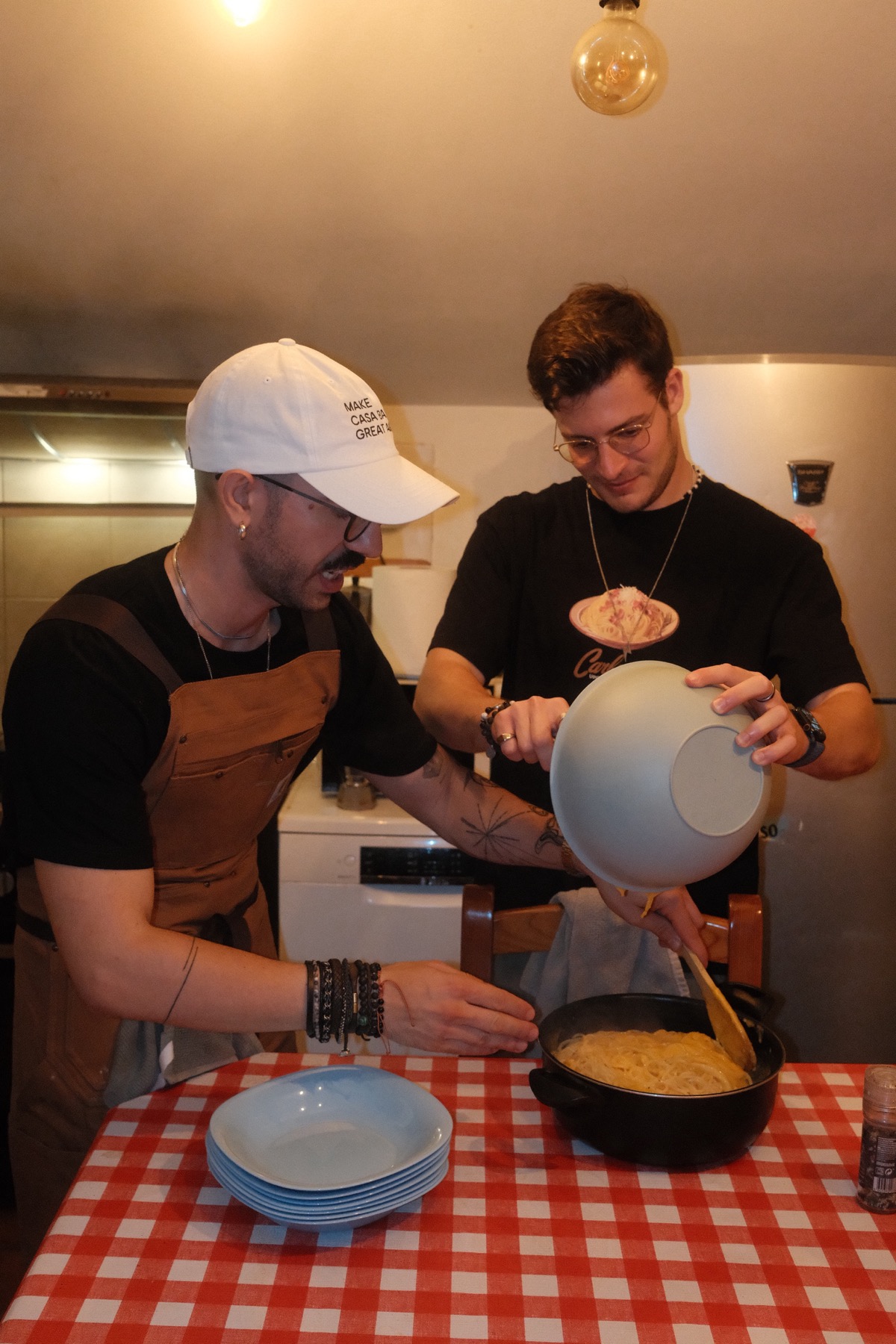
The best coliving in Thailand will have a kitchen and ideally be near a morning market. If it encourages communal cooking, even better. That's the Casa Basilico litmus test wherever we land.
Where Casa Basilico Is Heading
We run pop-up foodie coliving across different chapters each year. The kitchen's always open, the community is tight-knit, and you eat well every single day without thinking about it. Thailand isn't on our map yet, but our current chapter is in Oaxaca, Mexico, one of the great food cities on the continent, and new destinations get announced to our community first.
If you're weighing Southeast Asia against Latin America, read our full breakdown: best coliving in Mexico for digital nomads. Two different vibes, both worth considering seriously.
Still figuring out what coliving actually means versus just renting a furnished room? Our glossary entry on coliving chapters explains the model and why a month in a real community beats a week in any coworking retreat, every time.
Want to know when we announce new chapters? Join the Casa Basilico community. That's where it happens first. 🌿
Winter is coming. We'll be in Brazil.
Pipa chapter, Jan–Mar 2027: 30°C, surf before standup, and a dinner table that seats everyone. 180+ nomads have lived with us. Your turn.
Take me to Brazil 🇧🇷

Spreading love through cooking & community.
© 2026 CasaBasilico OÜ (16850261)
All rights reserved.
Design & Branding by ahgoos.com
info@casabasilico.com