Morocco Digital Nomad Guide
Morocco is not subtle. It hits you immediately: the medina labyrinth, the smell of cumin and charcoal, the Atlantic coast wind, the mint tea poured from an unreasonable height. It's a lot. And that's exactly why digital nomads keep coming back.
For the price of a bad studio apartment in a European city, you can rent a riad with a rooftop terrace, eat well three times a day, and work from a country that still surprises you after weeks. There's a reason Taghazout became one of the most talked-about nomad spots in the world, and a reason Marrakech has been quietly hosting remote workers long before it was cool.
This is everything you need to know before you go.
Cost of Living in Morocco
Morocco punches well above its weight in terms of value. Budget-conscious nomads can live comfortably for under $1,000/month. If you want more space, better coffee, and the occasional hammam session, $1,300–$1,700/month gets you something close to luxurious.
Source: Numbeo Morocco 2025, Nomad List cost estimates 2025
If you cook at home and skip the rooftop cocktail bars (no judgment), you can eat and live well for next to nothing. Marrakech's souks sell fresh vegetables, olives, spices, and preserved lemons at prices that will make you pause in disbelief.
Visa Situation
Morocco is generous with visas. Most Western passport holders (US, EU, UK, Canada, Australia) get 90 days visa-free on arrival. No application, no pre-approval, no waiting. You land, they stamp, you go find a riad.
There is no official digital nomad visa for Morocco as of 2026. The most common workarounds:
For most people doing 1–3 months, the tourist entry is all you need. Check your passport requirements on the Moroccan Ministry of Foreign Affairs website or consult a current travel forum before you book — rules shift.
Internet & Infrastructure
Morocco's connectivity is decent in the cities and tourist hubs. Fibre connections hit 50–150 Mbps in Marrakech and Agadir. Taghazout improved thanks to the nomad boom. You'll find coworking spaces with stable 50–80 Mbps connections.
The main ISPs are Maroc Telecom, Orange Maroc, and Inwi. For mobile data, a prepaid Maroc Telecom SIM with unlimited data runs around $15–20/month. Buy one at the airport or any local phone shop — it takes about 10 minutes.
Where connectivity gets patchy: rural areas, the mountains (Atlas region), and some parts of the coast outside established nomad zones. If you're doing a workation in the Sahara desert (it happens), pack a backup hotspot.
Source: Speedtest Global Index 2025, remote work forums
Best Cities for Digital Nomads
Taghazout: The Surf and Work Spot
Forty-five minutes north of Agadir, Taghazout is small, photogenic, and built around a bay that surfers have loved for decades. The nomad infrastructure arrived later but arrived properly: coworking spaces with sea views, reliable WiFi, good coffee, and a community of people who take their laptops seriously in the mornings and their surfboards seriously in the afternoons.
Accommodation runs $400–600/month for a private room with a sea view. It's not cheap for Morocco but it's still absurdly cheap for what you get.
Digital nomad guide to Taghazout, Morocco
Marrakech: Culture Overload, in the Best Way
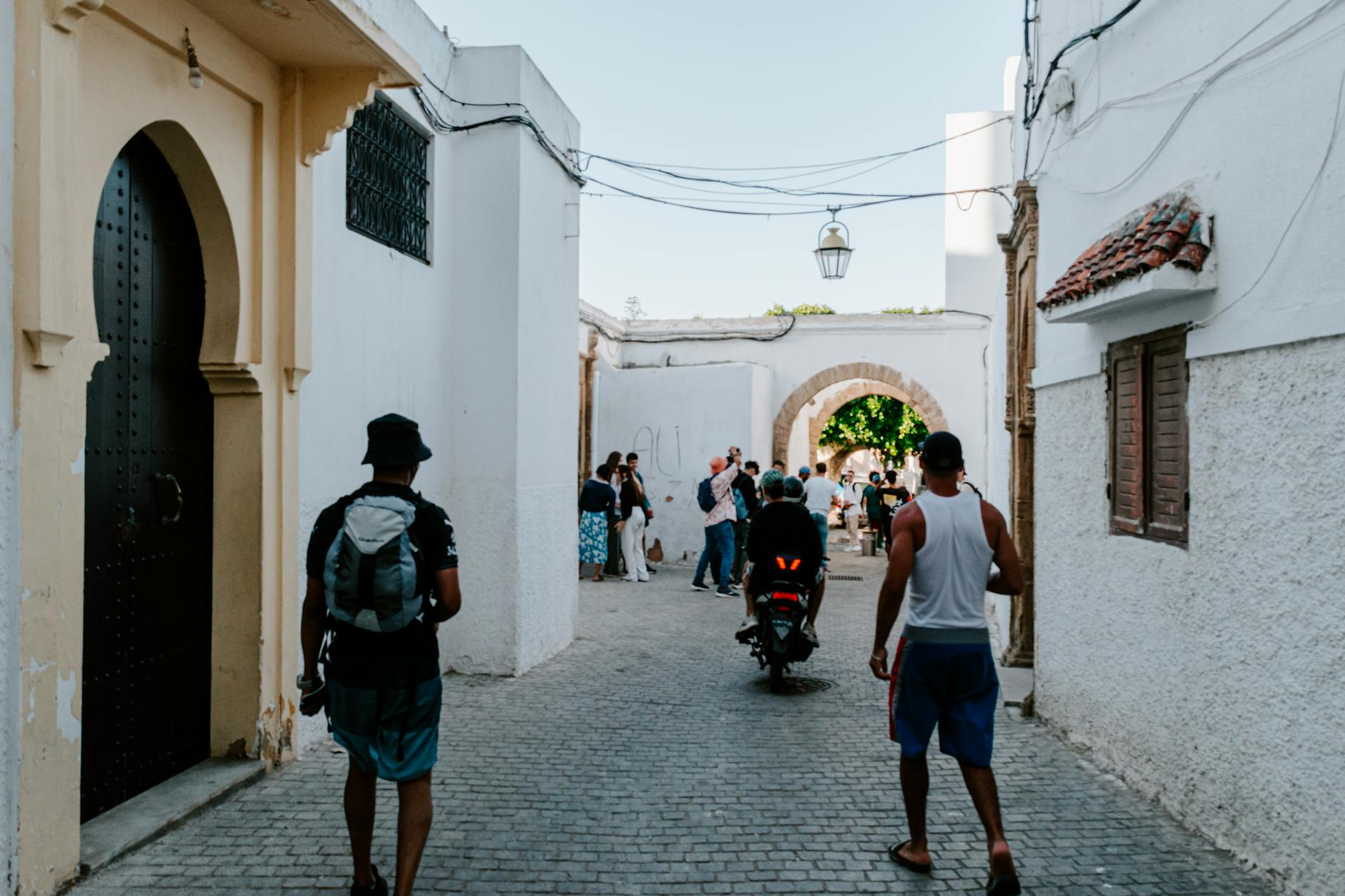
Marrakech is the city that makes people extend their stays. The medina is overwhelming in exactly the right way: all riads and dead ends and sudden squares and tea shops run by guys who definitely want to sell you something. But get through the tourist layer and there's a city with serious creative energy, incredible food, and a growing expat and nomad scene in the Guéliz neighbourhood.
Stay in Guéliz (the French-influenced new town) for reliable cafés with WiFi and a walkable, lower-stress lifestyle. Stay in the medina if you want atmosphere and can tolerate WiFi that occasionally requires a gentle restart.
Monthly rent in Guéliz for a decent studio: $400–650. In the medina for a shared riad: $300–500.
Agadir: The Uncomplicated Option
Agadir was rebuilt after a 1960 earthquake and lacks Marrakech's historical romance, but it makes up for it in practicality. Beach, reliable internet, modern apartments, good supermarkets, and a relatively easy entry point. Good if you want Morocco's weather and value without the sensory overload of the medina experience.
Essaouira: The Moody Coastal One
A walled coastal city with whitewashed walls, blue boats, and so much wind it's nicknamed "the windy city of Africa." Essaouira has a bohemian, slow-travel energy. It's not a coworking hub — it's a place you go when you want to write, paint, or just decompress for a few weeks. If productivity isn't your main goal this month, this is your spot.
The Food: The Real Reason to Go
Look, we're a foodie coliving. We have opinions about food. And Morocco makes this easy.
Tagine is the obvious one, but don't underestimate it. A slow-cooked lamb tagine with preserved lemon and olives from a proper restaurant (not a tourist trap on Djemaa el-Fna) is one of those meals you'll describe to people for months. Order it in the medina side streets, not on the main squares.
Harira is the soup you need in your life — tomato, lentils, chickpeas, a handful of fresh herbs, a squeeze of lemon. It's the afternoon reset meal. It costs almost nothing and it's everywhere.
Pastilla (or bastilla) is peak Morocco: a flaky pastry filled with pigeon or chicken, almonds, and a dusting of powdered sugar. Sweet and savoury in the same bite. Sounds chaotic, tastes perfect.
B'ssara is a fava bean soup with olive oil and paprika. Marrakech breakfast, eaten standing at a street stall, costs about $1. This is living.
Street food around Djemaa el-Fna at night: yes, it's touristy. Eat there anyway once. The grill stalls, the snail soup vendors, the fresh orange juice for 50 cents — it's worth it.
For coffee, the French colonial legacy left a strong café culture. A decent café au lait at a local spot costs $1–1.50. Guéliz in Marrakech has proper specialty coffee if you need it.
Practical Notes
Getting around: Petits taxis (small red cabs in Marrakech) are metered and cheap. Negotiate or confirm the meter is on before you get in. For intercity travel, CTM buses are reliable and comfortable. Trains connect Casablanca, Rabat, Fes, and Tangier.
Safety: Morocco is generally safe for travellers. The main annoyance is persistent touts in tourist areas — the medina and souks especially. Be politely firm ("la shukran" = "no thanks") and keep walking. Don't be put off — it's mild by the standards of many tourist cities.
Language: Arabic and Darija (Moroccan Arabic) locally. French is widely spoken in cities and business contexts. Spanish is common in the north (Tangier, Tetouan). English is increasingly understood in coworking spaces and nomad hangouts.
Weather: October to April is the sweet spot for most cities — warm but not brutal. Marrakech in July and August is hot (40°C+). The coast (Taghazout, Agadir, Essaouira) stays cooler year-round thanks to the Atlantic.
Is Morocco Worth It?
For price, food culture, landscape variety, and a different day-to-day experience from European defaults: yes, Morocco is worth it. It's not the easiest destination you'll ever work from. The medina will disorient you. The internet will occasionally test your patience. But no one comes back from Morocco with boring stories.
If you want a base that gives you proper culture, incredible food, beach or mountain access, and enough daily novelty to stay interesting for weeks: Morocco delivers.
Best budget-friendly destinations for nomads in 2026
Pop-up vs fixed coliving: what's actually better?
Cities to Explore in Morocco (and Nearby)
If Morocco's calling, these are the bases people actually rave about: