
How Much Does Coliving Cost? A Price Breakdown by Destination

Coliving costs typically range from $400 to $3,000 per month, depending on destination, room type, and what's bundled into the price. In affordable hotspots like Bali, Tbilisi, or Chiang Mai, expect to pay $400 to $900/month for a private room with high-speed internet, a dedicated workspace, and utilities included. Latin American destinations like Mexico or Brazil sit in a similar range, often with more space for your money. Mid-range European locations like Madeira, the Canary Islands, or Croatia tend to run $800 to $1,800/month. Premium colivings in major cities or with curated programming, meals, and retreats can reach $2,000 to $3,000/month. Most coliving prices bundle internet, electricity, water, workspace access, and community events. When you factor in what you'd separately pay for a furnished apartment, a coworking membership, and utilities, coliving usually costs the same or less, with more pasta.
So you're Googling coliving costs at midnight because you're done with your overpriced studio, the building's terrible Wi-Fi, and eating the same three sad meals alone. We get it. We literally built a business around that exact feeling.
The word "coliving" means wildly different things depending on who's selling it. A $500/month coliving in Tbilisi looks nothing like a $2,500/month coliving in Lisbon, but both call themselves the same thing. So here's the real breakdown, destination by destination, with actual numbers.
We run Casa Basilico, a pop-up foodie coliving for digital nomads. We move between destinations (Madeira, Tarifa, Brazil, Mexico) and we've priced, budgeted, and lived through most of these markets. This is our honest, no-fluff take.
What's Actually Included in a Coliving Price?
Before we talk numbers, this part matters a lot. Not all coliving prices are created equal, and comparing them without understanding what's bundled is like comparing a €12 pasta carbonara at a restaurant to a €12 supermarket pasta kit. Same price, completely different thing.
What most colivings include:
What the better-run colivings add:
What you'll almost always pay separately:
The honest takeaway: a $700/month coliving that includes workspace and all utilities can easily be cheaper than a $550/month Airbnb where you still need to pay for a coworking desk and internet that works. Run the full numbers. Don't get fooled by the headline price.
How Much Does Coliving Cost by Destination?
Here are real-world ranges from 2024 to 2026, based on what operators actually charge.
Southeast Asia: $400 to $900/month
Southeast Asia is where the whole coliving movement started, and it's still the most affordable region for remote workers. The infrastructure has caught up too: fast internet, functional coworking spaces, a nomad community that actually exists.
Bali (Indonesia): The classic. Colivings in Canggu or Ubud run $450 to $800/month for a private room. The density of options is overwhelming, from budget dorms at $200/month to boutique colivings with pools, yoga decks, and daily smoothies at $900+. Pick based on what you actually need.
Chiang Mai (Thailand): Slightly cheaper than Bali, with excellent infrastructure. Expect $400 to $700/month for a solid private room and reliable internet. The coworking scene here is one of the best in Asia, and the street food budget is frankly offensive in a good way.
Vietnam (Da Nang, Hoi An): Similar range to Chiang Mai: $400 to $750/month. Bonus: the food is extraordinary and groceries cost almost nothing.
One caveat on Southeast Asia: visa limitations. Many countries cap tourist stays at 30 to 60 days. That's fine for slowmads doing longer stretches in one place, just plan your paperwork before you book.
Latin America: $500 to $1,200/month
Latin America has exploded as a coliving destination, especially post-pandemic. Mexico, Brazil, and Colombia lead the charge, and the value you get for your money is hard to beat anywhere outside Southeast Asia.
Mexico (Oaxaca, Mexico City, Tulum): This is our current territory, so we know it intimately. Private rooms in well-run colivings run $600 to $1,100/month. Oaxaca specifically is one of the best value-for-experience destinations on the planet right now: a world-class food scene (mole negro, tlayudas, the best mezcal you've ever had), solid internet infrastructure, and a cost of living that makes everything outside the coliving gloriously affordable. We're there in spring 2026, if you want to join us.
Brazil (Pipa, Florianópolis, Rio): We've run chapters here too. Smaller beach towns like Pipa offer remarkable value: $500 to $900/month in a community with pool access, two minutes from the ocean, and some of the warmest people you'll ever meet. Rio and São Paulo cost more, but you're paying for a city experience.
Colombia (Medellín, Cartagena): Medellín remains popular for good reason. Solid colivings run $600 to $1,000/month. Perpetual spring climate, strong nomad community, improving infrastructure. Medellín in particular has made serious investments in making remote work viable.
Argentina (Buenos Aires): The exchange rate situation makes Buenos Aires an interesting wildcard. Budget $500 to $900/month depending on the coliving and when you read this, since the economic situation shifts fast.
Europe: $800 to $2,000/month
Europe is where coliving starts feeling premium. Higher costs of living, more regulatory complexity for operators, and a smaller (but growing) supply of options.
Portugal (Madeira, Lisbon, Porto): Madeira is a classic for a reason. Colivings on the island run $900 to $1,500/month for a private room with workspace included. Lisbon and Porto are more expensive: $1,200 to $2,000/month in the city. We ran a chapter in Madeira. The levadas, the wine, the poncha. Worth it.
Spain (Canary Islands, Tarifa, Barcelona): Gran Canaria and Tenerife have a solid coliving scene: $900 to $1,600/month. Tarifa (southern Spain, near the Strait of Gibraltar) is cheaper and has an absolutely unhinged kitesurfing energy that we personally love, around $800 to $1,400/month. We've done a chapter there too. The wind is not a joke. Your laptop will fly off the table.
Croatia, Greece, Italy: Emerging coliving markets with slightly lower prices than Portugal and Spain at the same tier: $800 to $1,400/month. Fewer established operators, more DIY vibes. Italy in particular has barely developed as a coliving destination despite being the obvious perfect setting. Madonna, what an opportunity missed.
Georgia (Tbilisi): Technically outside the EU, but worth its own mention because the value is insane. Tbilisi colivings run $500 to $900/month in a proper capital city with jaw-dropping architecture, incredible food and wine, and one of the most nomad-friendly visa situations on the planet. If you haven't looked at Georgia, look at Georgia.
Premium and Urban Colivings: $1,500 to $3,000/month
These are fully-managed, high-amenity colivings in major cities or running as retreat-style experiences with everything included.
Think established operators in New York, London, or Amsterdam, or curated retreat formats where meals, experiences, and programming are baked into the price. Operators like Remote Year historically ran $2,000 to $3,500/month including accommodation, coworking, and travel logistics. Short-format workation retreats (one to two weeks) can run $1,000 to $3,000 for the whole trip, which looks steep per night but makes sense for the right experience.
At this price point, you're mostly paying for convenience, curation, and community. Sometimes it's worth it. Sometimes you're paying a brand premium. Know which one you're buying.
Is Coliving Actually Cheaper Than Renting an Apartment?
The honest answer: it depends on the city, but coliving wins more often than people expect.
Take Mexico City as an example:
The coliving often wins on cost, or at worst breaks even. And the coliving also gives you a community of interesting people, no landlord negotiations, no minimum six-month lease, and someone else dealing with the Wi-Fi router when it dies at 9am on a Monday.
For expensive cities (London, New York, Amsterdam), renting usually wins on pure cost. But coliving wins on flexibility and the fact that you won't spend your first week alone in a city wondering what you're doing with your life.
What Makes Some Colivings So Much More Expensive Than Others?
The difference between a $500 and a $2,000 coliving isn't always about location. What actually drives the price gap:
Room type. Shared dorms cost half of private rooms. Ensuite private rooms cost 20 to 40% more than shared-bathroom private rooms. This single variable explains a massive chunk of price variation.
Who curates the community. Mass-market colivings fill beds. Boutique colivings screen applicants, design events, and invest real time in the social experience. That costs money, and it usually delivers.
What's bundled. Meals included vs. self-catered makes a serious difference. Daily breakfast adds $100 to $300/month to the real cost. If one coliving includes dinner and another doesn't, the "cheaper" one might not be.
Operator quality. Larger operators have consistent infrastructure: working desks, reliable backup internet, proper beds. Smaller operators can be incredible or a disaster. Read actual reviews, not just star ratings. Ask specific questions.
The people. Some expensive colivings are expensive because the hosts have built something rare: a community worth paying to be part of. You're buying access to a curated group of people, not just a room.
How Do You Know If a Coliving Is Worth the Money?
Five questions to ask before you hand over your card details:
1. What's the internet speed, and is there a backup? Ask for a screenshot of a Speedtest result. Anything below 50 Mbps symmetrical should give you pause. A backup 4G router is non-negotiable for any serious remote worker.
2. How does the community work? Do they screen members? How many people are in the house at once? Is it a revolving door of one-week tourists or do people actually stay and build something?
3. What's included, line by line? Coworking space, utilities, cleaning, events, meals: go through it. The difference between "coworking access included" and "coworking partnership discount available" is significant.
4. What do the actual reviews say? Not star ratings. Real text. Look for mentions of Wi-Fi reliability, noise, whether the hosts show up when something goes wrong.
5. What's the minimum stay? Some colivings require 1 to 3 months minimum, which is great if you're doing a proper slowmad stretch. Others are week-by-week. Know before you commit.
We started Casa Basilico because we wanted something we couldn't find: a coliving where the food was actually good, the community was actually interesting, and the whole thing moved between destinations instead of being stuck in one place forever.
We run month-long pop-up chapters (Oaxaca, Pipa, Madeira, Tarifa) and we keep the groups small on purpose. The price is mid-range, everything is included except your flights and your bad life decisions, and there's always something cooking.
If that sounds like your thing, come find us. 🌿
See where we're heading next and grab a spot before they're gone.
FAQ
Is coliving cheaper than a hotel?
Almost always yes, if you're staying more than a week. Hotels in major cities run $80 to $300+/night. Even premium colivings at $2,000/month work out to about $65/night. That price includes a workspace, utilities, and an actual community. For any stay longer than 10 days, colivings aren't close to comparable.
Can I live in a coliving on a $1,000/month budget?
Yes, comfortably in Southeast Asia, Latin America, and parts of Eastern Europe like Georgia or Serbia. You might need a shared room or shared bathroom at that price point, but it's entirely doable, especially in cities like Chiang Mai, Tbilisi, or Oaxaca where everything outside the coliving (food, transport, activities) is also affordable.
Do coliving prices include food?
It varies a lot. Some colivings include breakfast, some include dinner, most include neither. At Casa Basilico, communal cooking is built into the culture: people cook together, share meals, and the kitchen is the center of the house. But it's not a formal meal plan with a menu. Always check before booking.
Are coliving prices negotiable?
Sometimes, especially for longer stays. Many operators will offer a discount for two-month or three-month commitments. Alumni discounts are also common. If you've stayed before, you usually get a deal coming back. At Casa Basilico we run tiered early-bird pricing, so the people who move fastest pay the least. It pays not to overthink it for too long.
What's the cheapest coliving destination in Europe?
Georgia (Tbilisi) takes the crown for value: $500 to $900/month with solid infrastructure, a fascinating city, and outstanding food and wine. Within the EU, Portugal outside Lisbon and Spain's Canary Islands offer the best value at $800 to $1,400/month for a well-run coliving with everything included.

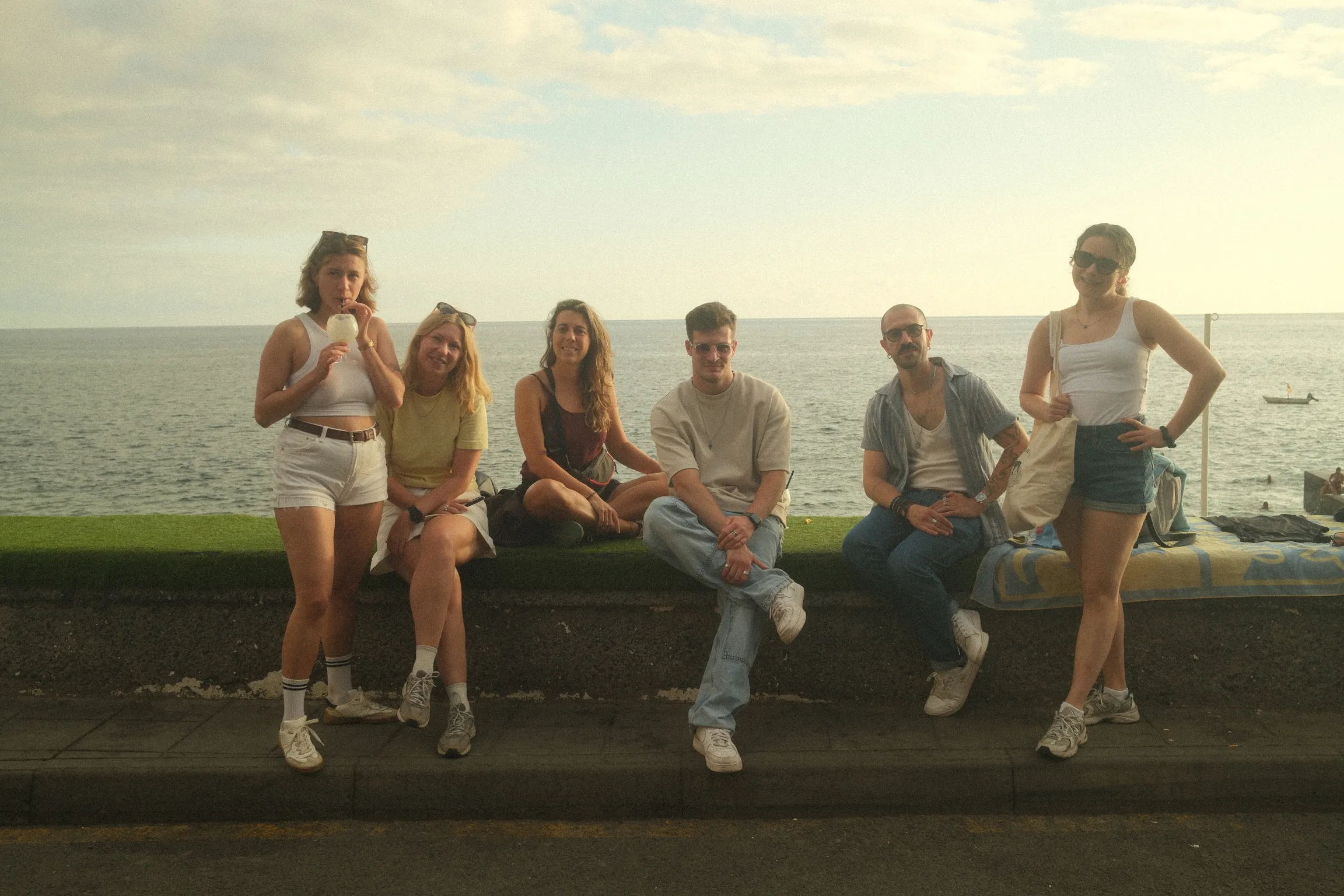
Spreading love through cooking & community.
© 2026 CasaBasilico OÜ (16850261)
All rights reserved.
Design & Branding by ahgoos.com
info@casabasilico.com