
What We Spend Running a Coliving (Real Numbers)
Running a pop-up coliving costs €15,000 to 30,000 per chapter month, split across accommodation rental (40 to 50%), food and hospitality (20 to 25%), marketing (10 to 15%), operations and utilities (8 to 12%), software and tools (2 to 3%), and admin and legal overhead (3 to 5%). For Casa Basilico, the house is always the biggest expense; we rent properties that sleep 10 to 16 people, which runs €3,000 to 7,000/month depending on country. Food is our second-largest cost because we actually cook for our guests (this is a foodie coliving, not a hostel with a microwave). Marketing to fill a chapter costs us €1,500 to 3,000 per cycle across Meta ads, email, and organic. When you price backward from these numbers, the math gets uncomfortable fast; which is why most colivings that launch don't survive past year two. Real numbers, broken down honestly.
We've been asked this question more times than we can count. By guests who are curious. By people who want to start their own coliving. By journalists who never end up writing the article. And occasionally by our accountant, who asks with a slightly different tone.
So we're going to answer it properly. Not the marketing version, not the "it depends" consultant answer. The actual numbers from six chapters across four countries with 180+ guests.
This is going to get specific. Grab a coffee.
Why are we telling you this?
Fair question. Most coliving operators keep costs private for the same reason restaurants don't print their food margins on the menu. But we've always built Casa Basilico on the idea that transparency wins over pretending. Our guests trust us with a month of their lives and a chunk of their salary; they deserve to know what goes into it.
Also? The coliving industry is full of operators pricing on vibes. Telling our real costs helps guests understand why good colivings cost what they do, and why suspiciously cheap ones should raise eyebrows.
Is coliving actually worth the cost?
The big one: what does the house actually cost?
The property is 40 to 50% of everything. This is the number that either makes your chapter viable or sinks it before you even unpack.
For a pop-up coliving with 10 to 16 guests, you need a house that can actually hold people without feeling like a hostage situation. That means private rooms or dorms, multiple bathrooms, a kitchen that fits a group cook, and outdoor space; because after week two, everyone needs air.
What that costs depends a lot on where you are:
Brazil (Pipa): We rented a villa sleeping 14 for around €2,800 to 3,500/month. Brazil is the reason our South American chapters have better margins than European ones. The exchange rate works in our favor, locals price in reais, and the property quality for that money is embarrassing compared to what you'd get in Lisbon.
Spain/Las Palmas, Tarifa: We've paid €4,500 to 6,500/month for comparable properties. Spain is expensive, full stop. Canary Islands especially; landlords there have figured out the digital nomad premium.
Portugal/Madeira: €4,000 to 5,500/month. Similar story. The island tax is real.
Mexico/Oaxaca: Still finalizing our 2026 chapter data, but comparable Latin American markets put us back in the €2,500 to 4,000 range for quality properties.
One thing people don't account for: you rarely get the exact property you want on your first search. We've spent non-trivial hours (and a couple of deposits) on houses that looked perfect online and were chaotic in person. Factor in 1 to 2 weeks of scouting time and the occasional sunk cost. It's part of the coliving business cost that nobody puts in a spreadsheet.
Food. The part other colivings forget to calculate.
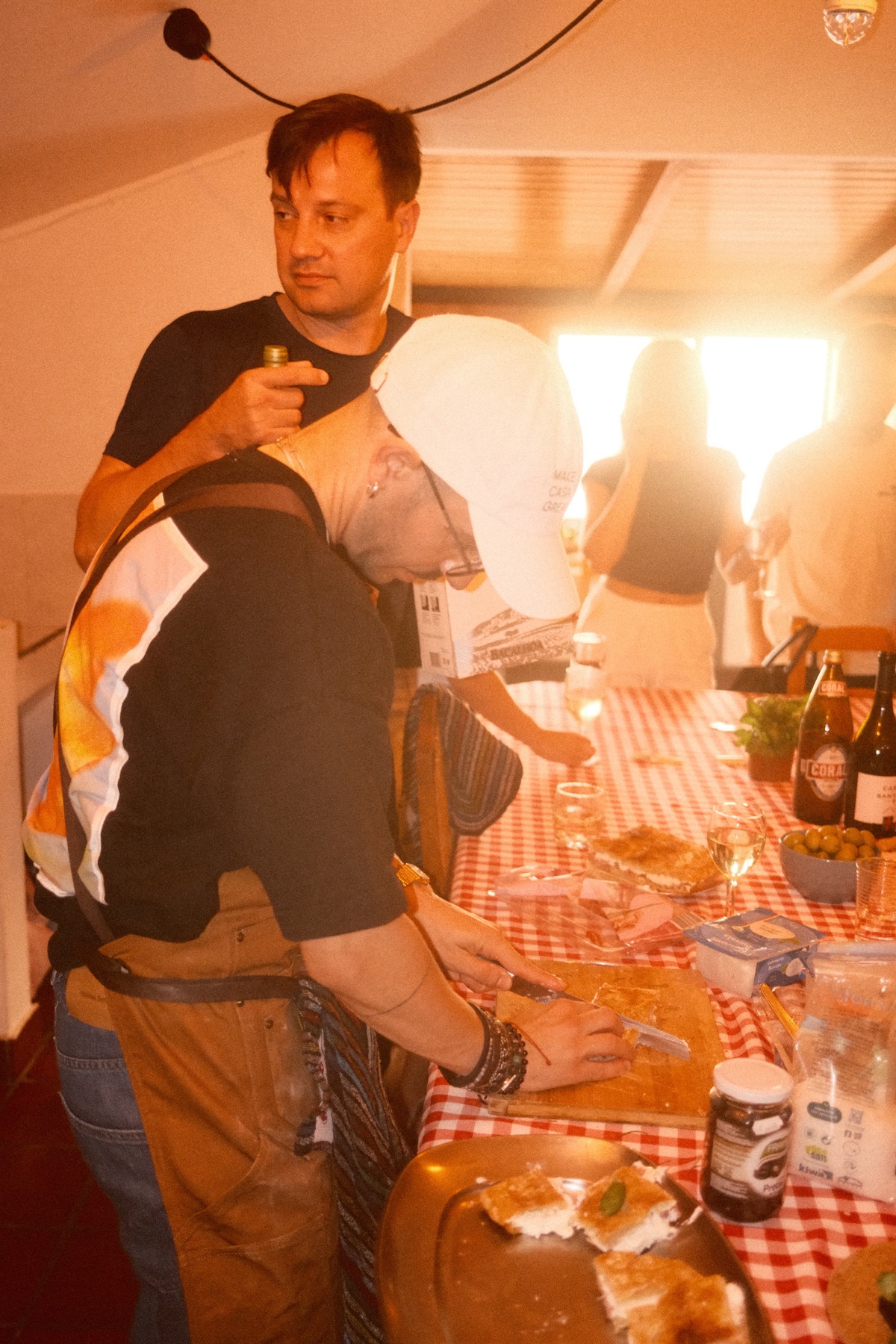
Casa Basilico is a foodie coliving. We actually cook. Group dinners most nights, breakfasts stocked, the occasional pasta situation that turns into an event. Fabio has cooked carbonara for 30 people more times than is probably normal.
This is our second-biggest cost line, and it's the one that most competitors skip or underestimate.
Per-person food cost: €12 to 20/day, depending on destination. Brazil and Mexico come in at the lower end because local markets are incredible and cheap. European chapters push toward €18 to 20/day once you account for good olive oil and cheese that doesn't taste like sadness.
For a 14-person chapter over 28 days, that's:
That number surprises people. It's the line item that separates a foodie coliving from a regular shared house. You're not paying rent. You're paying for someone to stock the fridge, plan the meals, cook three nights a week, and make the kitchen a community space rather than a passive appliance.
What Casa Basilico actually is
Marketing: what does it cost to fill a chapter?
A full chapter doesn't fill itself. Even with a solid alumni base, referrals, and organic Instagram content that performs well, paid marketing is part of the equation for every launch.
Our current setup:
Meta Ads: We run a three-tier funnel; awareness, consideration, conversion. Total monthly ad spend lands around €800 to 1,500/month during a launch cycle. Our best-performing TOFU creative (the "Dreaming of Brazil?" video, for the curious) ran at CPC €0.26 to 0.38; solid for the coliving space. Lifestyle videos perform better than static images, and anything that looks too polished performs worse than something that looks like a real person filmed it.
Email marketing (MailerLite): ~€50 to 100/month at our subscriber volume. We have a nurture sequence, a drop-off recovery flow, and launch campaign sends. Email converts better than social for people who are serious; they've been on our list for weeks or months before they finally click "I'm in."
Organic content (Instagram, TikTok, LinkedIn): Technically free in euros, expensive in hours. Juls runs our social presence and it's not a two-hour-a-week situation. Conservative time valuation puts this at €600 to 1,000/month equivalent if you're pricing it honestly.
Coliving directories and platform listings: We list on several platforms. Some take a 10 to 15% commission per booking. That's a cost that shows up when revenue comes in, not as a fixed line, but it's real.
Total marketing spend per chapter launch: roughly €1,500 to 3,000, plus the time cost of organic.
The most expensive type of marketing is the kind that doesn't work. We've tested enough variations to know that authentic beats polished, and specificity beats vague lifestyle content every time. "Coliving in Oaxaca with daily group dinners, 50 Mbps WiFi, and a rooftop" outperforms "Work from anywhere with like-minded people" by a mile.
The stuff nobody talks about (utilities, tools, admin, insurance)
This is the category that surprises new operators the most. Everything works in theory until you add up the line items.
Utilities (electricity, water, WiFi): €400 to 1,200/month depending on climate and property. Oaxaca in October? Mild. Spain in August with 14 people running AC at night? Uncomfortable bill. WiFi installation is often a one-time cost per chapter location (€100 to 300) plus monthly service (€40 to 80). We stress-test it before guests arrive. Learned that lesson the hard way and we're not going back.
Software and tools:
Legal and accounting: We're registered as Casa Basilico OU in Estonia. Estonian e-Residency is one of the more sensible decisions we've made. It gives EU legal standing with reasonable overhead. Annual maintenance including accounting runs us roughly €1,500 to 2,500/year, or €125 to 210/month amortized.
Insurance: Liability coverage for operating a multi-person residence with guests. Varies by country. Budget €100 to 300/month depending on where you're operating. Don't skip this. Seriously.
Contingency and the stuff that breaks: Something always breaks. A water heater. A WiFi router. A refrigerator the night before 14 people arrive. We keep a 10 to 15% buffer on property-related costs specifically for this. It's not paranoia, it's just how houses work.
How we pick coliving destinations
So does the math actually work?
Let's do the full chapter P&L for a hypothetical 14-person, 28-day chapter in Latin America:
Costs:
Revenue (full occupancy, 14 guests):
Margin: ~€5,450 (31%)
In a good chapter with good occupancy, yes, the math works. The problem is:
This is why coliving pricing feels high until you understand the cost stack. We're not charging €1,200/month because we think you're made of money. We're charging it because the math below requires it.
What this means for what you pay
When guests ask why coliving costs more than renting a room locally: you're not just paying for the room. You're paying for the whole operation; the house we scouted, the dinners we cooked, the WiFi we stress-tested, the people we carefully vetted for the community, and the 18 months of iteration to figure out how to do this without falling apart.
The cheapest coliving isn't the best deal. It might be an operator who underpriced their food costs, skipped insurance, or is running on personal savings while they figure out whether the model works.
We've survived six chapters because we price honestly and deliver what we charge for. A few people have complained we're expensive. We've had zero complaints about not delivering value.
That's the business we're trying to run.
FAQ
How much does it cost to start a coliving from scratch?
First-chapter startup costs run €5,000 to 15,000 once you factor in the property deposit (typically 1 to 2 months), initial food stocking, furniture and equipment for a space that doesn't come fully equipped, and the marketing spend to fill your first cohort. Most operators underestimate this by 40 to 60% because they calculate the recurring monthly costs but forget the setup phase. If you're launching your first chapter, double your initial estimate and see how you feel.
What's the single biggest driver of coliving profitability?
Property cost relative to local pricing. Operators who can find great properties in locations where the property cost is low relative to what guests will pay for the experience have strong margins. This is why Latin America chapters tend to work better financially than European ones; the house costs less, the food costs less, but guests (mostly from the US, Germany, UK) are used to paying European prices.
Why do some colivings include food and others don't?
Cost management and positioning. Including food meaningfully increases your cost per guest (€12 to 20/day is not trivial) but it also increases the community experience and gives you a clear differentiator. Colivings that skip food are usually competing on price. We compete on experience, so food stays.
Do coliving operators make a good living?
Depends entirely on scale and occupancy. A single-chapter operation at 70% occupancy is a lifestyle business that pays modestly. Three to five concurrent chapters with a reliable alumni base is a real business. Most operators are somewhere between "scraping by" and "comfortably covering costs while building something." The ones who burned out usually underpriced, over-promised, or tried to scale before the model was proven.
Are coliving platform commissions worth paying?
Sometimes. Platforms with actual reach charge 10 to 15% per booking. For a new coliving with no audience, that's worth paying to get your first guests. For an established operator with their own email list and social following, direct bookings at zero commission is obviously better. We use platforms selectively; for new destinations where we have less organic reach; and push everyone we can toward direct booking.
We've put real numbers out there. Now come see what they buy you.
Our next chapter is in Oaxaca, Mexico; mole negro, rooftop sundowners, real WiFi, and a group of people you'll actually want to spend a month with. Spots go fast and the early pricing doesn't stick around.

Spreading love through cooking & community.
© 2026 CasaBasilico OÜ (16850261)
All rights reserved.
Design & Branding by ahgoos.com
info@casabasilico.com