
The Rise of Slow Travel: Why Digital Nomads Are Staying Longer

Slow travel for digital nomads means staying in one place for weeks or months instead of bouncing between cities every few days. The trend is accelerating: a 2023 MBO Partners study found 17.3 million Americans working remotely while traveling, and a growing majority are choosing longer stays over rapid city-hopping. Constant movement creates decision fatigue, destroys productivity, and makes it nearly impossible to build the human connections most remote workers crave. When you stay longer, your internet setup gets sorted, your routine clicks into place, you find the coffee shop that becomes your unofficial office, and you get to know people. Studies show 57% of remote workers struggle with loneliness (Buffer, 2023). Slow travel directly addresses this by giving friendships enough time to become real. It's less about "seeing everything" and more about actually living somewhere.
What even is slow travel, and where did the fast version go wrong?
Okay, let's start with the obvious: digital nomads were supposed to be living the dream. Work from anywhere, see the world, never be stuck in a grey office again. And look, that's still the pitch. It just turns out "anywhere" works a lot better when it's somewhere you've actually had time to settle into.
The fast version of nomad life has a serious credibility problem: a new city every two weeks, fifteen tabs open comparing hostels, a Sunday afternoon wasted reinstalling VPN apps. Travel influencers made it look like one long sun-drenched adventure. What they didn't show you was the three hours spent chasing down a SIM card in a language you don't speak, or the Tuesday afternoon when you genuinely couldn't remember what city you were in. That's not freedom. That's just expensive chaos with better lighting.
Slow travel is the correction. Stay somewhere for a month, minimum. Actually unpack your bag. Learn which café has the fastest WiFi and which ones will kick you out after an Americano. Get a favourite restaurant. Figure out the cheap supermarket. Become, for just a little while, a local.
The Nomad List community, which tracks tens of thousands of active digital nomads, has consistently shown that cities with affordable cost of living and decent internet aren't being passed through anymore. They're being lived in. Cities like Tbilisi, Chiang Mai, Oaxaca, and Funchal keep showing up not as weekend stops but as month-long bases with return visitors.
Why does moving every few days actually wreck your work?
Productivity takes about a week to kick in when you land somewhere new.
You spend day one figuring out logistics. Day two exploring (because who can resist). Day three finally finding a workspace that doesn't have a barista who wants to chat every fifteen minutes. Day four, maybe, you start getting real work done. If your stay is seven days, you've lost half of it to setup. If it's thirty days, that setup cost becomes a rounding error.
There's a psychological concept called "decision fatigue," the idea that every decision, no matter how small, depletes your mental energy. When you're moving constantly, you're making hundreds of micro-decisions per week that have nothing to do with your actual job: where to sleep, which laundry place is trustworthy, what neighborhood is safe, whether the plug adapters are compatible. That cognitive load comes directly out of the same budget you need for deep work, creativity, and not sending passive-aggressive emails to clients.
A 2023 Owl Labs survey found that remote workers are 22% more productive when they have stable routines and consistent environments. Not glamorous advice, but accurate.
Slow travel gives you stability without sacrificing the adventure. You still woke up in Oaxaca this morning. You still ate tacos for breakfast. You're still living a life 90% of your LinkedIn connections would quietly envy. You just also sent your project on time.
What actually changes when you stay for a full month?
Week one: You're a tourist with a laptop.
Week two: You have opinions. Your coffee shop has a nickname. You know the shortcut.
Week three: The locals at the market recognize you. You start getting good at ordering in the local language, at least the food parts. You've had three interesting conversations with strangers that didn't start with "so where are you from?"
Week four: You don't want to leave.
That's the slow travel arc, and it's pretty consistent across destinations. The month-long stay is long enough to stop feeling like a visitor and start feeling like you belong somewhere, even temporarily. That feeling of belonging turns out to be the thing most nomads are chasing without quite knowing it.
what coliving actually looks like day-to-day
The friendships are different too. Relationships that start at a seven-day hostel stay tend to end with a vague "we should definitely keep in touch" and an Instagram follow you'll both forget about. Relationships that develop over a month have actual depth. You've cooked together, argued about the best route to the beach, shared the kind of long dinners that go past midnight. Those connections survive the trip.
Loneliness is one of the biggest problems in remote work. Buffer's State of Remote Work 2023 found that 57% of remote workers report struggling with it. Month-long stays, especially in shared spaces, are one of the more effective solutions that isn't just "go to a coworking space and stare at strangers."
Is slow travel expensive compared to moving constantly?
Counterintuitively: no. Often it's cheaper.
Nightly rates crater when you book by the month. An Airbnb that costs €80/night as a short-term rental will often drop to €35-45/night for a month-long booking. Coliving spaces typically offer monthly rates well below their weekly equivalents. And once you're settled, you stop eating at tourist-priced restaurants because you've found the spots where locals actually eat.
Then there's the flight math. Moving every two weeks means roughly 26 flights a year. At even €100 a flight (optimistic, for anywhere interesting), that's €2,600 in flights alone, plus every hour of travel, every airport, every jetlagged morning where you got nothing done. Slow travelers do six moves a year instead. The math is different.
how coliving compares to Airbnb for month-long stays
Hidden costs of constant movement also add up in ways you don't notice until you total them: SIM cards, transportation to/from airports, days of lost productivity, meals eaten at airports because you didn't have time to figure out real food. Slow travel eliminates most of those.
Where does coliving fit into the slow travel picture?
Solo slow travel is great. Slow travel with community is better.
The practical argument first: coliving spaces handle logistics. WiFi is already working. The kitchen has pots in it. Someone knows which weekend market is worth getting up early for. You're not spending your first week problem-solving your way into a functional life. You just arrive and it already works.
But mostly, it's the people.
When you land in a new city solo, meeting people requires effort. You have to put yourself out there, find the right places, show up with energy even when you don't have it. Coliving reverses the default. The community is built-in, and you opt out of dinner when you want to, rather than having to opt into connection every single day.
That friction difference matters more than it sounds. After a hard work week, the idea of "going out to meet people" can feel exhausting. The idea of "walking downstairs and seeing what's going on" doesn't.
a proper explanation of how coliving actually works
At Casa Basilico, we've built the whole thing around this principle: slow travel plus community plus genuinely good food. Our chapters run for a month minimum. You bring your work, we bring the pasta, and somewhere around week two you stop counting the days until you leave and start asking if you can extend.
Is slow travel just for burned-out tech workers looking for a reset?
It's a fair stereotype. The slow travel crowd does skew toward people who've had a "wait, is this it?" moment, usually after a few years of the same desk, the same commute, the same lunch options. But it's not only that.
We've had teachers, therapists, graphic designers, writers, photographers, and one guy who described his job as "professionally arguing on the internet" (he was a content strategist, technically). What they shared wasn't burnout. It was the desire to actually live in the places they were working from, instead of just surviving them between Zoom calls.
The demographic is also younger than the "burned-out tech bro" image suggests. Nomad List's 2024 data shows significant growth in the 24-30 age range: people who entered the workforce during remote-work's normalization and simply never established a reason to go back to an office. For them, slow travel isn't a break from "real life." It is real life.
slow travel works especially well for introverted remote workers
The honest trade-off
Slow travel isn't perfect. You'll miss things at home. Relationships that need physical presence don't travel well. If you have a cat, figure that out. And there's a version of slow travel that tips into avoidance, where staying permanently "between homes" becomes a way to avoid committing to anything. That's worth examining honestly.
For remote workers who want actual work, travel, and connection (not the Instagram version), staying longer is almost always the better choice.
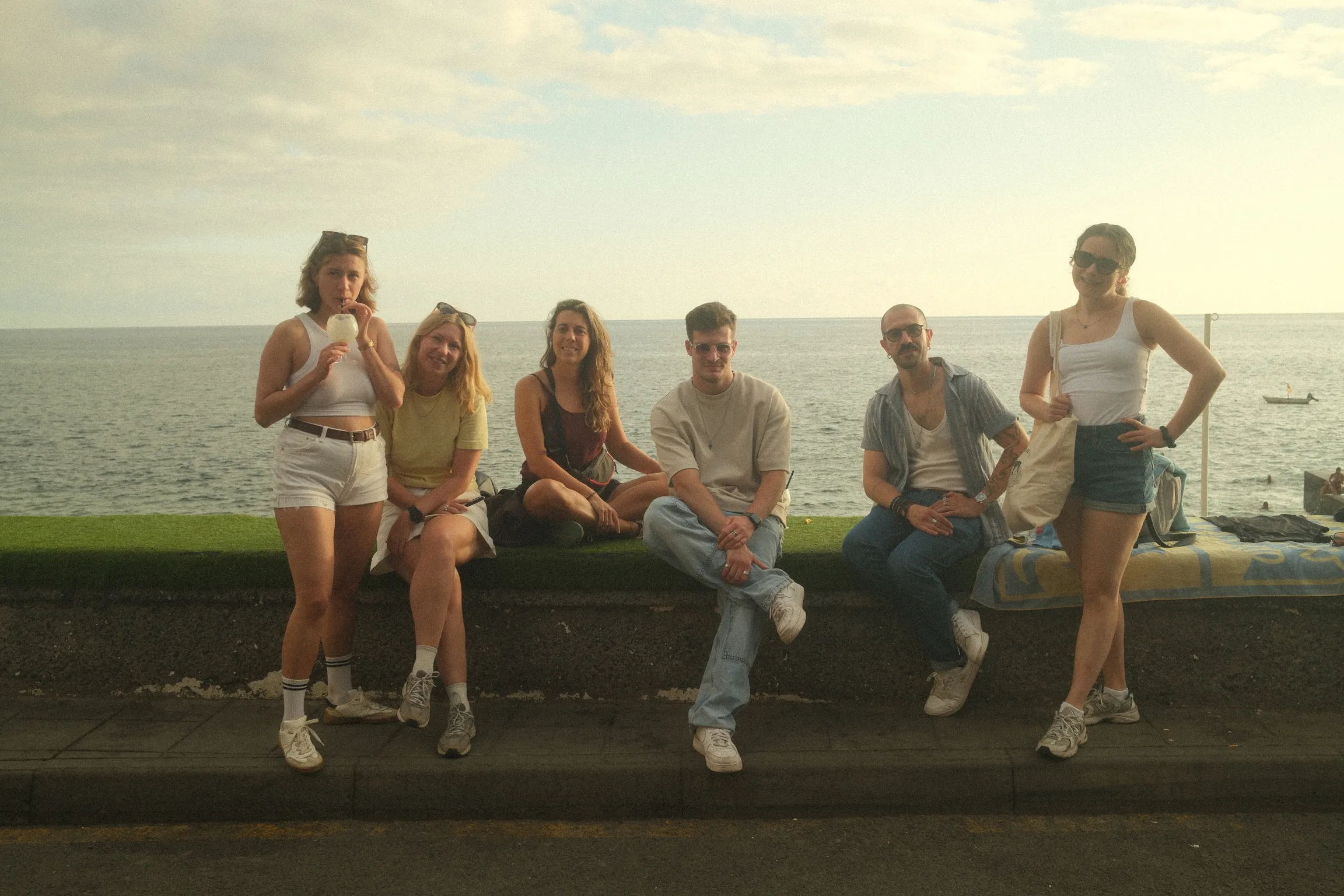
We've been running pop-up foodie coliving chapters since 2024: Las Palmas, Tarifa, Madeira, Brazil, and now Oaxaca. Every single time, the people who get the most out of it are the ones who stopped trying to see everything and just let themselves be somewhere: the ones who made friends, ate well, and stayed.
That's the whole pitch, honestly.
Come see what a month actually feels like → /join-us
FAQ
What is slow travel for digital nomads?
Slow travel means staying in one destination for longer, usually a month or more, instead of moving every few days or weeks. For digital nomads, it combines remote work with actually living somewhere rather than just visiting. The benefits are practical (stable routines, better productivity, lower costs per day) and personal (deeper connections, less decision fatigue, more time to enjoy where you are).
How long counts as "slow travel"?
Most slow travelers consider anything over two weeks a slow stay, with one month being the sweet spot. Two weeks is enough to settle in but not long enough to really feel at home. A month gives you time to develop routines, friendships, and a sense of the place that you can't get from a quick trip.
Is slow travel cheaper than moving around constantly?
Usually, yes. Monthly accommodation rates are lower than nightly rates, often 40-50% cheaper. You also cut down on flights, airport meals, SIM cards, and transport costs. And because you find local spots instead of eating at tourist-priced restaurants, your daily food budget tends to drop too.
Do you get bored staying in one place for a month?
The people who worry most about boredom are usually the ones who've never actually tried it. Within a week, you've built enough local knowledge and routines that the place doesn't feel like a vacation destination anymore. It feels like somewhere you live. Day trips, weekend travels, and local events fill in naturally. Most people who try a month-long stay end up wanting to extend.
How does coliving make slow travel better?
Coliving gives you a ready-made community in a new city, which solves the loneliness problem that comes with solo travel. It also handles logistics: WiFi, kitchen, shared spaces. You're not spending your first week figuring out infrastructure. For slow travelers, coliving combines the practical and social benefits that make staying somewhere for a month actually enjoyable rather than just tolerable.

Spreading love through cooking & community.
© 2026 CasaBasilico OÜ (16850261)
All rights reserved.
Design & Branding by ahgoos.com
info@casabasilico.com