
Best Time to Visit Puglia for Remote Workers
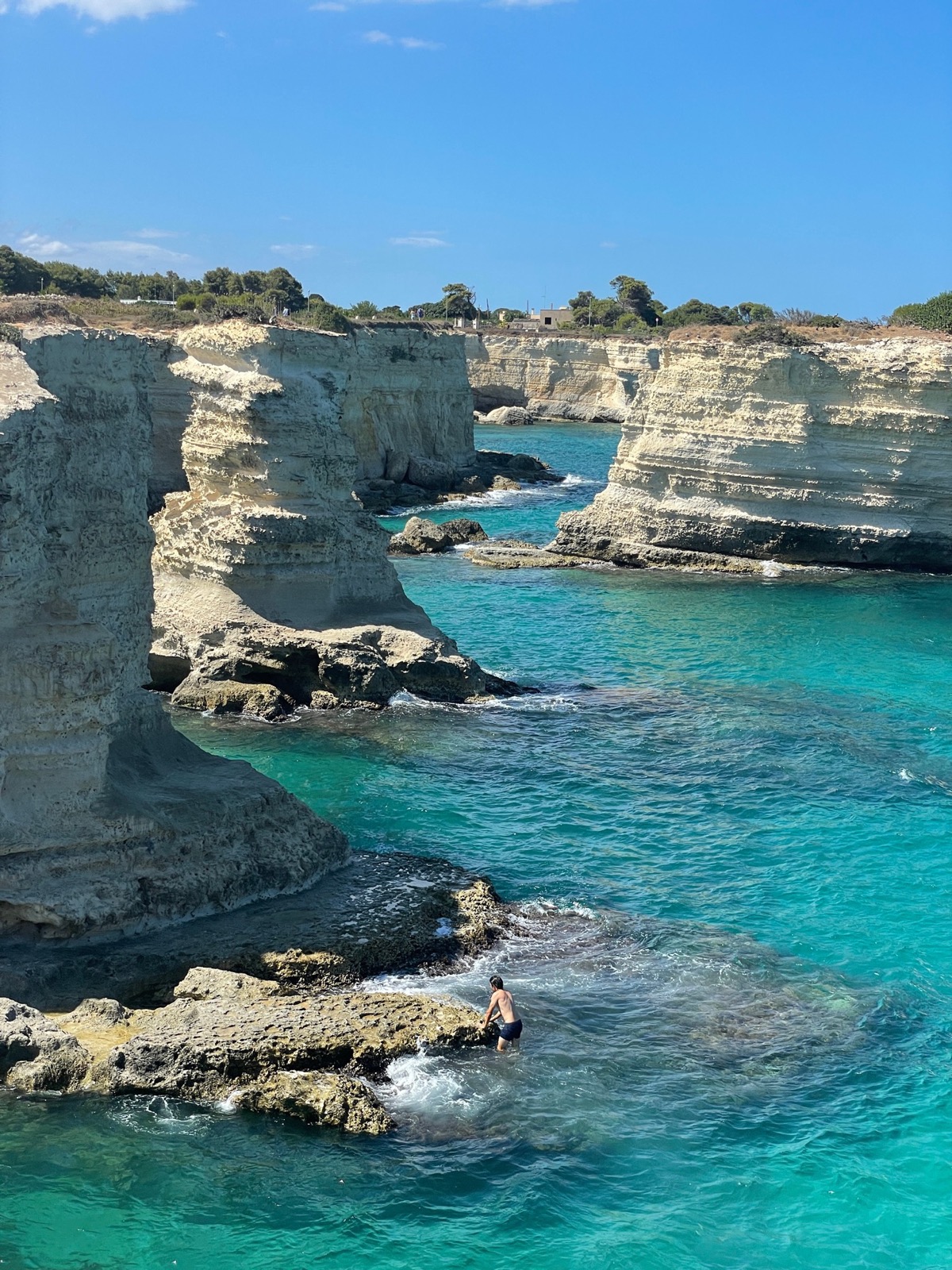
September is the best month to visit Puglia as a remote worker. The brutal August heat (35-40°C) is gone, the tourists are clearing out, and the whole region relaxes into harvest season mode. Average temperatures in September sit around 24-27°C during the day, the Adriatic holds at a swimmable 25-26°C, and you'll see maybe 3-4 rainy days the entire month. Prices drop 20-30% from August peaks. You can actually get a table at the good restaurants. The vendemmia (grape harvest) is happening, which means wine tastings, local sagre (food festivals), and Puglia at its most local and alive. April through June is a close second, with spring temperatures of 18-24°C, wildflowers everywhere, and basically zero tourists. Avoid August unless you enjoy being cooked alive and paying beach club prices for the privilege of a sun lounger you'll share with a stranger's elbow. October and November are also excellent if you're into olive harvests and deserted cities that feel like they're yours.
What's the weather actually like in Puglia in September?
Let's be honest about what "Mediterranean climate" means in practice, because travel blogs love to make it sound like every month is basically the same.
It is not.
August in Puglia is punishing. We're talking 38-40°C inland, packed beaches, restaurants fully booked, and accommodation prices that would make you cry a little. The sirocco (a hot wind from North Africa) occasionally rolls in and turns the whole region into a preheated oven. Beautiful, yes. Comfortable for working, absolutely not.
September fixes almost all of that.
Daytime highs average 24-27°C in coastal towns like Lecce, Polignano a Mare, and Gallipoli. Evenings drop to a pleasant 17-19°C, light jacket territory, perfect for dinner on a terrace without sweating through your shirt by the appetizers. Sea temperatures stay at 25-26°C well into October, so you're still swimming after your standup calls.
Rainfall is minimal: Puglia gets around 30-40mm in September according to Climatestotravel.com, spread over 3-5 days. You're not planning around weather the way you would in, say, Scotland. You're planning around which masseria you want to eat dinner at.
Humidity drops from August's coastal sweatbath. The light turns golden. Everything smells like ripe figs and warm stone. It's a bit much, honestly. In the best way.
Why does September work so well for remote workers specifically?
Remote work has specific requirements that normal tourism doesn't care about: reliable internet, somewhere quiet to work during the day, good coffee at reasonable hours, and a rhythm that doesn't completely derail your productivity.
August fails all of these.
September passes them all.
Accommodation with decent internet: In August, every rental is rented to families who don't need fiber and aren't going to ask about it. By mid-September, the tourist wave recedes and you can actually find apartments with proper connections (60-100 Mbps is realistic in Lecce and Bari) at prices that make sense. Coliving in Puglia for digital nomads has more detail on where exactly to base yourself.
Quieter coworking spaces: Puglia has a growing coworking scene: Lecce has Hub Leuca and SpazioZero, Bari has Copernico and a handful of newer spots. In August, they're either closed for the owners' own summer holiday (classic Italian move) or fully booked. September is when they're humming along normally again.
Restaurants with actual tables: The masserie, trattorias, and osterie you came for don't take reservations for walk-ins in August. They barely have to. By September you can eat at proper hours (though do not try to eat before 8pm, the locals will judge you) without planning three days ahead.
Festival season without the festival chaos: September sits right in Puglia's sagra peak. These are local food festivals celebrating everything from orecchiette to lampascioni (wild onions that are incredible) to the new wine harvest. They happen in piazzas, they're free or nearly free, and they run on weeknights, not a problem when you work remotely and can structure your day however you want.
What's actually happening in Puglia in September?
The vendemmia is the main event. Grape harvest across the Salento peninsula and the Valle d'Itria typically runs from early to late September, and it transforms the countryside. You'll see tractors hauling crates of Primitivo and Negroamaro grapes on every road. Masserie (farmhouses) open for harvest dinners. The air smells like fermenting grape must, and it's not shy about it.
Primitivo di Manduria is Puglia's most famous wine, a full-bodied red that clocks in at 14-17% alcohol and pairs perfectly with the local lamb, horse meat (a thing here), and aged pecorino. September is when the new vintage is arriving and the previous year's is drinking beautifully.
The olive harvest runs later, October through November, but in September you'll start seeing the preparations: nets laid under trees, families showing up on weekends to sort through the groves. Puglia produces 40% of Italy's olive oil, and the cold-pressed extra virgin coming out of here in autumn will ruin you for supermarket oil forever.
On the cultural side: the Taranta music festival (Pizzica, the traditional music of the Salento) runs through August and into early September. If you can catch it, do. It's loud, chaotic, and completely hypnotic.
Is April or May better than September?
Close call. Spring in Puglia is spectacular: wildflowers carpet the countryside, temperatures run 18-22°C, and it's basically tourist-free outside of Easter week (which you want to avoid: Easter in southern Italy is a serious event that takes over entire towns).
The argument for spring:
The argument for September over spring:
If you're purely chasing perfect remote work conditions and don't mind skipping the sea: April-May. If you want the full Puglia experience with swimming, wine festivals, and warm evenings: September wins.
Our guide to coliving in Puglia goes deeper on which towns work best for different working styles.
When should remote workers absolutely avoid Puglia?
August. We said it above but it deserves its own section.
August in Puglia is a different country from September. Italian internal tourism is massive: every family from Milan and Rome descends on the Adriatic coast simultaneously. Accommodation prices triple. The beach towns are at 400% capacity. Traffic on the coastal roads is a special kind of suffering.
Can you work remotely from Puglia in August? Technically yes. Should you? Only if you enjoy air conditioning as your entire personality and have zero need to leave your apartment before 7pm. The heat between noon and 4pm is real and limits your day.
December through February is fine weather-wise (10-14°C, rarely cold) but half of coastal Puglia closes for the season. The beach towns in particular go quiet, charming in its own way but not great if you want options. Lecce stays lively year-round and is actually lovely in winter. Ostuni likewise.
What should you eat in September specifically?
Everything. But if we're being specific about September:
Figs. Puglia produces extraordinary figs, the Dottato variety particularly. September is peak fig season and you'll find them everywhere: fresh, dried, stuffed with almonds and dipped in chocolate (the Lecce pastry shop tradition), piled at markets for basically nothing. Eat them every day.
New olive oil. Some producers do early harvest in late September. The new oil (olio nuovo) is intensely peppery and grassy in a way that fades over time. Get it on bread, nothing else. No salt needed.
Orecchiette with turnip greens (cime di rapa). Technically year-round but autumn is when turnip greens are best. The combination of the bitter greens, garlic, anchovy, and al dente pasta is one of the great dishes of Italian cuisine. Why we're a foodie coliving, not just a coliving explains our obsession with this stuff more than is probably healthy.
Local wine at harvest prices. September is a great time to visit a cantina directly. Some are open to walk-ins during harvest and you'll pay producer prices, not restaurant markup.
Practical numbers for September in Puglia
Sources: Climatestotravel.com for temperature averages; SeaTemperature.org for Adriatic September data; Numbeo for cost-of-living estimates (2024-2025).
Casa Basilico in Puglia
We ran a chapter in Puglia and it broke something in us, in the best way. Fourteen people, a masseria with an outdoor kitchen, a wood-burning oven, and direct access to a trullo-studded landscape with zero tourists within a reasonable radius.
The food was the point, as usual. We made pasta from scratch with a 78-year-old nonno who appeared unannounced and started correcting everyone's technique. We had a lampascioni cook-off that got surprisingly competitive. One person ate so much fresh burrata they had to lie down for an hour and we respected that decision completely.
If you want to experience Puglia in September with people who take the food as seriously as the work-life balance: come join us.
We don't have permanent chapters here year-round. We pop up, do it properly, then move somewhere else equally good. Which is kind of the whole point.
Ready for a September in Puglia that you'll actually remember? Check if we have an upcoming chapter and apply at /join-us. Spots go fast, especially in autumn.
Frequently Asked Questions
Is September a good month for Puglia weather?
Yes, one of the best. You get late-summer warmth (24-27°C days) without August's punishing heat and crowds. The sea is still warm, prices drop noticeably, and harvest season is in full swing. Puglia at its most livable.
Can you swim in Puglia in September?
Absolutely. Adriatic sea temperatures in September average 25-26°C along the Puglia coast, warmer than the North Sea in July, for context. You'll be swimming comfortably until at least mid-October.
Does it rain a lot in Puglia in September?
No. September averages 30-40mm of rainfall spread over 3-5 days. It's the driest part of southern Europe. Plan outdoor dinners freely.
What's the difference between Lecce and Bari for remote workers?
Lecce is more compact, walkable, and has a strong cafe culture, good for solo workers who want ambient buzz. Bari is bigger, faster, has better transport connections, and a more gritty energy that some people love. Both have adequate coworking options and reliable fiber internet.
Is Puglia expensive for digital nomads?
Less than you'd expect. A good apartment in Lecce runs €600-900/month outside peak season. Add food, coworking, and transport and you're looking at €1,200-1,800/month all-in, cheaper than most Western European capitals and with better food and weather.

Spreading love through cooking & community.
© 2026 CasaBasilico OÜ (16850261)
All rights reserved.
Design & Branding by ahgoos.com
info@casabasilico.com