
The 15 Easiest Countries to Move to as a Remote Worker
The easiest countries to move to as a remote worker in 2026 are Portugal, Georgia, Mexico, Estonia, Croatia, Costa Rica, Panama, Thailand, Colombia, Malta, Uruguay, Paraguay, Indonesia, Czech Republic, and Albania. These countries make the cut for three reasons: straightforward visa processes built for remote workers, low bureaucratic friction, and infrastructure that supports working online. Portugal's D8 Digital Nomad Visa takes 1-3 months to process and lets you stay up to 2 years. Georgia gives most nationalities a full 365 days visa-free. No application, no fees. Mexico works on a generous tourist entry while a proper temporary residency visa is accessible for longer stays. The common thread across all 15: each offers either a dedicated digital nomad visa, a streamlined residency route, or a long-stay tourist policy remote workers have used legally for years. None of them will make you feel like a criminal for wanting to live somewhere new.
If you're still googling "best country for digital nomads" from the same apartment you've been in for three years, this one's for you. Moving countries as a remote worker has never been more doable. Governments are competing for your tax base, your spending, and frankly your Instagram posts showing off their coastline.
The hard part isn't finding a country that will have you. It's figuring out which one actually works for how you live, what you earn, and what you need from a place.
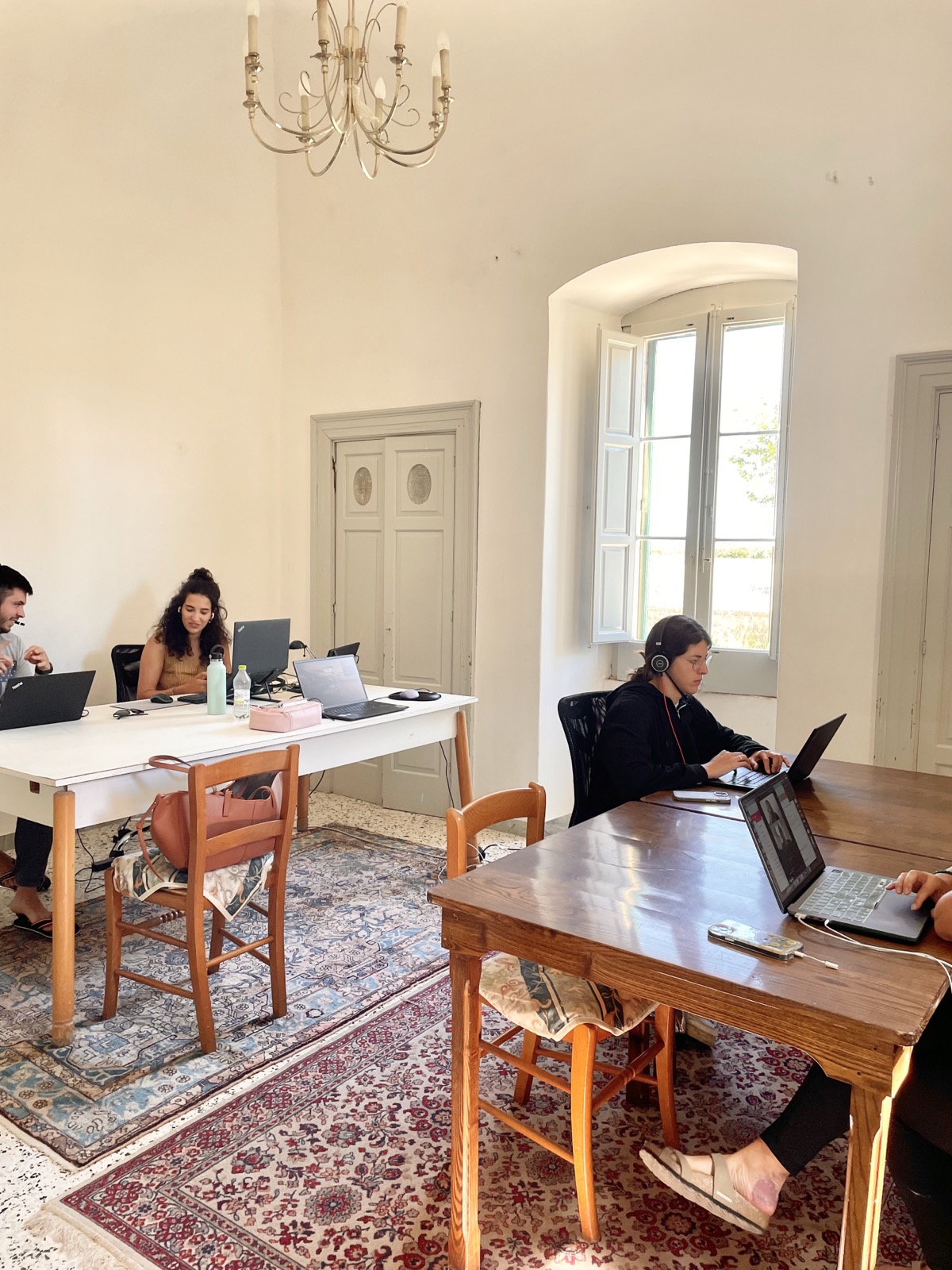
We've run coliving chapters across Europe and Latin America since 2024, and we've watched a lot of people make this decision.
What Makes a Country "Easy" to Move To?
There's "easy" as in friendly people and nice weather. Then there's "easy" as in the government won't make you feel like you're applying for a security clearance just to rent an apartment. We're talking about the second kind.
A country makes this list if it has at least one of the following:
We've also weighted internet reliability, cost of living, expat community size, and whether you'll eat well. That last one is non-negotiable for us.
The 15 Easiest Countries to Move to as a Remote Worker
1. Portugal
Portugal is what happens when a country decides to actually compete for remote workers. The D8 Digital Nomad Visa, launched in 2022, lets non-EU nationals live and work remotely for up to 2 years with the option to extend. Income requirement: €3,480/month (as of 2025). Proof of accommodation required. Processing takes 1-3 months through the AIMA portal.
It's not instant, but it's one of the most complete pathways in Europe. You get legitimate residency, access to Portugal's healthcare system, and the right to stay without worrying about overstays. Lisbon and Porto have mature nomad communities, Madeira has its own Digital Nomad Village in Ponta do Sol, and the Algarve has 300+ days of sunshine annually.
Casa Basilico ran a chapter in Madeira in 2025 and the whole island felt like cheating at life. Fiber internet, a community of people who get it, and fresh espetada basically every night.
Our complete guide to coliving in Madeira
2. Georgia
The most underrated country on this list, and it's not close. Georgia gives most nationalities (US, UK, EU, and many others) a full 365 days visa-free. You just show up. No application, no fees, no income threshold.
For remote workers, this is a golden ticket. Tbilisi has exploded as a nomad hub over the last three years, with fast fiber internet, an extraordinary food scene (khachapuri deserves its own residency permit), and a cost of living that makes most European cities look embarrassing. A comfortable apartment in Tbilisi runs €400-600/month. The country also runs a "Remotely from Georgia" program with tax incentives for longer stays.
If you're looking to move somewhere new and you want to spend 6 months figuring it out before committing to paperwork, Georgia is your answer. Few countries make it this low-friction.
3. Mexico
Mexico technically doesn't have a standalone digital nomad visa, but it doesn't need one. Tourist entry (FMM) grants up to 180 days, and if you're earning income from foreign clients, you can work remotely without a work permit. Many nomads use Mexico City, Oaxaca, or Playa del Carmen as year-round bases by periodically crossing the border.
For longer stays, the Temporary Resident Visa is accessible with proof of monthly income around $1,620 USD. You apply at a Mexican consulate in your home country, then finalize it once you're in Mexico. It's not the flashiest system in the world, but it works, and Mexico is one of the most livable countries on the planet for remote workers.
We're running a chapter in Oaxaca in 2026. The mole negro alone is reason enough to sort out a visa.
4. Estonia
Estonia launched the world's first Digital Nomad Visa in 2020, so they've had more time than anyone to get the process right. The visa lets remote workers live in Estonia for up to a year. Income requirement: €4,500/month. The application is fully digital, which is on-brand for a country that has been running its government online since before most countries had websites.
Beyond the visa, Estonia's e-Residency program lets you register a company and manage it remotely from anywhere in the world. If you run a freelance business or an agency, this is useful infrastructure. Tallinn's old town is beautiful. The winters will test your commitment to the relocation. Bring layers.
5. Croatia
Croatia launched its Digital Nomad Residence Permit in 2021 and has been refining it since. Non-EU citizens can stay up to 1 year, extendable. Income requirement: roughly €2,539/month. No work permit needed as long as your clients are based outside Croatia.
Split and Dubrovnik are the obvious choices, but the islands (Brač, Hvar) offer a different pace entirely. Internet is solid in the main cities, cost of living is meaningfully lower than Western Europe, and the Adriatic coast in September is one of the best places on earth. Game of Thrones was filmed there for a reason, even if we're not supposed to mention it anymore.
6. Costa Rica
Costa Rica introduced a Digital Nomad Visa in 2022. Valid for 1 year, extendable to 2. Income requirement: $3,000/month (or $4,000 for families). Health insurance is required, which you likely have anyway if you're earning that much remotely.
The selling point is obvious: jungle, beaches, volcanoes, and political stability in a region where that last one isn't guaranteed. San José has solid coworking infrastructure, but many nomads base themselves in Santa Teresa or Nosara for a slower coastal pace. The country is English-friendly in nomad-heavy areas, and the food is honest. Casado is not trying to impress you, and that's the point.
7. Panama
Panama's Friendly Nations Visa is one of the most accessible residency routes in Latin America. Citizens of 50+ qualifying countries including the US, UK, EU, Australia, and others can apply for temporary residency with straightforward requirements: proof of economic ties to Panama (a job offer or a bank account with $5,000) and a clean criminal record.
Panama City has legitimate big-city infrastructure, and foreign-earned income is not subject to Panamanian income tax. The cost of living rewards people earning in dollars or euros, and you can eat extremely well for not a lot of money. Spanish is necessary for everyday life outside the expat bubble, but the city is international enough that you can get started without it.
8. Thailand
Thailand doesn't have a traditional digital nomad visa, but its Long-Term Resident (LTR) Visa launched in 2022 covers the high end of the market. It requires annual income of $80,000+ or a financial portfolio of $1M, which puts it out of reach for many early-career nomads.
For everyone else, the Multiple Entry Tourist Visa (METV) grants 6-month stays with multiple entries, and many nomads run on back-to-back cycles using border runs to neighboring countries. It's a gray area, and Thailand is aware of it. A proper digital nomad visa for broader income ranges is reportedly in development for 2026.
Chiang Mai remains one of the best cities in the world for nomads. Fast fiber internet for €15/month. Street food that costs less than a coffee in London. A massive expat community if you want it, or a quieter neighborhood if you don't.
9. Colombia
Colombia's digital nomad visa (Visa NM) lets remote workers stay up to 2 years. The income requirement, around 3x Colombia's minimum monthly wage, works out to roughly $800-900 USD/month as of 2025. That's one of the lowest income thresholds on this entire list, which makes it accessible to early-career freelancers who'd be priced out of Portugal or Estonia.
Medellín has become the tech hub of Latin America over the past decade. The metro works, the neighborhoods are distinct and walkable, the coffee situation is exceptional, and the city is at 1,500 meters elevation so it never gets oppressively hot. Bogotá is bigger and more intense, with a serious cultural scene that rewards exploration.
10. Malta
Malta's Nomad Residence Permit is aimed at non-EU workers employed by foreign companies. Income requirement: €2,700/month gross. Valid for 1 year, renewable. The island is small enough to drive across in 45 minutes. English is an official language, and the Mediterranean lifestyle is exactly what it sounds like.
The practical advantage of Malta is EU residency. Once you're a resident, you have Schengen access and can travel freely across Europe. Malta is expensive by Southern European standards, but it's a strong base for anyone who wants stable, English-speaking EU residency without dealing with the UK's weather or its post-Brexit paperwork complications.
11. Uruguay
Uruguay is the most underrated South American option. Residency is accessible, infrastructure is solid, and the country consistently ranks as having the highest GDP per capita in Latin America. Foreign income is exempt from Uruguayan tax for the first 5 years of residency, which is the kind of policy that makes accountants emotional.
Montevideo is small, calm, and functional. Not a party city, not a chaos city. A city where things work. Internet is reliable, the beef is world-class, and the country has a genuine rule of law that you don't always find in the region. If you want South America without the chaos, Uruguay is the answer.
12. Paraguay
Paraguay's residency scheme is direct. Deposit $5,000 in a Paraguayan bank account and you're most of the way there. Processing time: 2-3 months. Legal fees: a few hundred dollars.
The result: zero tax on foreign-earned income, permanent residency on a relatively fast track, and access to some of South America's most affordable cost of living. Asunción is not glamorous, but it works. This option attracts people who are optimizing hard for taxes and residency speed above lifestyle. If that's you, Paraguay is doing the most.
13. Indonesia (Bali)
Indonesia's Second Home Visa launched properly in 2022. It allows a 5-year stay with a deposit of around $8,500 USD held in an Indonesian bank account. For shorter stays, the Social Cultural Visa gives 60 days extendable to 6 months for a manageable fee.
Bali has the most developed nomad scene in Southeast Asia: fast coworking spaces, long-established expat communities, and a culture with decades of experience hosting foreigners. It's not undiscovered. The combination of reliable fast internet, low cost of living, and quality of life is hard to replicate elsewhere. Canggu has more coworking cafés per square kilometer than most European cities.
14. Czech Republic
Czech Republic offers one of the more accessible European residency routes via the Freelancer Visa (Živnostenský list). You get a trade license, register as a freelancer, and apply for residency. The process takes 2-3 months and has no explicit income requirement, though you need to demonstrate you can support yourself financially.
Prague is one of Europe's most beautiful cities, with a cost of living well below Paris, Amsterdam, or London. Central location means you're within 2 hours of most major European cities. The Schengen access, the cultural scene, and the fact that a very good beer costs around €1 in a local pub all add up to a quality of life that doesn't make sense given how much cheaper it is than Western Europe.
15. Albania
Albania is the dark horse on this list. No dedicated nomad visa, but EU citizens and many non-EU nationals get 1 year visa-free. The country is in active EU accession negotiations, so the infrastructure is improving faster than almost anywhere else in Europe.
Tirana has a growing coworking scene and some of the lowest costs of living on the continent. The Albanian Riviera is beautiful and barely crowded. The catch: this is early-stage nomad territory. Internet outside major cities can be inconsistent, and the bureaucracy runs slow. But for people who want to be ahead of the curve, Albania in 2026 is what Portugal was in 2018. Get there before the prices follow.
What Should You Think About Before Picking a Country?
The visa is just the beginning. Before you commit to a move, work through these:
Taxes: Where you pay depends on your residency status and your home country's tax treaties. Portugal's NHR regime, Uruguay's 5-year foreign income exemption, and Georgia's zero-tax-on-foreign-income setup all attract nomads for real financial reasons. Get an accountant who specializes in digital nomads before you move, not after. The consultation fee will save you five times that.
Health insurance: Most digital nomad visas require it. Sort this before you apply, not while you're waiting on approval.
Banking: A local bank account simplifies rent, utilities, and daily admin. Some countries (Paraguay, Panama) require it as part of the residency process. Others just make life easier when you have one.
Community: Moving to a country where nobody else is doing what you're doing is beautiful and lonely in equal measure. Check what the remote worker community looks like in your target city before you sign a year-long lease on an apartment.
The Fastest Way to Test a Country Before You Commit
You don't have to sign a lease to know if a country works for you.
The best way to road-test a destination is to spend a month there with other remote workers who've already figured out the logistics. You learn what the Wi-Fi is really like at 3pm on a Tuesday. You find out which neighborhood you'd actually want to live in. You discover whether the food is good enough to sustain a year of life there (this is more important than it sounds).
That's exactly what our coliving chapters are. One month, one destination, a house full of people who work remotely and want to live well while doing it. We handle the logistics, the accommodation, the communal dinners. You show up and work.
Our 2026 chapter is in Oaxaca, one of the most livable cities in the Americas for remote workers, and also one of the best places on earth to eat. If you're even considering Mexico as a destination, this is the most efficient way to find out if it's right for you.
Apply for the Oaxaca chapter before spots fill up
Come eat mole negro with us. You can sort the visa paperwork after.
FAQ
Do I need to pay taxes in the country I move to?
It depends on your residency status and your home country's tax treaties. Most digital nomad visas create temporary residency, which may or may not trigger local tax obligations. Georgia and Paraguay generally don't tax foreign income. Portugal's NHR regime offers a flat 20% rate on certain employment income. Uruguay gives you a 5-year foreign income exemption. Hire a nomad-specialist tax advisor before moving. The €300 consultation fee will save you far more than that.
Which country on this list is easiest for US citizens?
Mexico, Colombia, Costa Rica, and Panama are the most accessible for Americans in terms of visa requirements, proximity, and cultural adjustment. Portugal and Croatia are strong European options. Georgia is underrated for Americans who want to stretch their income in a completely different cultural context. Most of these countries have active US expat communities, which helps with the practical side of relocation.
Can I legally work remotely on a tourist visa?
Most tourist visas technically prohibit "working" in the country. However, working remotely for foreign clients while on a tourist visa sits in a legal gray area in many places. Mexico is the clearest example: the government does not enforce work restrictions for foreigners earning income abroad. If you want full legal clarity and no gray areas, use a proper digital nomad visa or residency permit. The risk with the tourist-plus-remote-work approach is mostly theoretical right now, but it's not zero, and it's country-dependent.
How long does it actually take to get settled in a new country?
Visa processing ranges from days (Georgia: walk in) to months (Portugal: 1-3 months). Once you're on the ground, finding an apartment, opening a bank account, and getting your basic admin sorted typically takes 2-4 weeks. Budget for that transition period and don't commit to heavy client work during it. The first month in a new country is part orientation, part logistics, part falling in love with a place. Give it space.
Should I use a relocation agency or do it myself?
For straightforward moves like Georgia or Mexico, DIY is completely manageable. For more complex applications like Portugal's D8 or Thailand's LTR, a local immigration lawyer will save you time and reduce rejection risk. Costs typically run $500-2,000 depending on country and complexity. For first-time international relocators who've never dealt with foreign bureaucracy, the peace of mind is usually worth the fee.

Spreading love through cooking & community.
© 2026 CasaBasilico OÜ (16850261)
All rights reserved.
Design & Branding by ahgoos.com
info@casabasilico.com