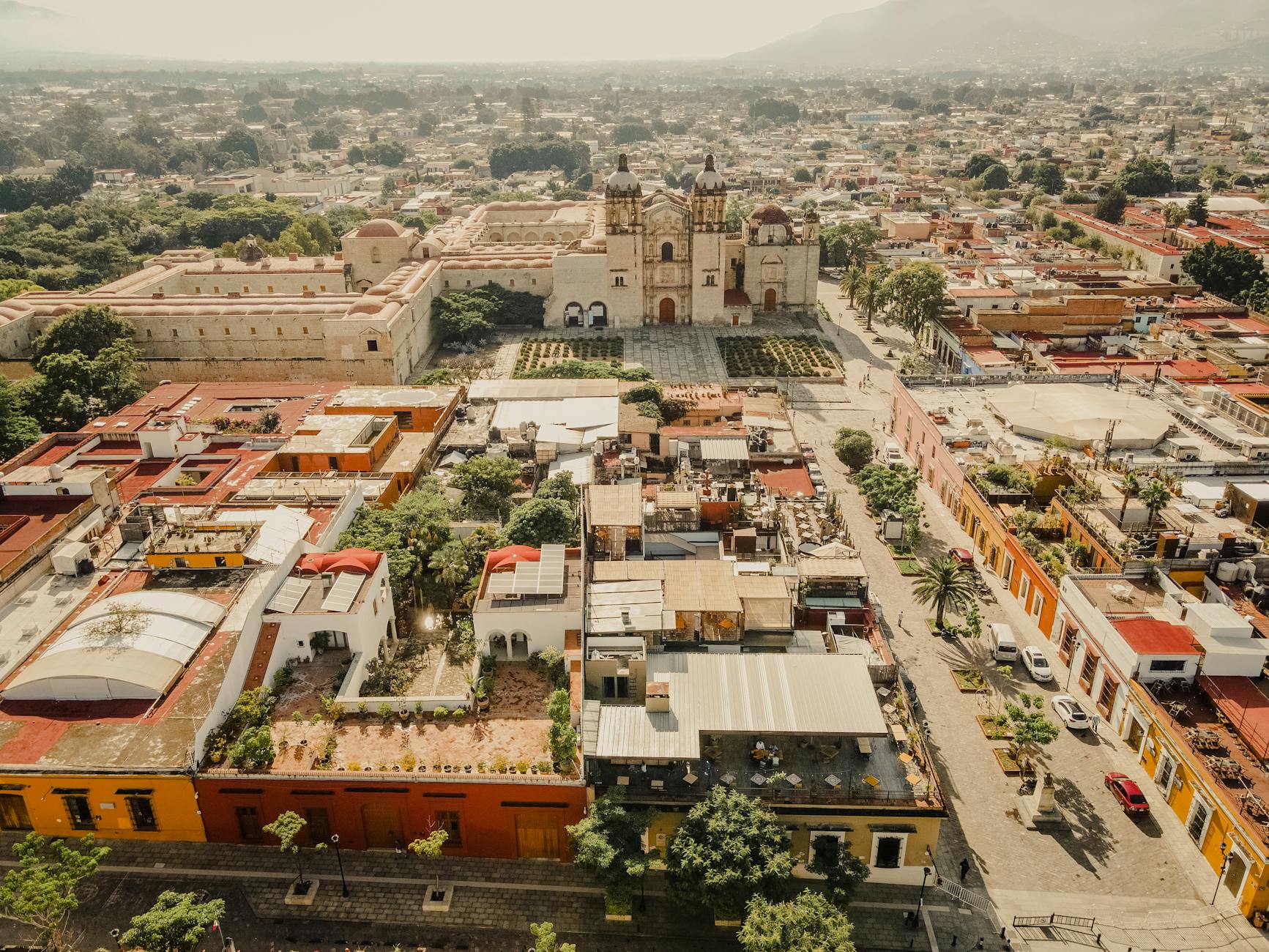
Coliving in Oaxaca City, Mexico for Digital Nomads
What is it like to live in Oaxaca City as a digital nomad?
Oaxaca is the kind of place that turns a one-month experiment into a life decision. It's a mid-sized city in Mexico's southern highlands: 1,550 metres above sea level, perpetual spring weather, and a food culture that makes grown adults emotional. For digital nomads, it offers a rare combination: affordable cost of living (around $950–$1,400/month all-in), decent coworking infrastructure, reliable internet in the center, and a social scene built around mezcal bars and food markets rather than rooftop brunches. It's not for everyone. There's no beach. The power cuts occasionally. But the mole negro alone is reason enough to stay six months. English is spoken in most tourist-facing places, but Spanish will make your life dramatically better and the food dramatically cheaper. Timezone is Central Time (UTC-6), which works well for US East Coast clients and is manageable for Europe with early mornings.
Key Stats at a Glance
| Stat | Details |
|---|---|
| Monthly cost of living | $950–$1,400/month (solo nomad, incl. accommodation). Source: Numbeo, 2025 |
| Average internet speed | 25–60 Mbps (Centro and coworking spaces) |
| Timezone | CST (UTC-6): overlaps well with US East Coast, tough for Europe |
| Visa | Tourist card (FMM), up to 180 days on arrival for most nationalities. No digital nomad visa yet. |
| Best months | October through April (dry season, 18–26°C) |
| Safety | State homicide rate ~8/100k vs Mexico national average of 26/100k |
Cost of Living in Oaxaca City
Here's where your money actually goes, with no rounding in your favor.
| Category | Solo Nomad (mid-range) |
|---|---|
| Private room in shared flat | $400–600 |
| Studio apartment in Centro | $700–900 |
| Coworking membership (hot desk) | $80–150 |
| Groceries (cooking 4-5x/week) | $150–200 |
| Eating out (local fondas + cafés) | $150–250 |
| Transport (InDrive/Uber) | $30–60 |
| Mobile data (Telcel SIM, 20GB+) | $10–20 |
| Going out (mezcal, weekend trips) | $100–200 |
| Total | $950–$1,400/mo |
The low end is very achievable. Centro accommodation skews the budget more than anything else. If you stay in Jalatlaco or Reforma and cook a few days a week, the city is genuinely affordable in a way that Mexico City stopped being years ago. A full set-lunch at a local fonda runs 60–90 pesos (about $3–4). A pour of artisanal mezcal at a local spot is 50 pesos. Fresh produce at Mercado Benito Juárez is embarrassingly cheap. The expensive parts are anything imported and accommodation in prime Centro, which you don't need if you're willing to walk ten minutes.
Where to Work in Oaxaca City
Coworking spaces
Lula Coworking is the most nomad-friendly option in the city. Central location, reliable fiber, day passes and monthly memberships, a decent coffee setup, and a crowd of remote workers who want to work and occasionally grab lunch together. It's the closest thing Oaxaca has to a proper nomad hub.
Selina Oaxaca combines accommodation, coworking, and regular social events under one roof. The WiFi is consistently solid, and if you're new to Oaxaca and want to meet people fast, it works well. It's a social hub more than a deep-focus workspace, but you can usually find a quiet corner when you need it.
Laptop-friendly cafés
Café culture in Oaxaca is strong. Several independent cafes in Centro, particularly around Macedonio Alcalá and the streets near Santo Domingo church, have fast enough WiFi, excellent coffee, and an unspoken understanding that laptop workers are welcome. Café Brúlerie and Café Los Cuiles are community favourites. Don't expect dedicated power strips or standing desks. Do expect some of the best coffee you've had while working anywhere.
Internet situation
In Centro and at coworking spaces, 25–60 Mbps download is common. It's not Lisbon fiber, but it handles video calls, uploads, and most remote work without drama. Power outages happen occasionally, usually brief and almost always during heavy afternoon rain in the wet season. A Telcel SIM card (best coverage in Oaxaca state) is worth getting from day one as a backup. Most coliving spaces and coworking offices have generator backup or fiber with redundancy.
Best Areas to Stay in Oaxaca City
Centro Histórico
Where most nomads land and most never leave. Walkable, beautiful, loud on weekends, and with the highest concentration of cafes with decent WiFi. Markets, restaurants, mezcal bars, and colonial architecture are all within a 20-minute walk. Accommodation is pricier than elsewhere in the city, but you save on transport because you don't need any.
Jalatlaco
Centro's quieter, more photogenic neighbour. Painted streets, bougainvillea spilling over terracotta walls, boutique cafes, and a village feel inside a city. It attracts the slow travel crowd: people who want to feel like they live somewhere rather than pass through it. Perfect if you work mornings and want to wander narrow cobbled streets in the afternoon with no particular agenda.
Reforma
Where you go when you want a bit more room to breathe. More residential, less Instagram-famous, slightly cheaper. You'll find local fondas charging 60 pesos for a full lunch and fewer tourists. Ten minutes in an InDrive to Centro. Good if you're staying longer term and want to feel like a local rather than someone on a slow workation.
Xochimilco
Sits just north of Jalatlaco. Colourful, artsy, a little rougher around the edges. Some of the best mezcal bars in the city are here, along with local markets and a neighbourhood energy that hasn't been fully flattened by gentrification yet. Strong pick if you want character over convenience.
Visa & Logistics
Mexico is one of the easier countries to enter for most nationalities. Here's what you actually need to know.
The tourist card (FMM): Citizens of the US, EU, UK, Canada, Australia, and most other places get a tourist card on arrival, valid for up to 180 days. There's no separate digital nomad visa in Mexico as of 2026, so the tourist card is what everyone uses. 180 days is more than enough for a full chapter.
SIM card: Pick up a Telcel SIM at the airport or any OXXO convenience store (they're on every corner). Telcel has the best coverage in Oaxaca state, including in the valleys outside the city. A 30-day plan with 20GB costs around 300–350 pesos.
Getting there: Oaxaca's airport is called Xoxocotlán International (OAX). Yes, you have to learn to say that eventually. It's 20 minutes by Uber from Centro. Direct international connections are limited: most people fly via Mexico City, Houston, or Los Angeles. Budget for at least two flights and a layover. Not the city's strongest selling point.
Getting around: Oaxaca City is walkable if you stay in Centro or Jalatlaco. For anything further, InDrive is cheaper than Uber and both work well. Colectivos (shared minivans) cost almost nothing and get you across the city fast, but require some Spanish confidence. Taxis off the street are fine within the city. Just agree on a price first.
Things to Do in Oaxaca City
The things to do will find you. But here's a map of the ones worth planning around.
- Monte Albán. The ancient Zapotec city sits on a flattened hilltop 45 minutes from Centro by taxi or colectivo. Worth going twice: once to absorb the scale, once when you understand more about what you're looking at. Go early before the heat.
- Hierve el Agua. Petrified waterfalls above the valley with natural infinity pools overlooking the mountains. A full-day trip from Oaxaca, usually done by organised tour or rented car. Go on a weekday.
- El Árbol del Tule. In Santa María del Tule, 15 minutes east, there's a cypress tree that is the widest in the world. This sounds like a tourist trap and is not. It's just a genuinely extraordinary tree that you stand next to and feel small.
- Mezcal distillery tours. The valleys around Oaxaca are full of small palenques making mezcal the way it's been made for hundreds of years. Santiago Matatlán calls itself the "world capital of mezcal." Go on a guided tour or rent a car and drift through villages until someone waves you in.
- Guelaguetza festival (July). Oaxaca's major cultural festival fills the city with traditional dance, music, and food from all 8 regions of the state. If you're there in July, plan your schedule around it.
- Día de los Muertos (late October/early November). One of the unmissable cultural events in Mexico. The cemeteries outside the city fill with marigolds, candlelight, and families. It is genuinely moving in a way that no amount of pre-travel reading prepares you for.
- Alebrijes workshops. Painted wooden folk-art animals are made by hand in villages like San Martín Tilcajete. Watch people paint with a precision that makes you reassess your relationship with "hobbies."
What to Eat in Oaxaca City 🌮
Oaxaca has one of the most extraordinary food cultures on the planet. If you've been eating "Mexican food" your whole life without coming here, you haven't been eating Mexican food. You've been eating a rumour of it.
Start with the mole negro. This is the thing. A sauce made from more than 30 ingredients (dried chilies, dark chocolate, tomato, plantain, nuts, cloves, charred tortilla) cooked low and slow for hours until it becomes something so complex it barely makes sense. Get it over a turkey leg with rice and handmade tortillas. Mercado de 20 de Noviembre is the easiest starting point, and the vendors there have been making it the same way for decades.
Tlayudas are the local answer to pizza, except better. A large toasted corn tortilla, spread thick with black bean paste (the spreadable kind, not the soup kind), loaded with Oaxacan cheese, your choice of meat, and whatever else they're feeling. Eat them at night from one of the street vendors around the Zócalo. Order two. You'll want two.
Quesillo, the Oaxacan string cheese, is its own food group here. It comes pulled into a ball that you unravel like a very delicious ribbon. It melts. It stretches. It goes on top of everything. You will buy a bag at the market, eat it while walking, and have no regrets about any of it.
Chapulines (toasted grasshoppers seasoned with lime, salt, and chili) are not a tourist gimmick. They're a genuine Oaxacan pantry staple that locals have been eating since long before Instagram. Crunchy, salty, a little smoky. Eat them on a tlayuda, fold them into a taco, or snack on them like crisps with a mezcal. By day three you'll stop thinking about it and just eat them.
Tejate is a pre-Hispanic chocolate drink made with cacao, maize, mamey sapote, and a flower called rosita de cacao, served cold in a gourd from market stalls. It tastes ancient and strange and completely addictive. Find it at Mercado Benito Juárez on a hot afternoon and drink it standing up, which is the correct way.
The markets deserve your first full morning. Mercado Benito Juárez for the overwhelming sensory experience: cheese stalls, towering dried chile pyramids, fresh-squeezed juice, grasshoppers in newspaper cones, and vendors who will absolutely sample you into a corner if you make eye contact. Mercado de 20 de Noviembre for the meat corridor where vendors grill over open coals and you eat standing with a stack of tortillas. El Pochote on Fridays and Saturdays for organic producers, an excellent breakfast, and a crowd that takes food seriously.
Mezcal deserves its own section. You're in the place where it's made. Drink the artisanal stuff from small producers, not the export brands. Start with an espadín to calibrate, then work toward the wilder varieties: tobalá, tepeztate, something smoked. Sip it, don't shoot it. There are mezcalerías in most neighbourhoods offering free tastings. In Situ near the Zócalo is one of the best mezcal bars in the country and they won't make you feel stupid for asking questions.
One honest note: Oaxaca's food scene isn't just good for a digital nomad destination or a Mexican city. It's good on a global scale. If you care about food at all (and if you're reading a Casa Basilico city guide, we assume you do), this place will ruin other cities for you. You have been warned.
Weather & Best Time to Visit
Oaxaca sits at 1,550 metres above sea level, which means the climate has nothing to do with the beach Mexico you might be picturing. Think more "nice Spanish city" than "Cancún."
Dry season (October–April): The sweet spot. Days run 18–26°C, skies are consistently clear, and the city is at its most photogenic. This is when Casa Basilico runs its Oaxaca chapter, and for good reason.
Rainy season (May–September): Mornings are usually fine and often beautiful. Afternoons bring short, heavy storms, mostly between 3pm and 6pm. Work through them, then go out after. Accommodation is cheaper and the valleys are startlingly green. Not a bad time to be here, just different.
Altitude note: Nights can be cool year-round, even in summer. A light jacket is always worth packing. The altitude also means the sun is more intense than at sea level: sunscreen is non-negotiable even in mild weather.
For specific dates: Día de los Muertos (late October/early November) and Guelaguetza (July) are the two events worth planning around. Semana Santa in April is beautiful but the city fills up fast.
Safety in Oaxaca City
Oaxaca City is safer than Mexico's national headlines suggest. The state's homicide rate sits around 8 per 100,000 people, compared to Mexico's national average of 26 per 100,000. The Centro and Jalatlaco areas are well-lit, well-frequented, and comfortable to walk at night.
Standard city-sense applies: don't flash expensive gear in obvious places, use Uber or InDrive instead of unmarked street taxis, and ask locals where not to go rather than trusting a blog written three years ago. Most nomads who've spent time here say they felt more relaxed than they expected.
One thing worth knowing: Oaxaca has an active political culture and protests, roadblocks, and marches happen regularly. They can occasionally disrupt transport or commerce for a day or two, but they are very rarely violent and usually resolve within hours. It's not something to fear, but good context to have if you're catching a flight.
The Honest Downsides
Oaxaca is not for everyone. Anyone telling you otherwise is in the first two weeks.
- No beach. It's in the mountains. If you need an ocean in walking distance, this is not your city. Huatulco is 5 hours away; Puerto Escondido is 4 hours. Worth a weekend trip, not a daily commute.
- Spanish is not optional. Oaxaca is not Playa del Carmen. Outside coworking spaces and tourist restaurants, English is limited. If you can't get by in basic Spanish, you'll miss the best 70% of this city. Invest in the language before you arrive.
- The altitude adjustment is real. At 1,550 metres, you'll feel slower and slightly breathless on hills for the first few days. It passes. Plan for it.
- Getting there is a pain. Oaxaca doesn't have great direct international connections. Most routes go via Mexico City, Houston, or Los Angeles. Budget for layovers and two flights.
- Power cuts happen. Not daily, not catastrophic, but the electricity grid can be unreliable during afternoon storms in rainy season. Coworking spaces have backup. Apartments don't always. Have a SIM-card hotspot ready.
- Gentrification in Centro is moving fast. Rents have risen, some local-facing businesses have been replaced by tourist-facing ones. Not a dealbreaker, but go in with eyes open rather than expecting something frozen in time.
Is Oaxaca City Right for You?
Great if: you care about food as a genuine priority, not a nice-to-have. You want to live in real Mexico rather than tourist Mexico. You're staying at least a month. You have functional Spanish or a real willingness to learn. You like a city with a strong identity that doesn't rearrange itself for you.
Probably not if: you need a beach. You're on a tight budget and expect Bali prices with European infrastructure. You want the kind of nomad scene where there's a weekly English-speaking meetup with 200 people. You need upload speeds above 60 Mbps reliably.
If you want the deep experience of being somewhere real, eating extraordinarily well, and working alongside people who are there for exactly that, come do it with us. That's why we picked Oaxaca for our 2026 chapter.
Oaxaca City vs. Other Nomad Hubs
| If you want… | Oaxaca | Mexico City | Playa del Carmen | Medellín |
|---|---|---|---|---|
| Cost | Low | Mid | Mid | Low |
| Food culture | World-class | Excellent | Tourist-grade | Good |
| Internet | 25–60 Mbps | 50–200 Mbps | 30–80 Mbps | 30–100 Mbps |
| English friendliness | Low | Mid | High | Low |
| Beach access | 4–5 hrs | None | In city | None |
| Nomad community size | Small but real | Large | Very large | Large |
| Feels like travel | High | Medium | Low | Medium |
Mexico City is the obvious comparison. It has faster internet, more English, a bigger nomad scene, and more of everything. It's also louder, more expensive, and a much harder city to actually settle into. Oaxaca rewards people who came because they chose it, not as a default.
Playa del Carmen is what happens when a nomad destination optimises for accessibility over authenticity. The beach is real. The food scene is not. If beach is the priority, go to Playa. If food is the priority, stay in Oaxaca.
Medellín often comes up in the same conversation as Oaxaca: similar price range, strong culture, Latin America with personality. Worth considering if you want Colombia. But Oaxaca's food culture is in a different weight class, and the landscape here is specific in a way Medellín isn't.
Casa Basilico in Oaxaca City, Mexico
Casa Basilico runs its 2026 chapter right here in Oaxaca. No coincidence. The foodie coliving concept fits this city like a quesillo fits a tlayuda: communal dinners built around local market ingredients, mezcal evenings with the group, and a kitchen that actually gets used daily by people who want to cook and eat together. If you've been looking for a reason to come to Oaxaca and also not do it alone, this is it.
Find out about our Oaxaca 2026 chapter →
Frequently Asked Questions
Is Oaxaca safe for digital nomads?
Oaxaca City is safer than Mexico's national headlines suggest. The state's homicide rate sits around 8 per 100,000 people, compared to Mexico's national average of 26 per 100,000. The Centro and Jalatlaco areas are well-lit, well-frequented, and comfortable to walk at night. Standard city-sense applies: don't flash expensive gear in obvious places, use Uber or InDrive instead of unmarked street taxis, and ask locals where not to go rather than trusting a blog written three years ago. Most nomads who've spent time here say they felt more relaxed than they expected.
How fast is the internet in Oaxaca City?
In Centro and at coworking spaces, 25–60 Mbps download is common. It's not Lisbon fiber but it handles video calls, uploads, and most remote work without drama. Power outages happen occasionally, usually brief and almost always during heavy afternoon rain in the wet season. A Telcel SIM card (best coverage in Oaxaca state) is worth having as a backup. Most coliving spaces and coworking offices have generator backup or fiber with redundancy.
Do I need to speak Spanish to live in Oaxaca?
You can survive without it, especially in tourist-heavy areas. But Oaxaca isn't as English-friendly as Mexico City or Playa del Carmen. Speaking even basic Spanish will open up better restaurants, more genuine conversations, lower prices at markets, and a much richer experience overall. Duolingo before you arrive is the bare minimum. A language exchange with someone at your coworking space will take you further faster.
What's the best time of year to go?
October through April is peak season for good reason: dry, warm (18–26°C), clear skies, and the city at its best. May through September is rainy season. Afternoons can be stormy but mornings are often beautiful, accommodation is cheaper, and the valleys are startlingly green. Día de los Muertos in late October and early November is extraordinary if you can overlap with it. Guelaguetza festival in July is worth planning around too.
What kind of digital nomads does Oaxaca attract?
Not the beach bar laptop crowd. Oaxaca pulls people who chose it deliberately: people who care about food and culture, who are staying weeks or months rather than passing through, and who are comfortable in a city that has its own rhythm and doesn't bend itself to accommodate you. The nomad community is real and growing but still small enough that you meet people and form real friendships rather than cycling through strangers. It rewards the curious and the unhurried.
Can I stay longer than 90 days in Mexico?
Yes. Mexico allows up to 180 days on a tourist card (FMM) on arrival. No separate visa required. There's no dedicated digital nomad visa as of 2026. If you want to stay even longer, the FM3 temporary resident visa is an option if you have a longer-term plan. Border runs (crossing briefly into Guatemala or Belize and re-entering) are also commonly used, but check current regulations before relying on them.