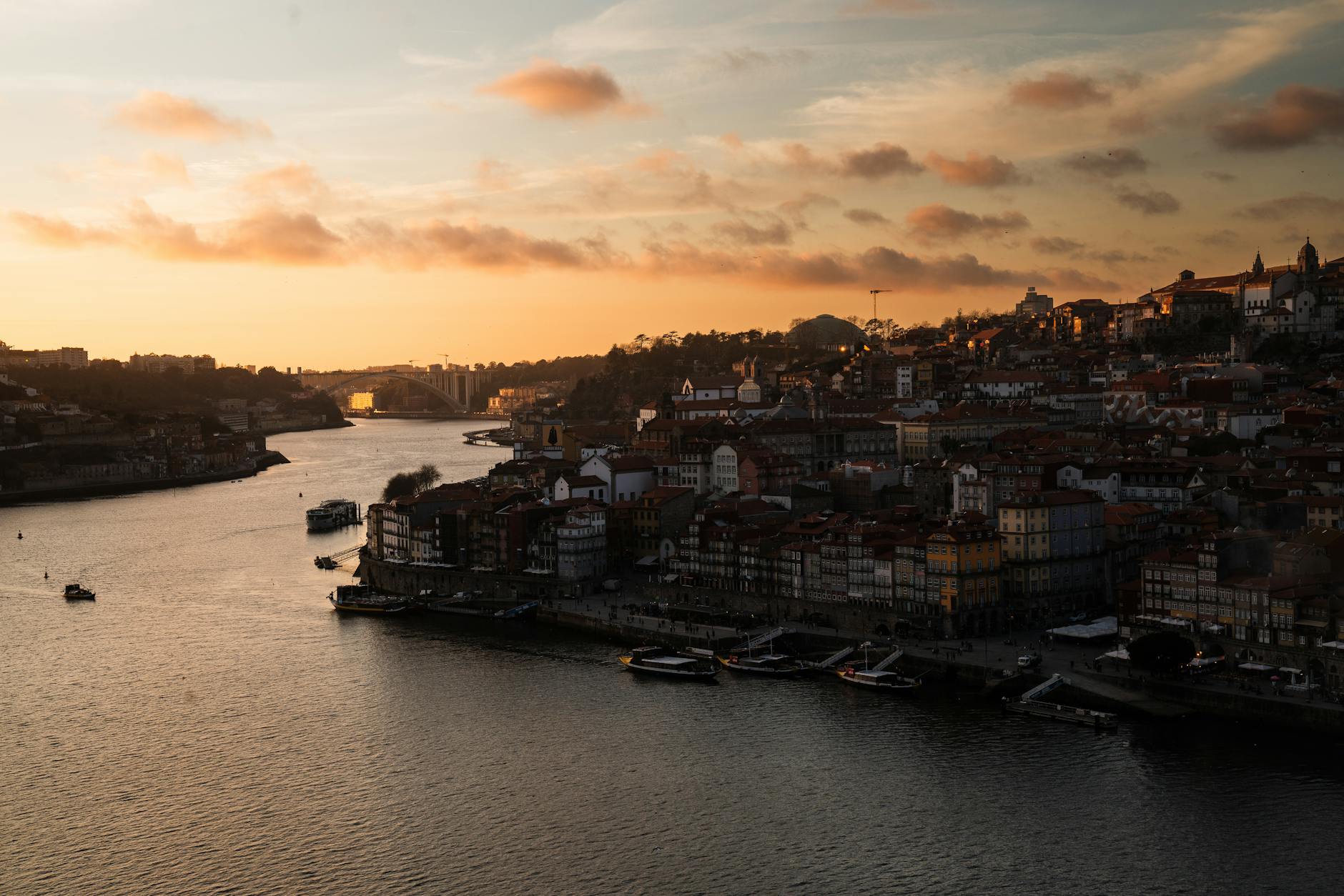
Coliving in Porto, Portugal for Digital Nomads
What is it like to live in Porto as a digital nomad?
Porto is one of those cities that gets under your skin fast. It's hilly, a little chaotic, and the tiles are everywhere: on churches, on buildings, on the floor of your local café. Fiber internet is standard (you'll regularly see 200+ Mbps), coworking spaces are solid, and the cost of living is still manageable compared to Lisbon or any major northern European city. The vibe is authentically Portuguese in a way that Lisbon has slowly been losing to Airbnb tourism. Locals are direct, markets are real, and the food is exactly what a city built on wine and Atlantic fishing should taste like: hearty, proud, slightly excessive. Summer is sunny and busy, winter is rainy and moody and entirely livable if you pack a decent rain jacket. Monthly costs land around €1,300–1,800 depending on whether you cook or eat out daily, which is a tough call when a full lunch menu with wine costs €10. Porto is the cheaper, weirder, friendlier cousin of Lisbon, and a lot of people who came for a month ended up staying six.
Key Stats at a Glance
| Stat | Details |
|---|---|
| Monthly cost of living | €1,300–1,800/month (solo nomad, incl. accommodation). Source: Numbeo, 2026 |
| Average internet speed | 150–300 Mbps (fiber widely available) |
| Timezone | WET (UTC+0) / WEST (UTC+1) summer — overlaps with US East Coast mornings |
| Visa — EU citizens | Free movement, no visa needed |
| Visa — US citizens | 90/180 Schengen days, or Portugal D8 Digital Nomad Visa (€3,040/mo income) |
| Safety | Very safe. Petty theft in Ribeira and São Bento, otherwise relaxed. |
Cost of Living in Porto
The honest version: Porto is cheaper than Lisbon by 15–20%, which adds up fast over a 3-month stay. Here's where the money actually goes for a solo nomad doing things properly.
| Category | Solo Nomad (mid-range) |
|---|---|
| Private room in shared flat | €500–750 |
| Studio in central neighborhood | €900–1,300 |
| Coworking membership (hot desk) | €100–180 |
| Groceries (cooking 4-5x/week) | €180–250 |
| Restaurants & cafés | €200–350 |
| Public transport (Andante monthly pass) | €30–40 |
| Mobile data (local SIM, 20GB+) | €15–25 |
| Going out, weekends, day trips | €120–250 |
| Total | €1,300–1,800/mo |
The thing nobody tells you about Porto is how cheap eating out still is. A menu do dia (lunch menu) at a proper neighborhood tasca runs €8–12 with bread, soup, main, dessert and a glass of wine. Espresso at the counter is €0.70. A pastel de nata in Cedofeita is €1.20, which is the kind of math that ruins you for any other country. Rent is the main pressure, especially in Cedofeita and the historic center, where short-term Airbnbs have pushed prices up over the last three years. If you book monthly via a coliving operator or sublet from a local you'll do better than the listed Airbnb rate, often by 30–40%. If you want a private studio in Cedofeita with a view of the river you're looking at €1,200+, and it's worth every euro. If you can live in Bonfim and cook a few times a week you'll comfortably come in under €1,400 without trying.
Where to Work in Porto
Coworking spaces
Porto i/o has multiple locations across the city, with Trindade and Boavista being the most used. It's more professionally oriented than most: you'll be working alongside local startups and freelancers, not just travelers on a two-week visit. Internet is enterprise-grade, the spaces are clean without trying too hard, and the staff actually know your name by week two. Day passes available if you want to test the water.
Selina Porto covers the coworking need in a space that also has accommodation, so the crowd is predictably nomadic and English-speaking. Good for meeting people fast and a useful first-week base if you're still figuring out the city. The downside: it gets busy on Mondays and Fridays when everyone is filing their weekly Zoom calls.
Second Home Porto occupies the Palácio dos Correios, a former post office turned coworking and cultural space. The architecture alone is worth the day pass. Higher end, beautiful natural light, and probably the prettiest place in Porto to write a proposal you've been putting off for two weeks.
Typographia Cowork in Cedofeita is the under-the-radar option. Smaller, quieter, mostly local freelancers, and the WiFi never drops. If you need to do focused work and don't care about networking events, this is your spot.
Laptop-friendly cafés
Combi Coffee in Cedofeita is the local nomad office that everyone pretends to have discovered first. Specialty coffee, decent food, lots of outlets, no time pressure on the table. If it's full at 10am, walk two streets over to its sister spot.
Mesa 325 does excellent flat whites and one of the better avocado toasts in the country. The crowd is half remote workers, half Porto's design school. Plug points everywhere.
Bird Coffee in Bonfim is small, calm, and run by people who care about coffee with religious intensity. Better for deep work than calls, since the music is dialed in.
Café Candelabro in the historic center is a bookshop-café hybrid where you can spend three hours on one filter coffee and nobody will say anything. Lovely vibe, beautiful light, slightly slow WiFi on busy afternoons.
Internet situation
Portuguese internet is genuinely one of Europe's best-kept secrets. Fiber is widely available across central Porto and most apartments rented to nomads come with 200–500 Mbps. Coworking spaces typically deliver 100–300 Mbps with proper enterprise routers and backup connections. Cafés range from 20 to 200 Mbps depending on the spot. For backup, get a local SIM (NOS, Meo, or Vodafone Portugal all work; NOS is the cleanest for nomads). A 30-day plan with 20+ GB runs about €15. If you have a high-stakes call, default to a coworking space and don't gamble on café WiFi.
Best Areas to Stay in Porto
Bonfim
This is where most nomads end up, and for good reason. It's east of the center, still walkable to everything, noticeably cheaper than Baixa, and the café-to-resident ratio is honestly suspicious in the best possible way. Independent coffee shops with strong WiFi on every other block. Locals haven't been pushed out yet, so you're still buying bread from people who actually live there. Best for: nomads who want to settle in for a month or more and feel like they actually live in Porto rather than visit it.
Cedofeita
Just northwest of the main drag and has the best mix of local life and creative infrastructure. The bookshops, wine bars, and small restaurants feel like they exist for the people who actually live there, not for the Instagram crowd. It's also where most of the coworking spaces and specialty cafés cluster. Pricier than Bonfim but still well below Lisbon. Best for: people who want to walk to their café office and have a decent restaurant on every corner for dinner.
Miragaia
Quieter, squeezed between the Douro riverfront and the Cordoaria gardens. Popular with slow travelers who want less hustle, better views, and the kind of neighborhood bakery that knows your order by day three. You're a stone's throw from Ribeira (touristy but stunning) and a 15-minute walk from Cedofeita. Slightly harder to find a desk outside your apartment, but livable. Best for: writers, designers, anyone who works mostly solo and wants river views from their kitchen.
Foz do Douro
The Atlantic-facing neighborhood where the river meets the ocean. It's where Porto goes on weekends, and where you go when you want to work with a sea breeze coming through the window. Pricier than central neighborhoods and a 20-minute tram ride into town, but if you've already done a month in the city and want to slow down, this is your second-month upgrade. Best for: nomads who already know Porto and want beach-adjacent living without sacrificing infrastructure.
Vila Nova de Gaia
Technically a separate city across the Douro, but a 10-minute walk or metro hop from central Porto. Rent is lower, the view back across to Porto is genuinely one of the best in Europe, and the wine cellars are at your doorstep. Best for: longer stays where you want value plus the daily ritual of crossing the Dom Luís bridge into the city.
Visa & Logistics
EU passport holders: nothing to do. Move in, set up.
Americans, Canadians, Brits, Australians: you get 90 days within any 180-day Schengen window. That's plenty for one chapter. For longer, the D8 Digital Nomad Visa is one of the better-designed nomad visas in Europe. You'll need €3,040/month of consistent income (12x the Portuguese minimum wage), a Portuguese tax number (NIF), and a rental contract or accommodation proof. Processing runs 2–4 months. Once you have it you can stay a year initially, extend, and eventually go for permanent residency. Worth talking to a tax advisor about the NHR (non-habitual resident) regime if your income is non-Portuguese.
A few logistics that save time:
- NIF (tax number): required for everything from a phone plan to a long-term rental. Use Bordr or e-Residence to get one online in about a week, or walk into any Finanças office with your passport.
- Bank account: ActivoBank is the easiest for nomads, fully English, free, and works on day one. Revolut handles most things if you don't want a Portuguese account.
- Public transport: the Andante monthly pass is €30–40 depending on zones. Buy it at any metro station with cash or card.
- From the airport: the metro purple line runs every 20 minutes and reaches the center in 30 minutes for €2. Uber and Bolt both work and are cheap.
Things to Do in Porto
Porto is small enough that you'll cover the highlights in two weekends and rich enough to keep finding new corners for the next six months. The short list:
- Douro Valley day trip. Take the train from São Bento out along the river. The terraced vineyards above Pinhão look unreal. Stop at a quinta for a tasting and lunch, take the train back at golden hour.
- Livraria Lello. Yes, the Harry Potter staircase bookstore. Yes, there's an entry fee. Go anyway, early on a weekday, and buy a book so the credit lands.
- Cross the Dom Luís I bridge at sunset. Walk the upper deck, not the lower. The view back over Ribeira is the postcard you came for.
- Port wine cellars in Vila Nova de Gaia. Graham's, Taylor's, and Sandeman all do proper tastings for €15–25. Do one. The history is good and the wine is better.
- Surf at Matosinhos or Espinho. 20 minutes on the metro. Long Atlantic beaches, surf schools that'll have you standing in an hour.
- Casa da Música. Even if you don't like classical, do the architecture tour. The Rem Koolhaas building is one of the best concert halls in Europe.
- São João festival on June 23rd. Locals chase each other with plastic hammers, sardines are grilled on every corner, and the city throws itself into the river at 1am. It's the best street party in Portugal.
- A weekend in Aveiro and Costa Nova. 40 minutes south, canals and striped beach houses, and the best ovos moles in the country.
What to Eat in Porto 🍷
This is where Porto earns its reputation. The food here is not subtle and absolutely not trying to be Instagram-aesthetic. It's built to fill you up after a morning of hauling fishing nets or working a vineyard, and somehow that context makes everything taste better.
The francesinha is the main event and it demands a paragraph of its own. Take a sandwich (ham, linguiça, smoked sausage, beef), cover it in melted cheese, top with an egg, then drown the whole thing in a beer-and-tomato sauce that simmers for hours. Serve it with fries. Order it with a fino (a small draft beer). Question every other city's sandwich culture afterwards. Café Santiago and Cervejaria Brasão both have cult followings. The debate over who makes it better is a legitimate local sport and you should pick a side by week two.
Bacalhau (salt cod) appears in approximately 365 preparations, one for every day of the year, as the Portuguese proudly claim. Bacalhau à Brás (shredded cod with eggs, onion, and shoestring fries) is the easy entry point. Bacalhau com natas (with cream) is the comfort food version. Bacalhau à Gomes de Sá (with potato and egg, baked) is the one your future Portuguese in-laws will judge you for ordering badly. Try them all. They are all different and they are all good.
Tripas à moda do Porto is the dish that gave Porto's locals their nickname: tripeiros (tripe eaters). Slow-cooked tripe stew with white beans, chouriço, and chicken. It sounds like a dare. It tastes like a hug. Order it at a proper tasca and not from a tourist menu, ideally somewhere with paper tablecloths and a TV showing football.
Bifanas are the underrated everyday food: pork cutlet sautéed in garlic and white wine, doused in sauce, stuffed in a soft roll, eaten standing up. €2.50 and the best lunch in Portugal. Grab one at a café in Cedofeita with a fino at 11am and feel immediately Portuguese.
Mercado do Bolhão reopened after a long renovation and is worth the visit. Fresh produce, local cheese, presunto, olives, and the kind of vendors who will judge you if you squeeze the fruit. Bring a bag. Go on a Saturday morning before 11am.
For wine: Vinho Verde (the local "green wine", young, slightly sparkling, lower alcohol) was made for Porto summers. Walk across the Dom Luís I bridge to Vila Nova de Gaia and do a Douro port wine cellar tour for €15–25. You'll have lunch in Gaia and end up staying through dinner.
Matosinhos, 20 minutes on the metro from central Porto, is where you go for grilled fish. The seafood restaurants line the main street. Robalo (sea bass), dourada (sea bream), arroz de lingueirão (razor clam rice). Order the fish of the day by weight, add a salad and bread, drink Vinho Verde, and remind yourself why you went remote in the first place.
Don't leave without a pastel de nata from Manteigaria in the center, eaten warm from the counter with a sprinkle of cinnamon and a bica on the side. Two euros total. Best breakfast in the city.
Weather & Best Time to Visit
Porto is wetter than Lisbon. That's the headline. It's also greener, fresher in summer, and the changing seasons are more dramatic.
Spring (March–May): The sweet spot for nomads. Mild, sunny days mixed with the occasional grey afternoon, flowers everywhere, 14–22°C. Pack a light jacket.
Summer (June–August): Sunny and pleasant, rarely above 28°C thanks to the Atlantic. June is gold (São João, sardines, long evenings), July and August are busier and slightly more expensive on accommodation.
Autumn (September–October): Probably the best version of Porto. Warm enough for the beach on weekends, cool enough for working, harvest season in the Douro, locals are back, prices drop after the summer peak.
Winter (November–February): Mild but properly rainy. 8–14°C, grey skies, atmospheric in the right mood, depressing if you need sunshine to function. The trade-off: cheap rents, empty coworking spaces, no queues anywhere, and the city to yourself. A good rain jacket and a good café fix most of it.
Safety in Porto
Porto is one of the safest cities in Europe, full stop. Violent crime is rare. The standard urban awareness applies: pickpockets work the touristy spots (Ribeira, São Bento station, the riverfront on summer weekends). Watch your phone in crowded trams and your laptop in busy cafés near tourist zones. Late-night Galerias de Paris (the bar street) can get rowdy but rarely dangerous. Solo female travelers report Porto as comfortable for nights out with the usual urban caveats. Beyond that, this is a city where you can walk home at 1am from a wine bar and not feel uneasy. That counts for a lot.
The Honest Downsides
Porto is not perfect and anyone selling it as such is selling you something.
- The hills are real. Porto sits on the side of a gorge. The first week your calves will complain. After that you'll be in the best shape of your remote-work life.
- Rain. From October to March you'll get proper Atlantic rain. Not a misty drizzle, real rain. Dress for it and don't book an apartment without good heating.
- Apartments aren't insulated. Many beautiful old buildings hit 12°C inside in January. Look for double glazing and decent heating before signing anything in winter.
- Bureaucracy. Anything official (NIF, residency, bank accounts) takes longer than it should. Bring patience and read every step twice.
- Tourist density in Ribeira from June to September. It's a 200-meter strip and avoiding it is easy, but it does feel a bit Disney during peak summer.
- The coworking scene is smaller than Lisbon. Five solid options is plenty, but if you want endless variety, Lisbon has the edge.
None of these are dealbreakers. They're the small print people skip when they're trying to sell you a dream.
Is Porto Right for You?
Yes if: you want a smaller, friendlier, cheaper alternative to Lisbon with serious food, fast internet, and a city center you can walk across in 20 minutes. You're fine with rain in winter, you like wine, you don't need a 50,000-person nomad scene to feel social.
Probably not if: you need year-round beach weather (try Las Palmas or Madeira), you hate hills, you can't handle grey skies for stretches in winter, or you need a city with the scale of Lisbon or Barcelona. Porto rewards slow living; if you're optimizing for variety and constant new faces, Lisbon will fit better.
Porto vs. Other Nomad Hubs
| If you want… | Porto | Lisbon | Madeira | Barcelona |
|---|---|---|---|---|
| Cheapest | Lowest | Mid | Lower | Higher |
| Biggest nomad community | Smaller | Largest | Mid | Large |
| Best food | Strong | Tied #1 | Strong | Tied #1 |
| Beach access | 30 min | 30 min | At door | In city |
| Year-round livable | Yes | Yes | Yes | Yes |
| Authentic local feel | Highest | High | Highest | Mid |
If you want a more established scene and bigger city, Lisbon is the obvious move. For an island version with Atlantic energy, Funchal in Madeira. For Mediterranean weather and a bigger city, Barcelona.
Frequently Asked Questions
Is Porto good for digital nomads year-round?
Yes, but with caveats. Summer (June–September) is peak tourist season: more people, higher short-term rental prices, and the historic center gets crowded. Spring and autumn are ideal: great weather, fewer crowds, still warm enough to eat outside. Winter is rainy and atmospheric. If you can handle grey skies, January and February are excellent for cheap rents and near-empty coworking spaces.
How fast is the internet in Porto for remote work?
Fast. Portugal has some of the best fiber infrastructure in Europe. Most apartments come with 100–300 Mbps, coworking spaces are reliable, and even café WiFi is generally solid. Always check before banking a high-stakes video call on café WiFi though, and keep a local SIM as backup.
Do I need to speak Portuguese to live in Porto?
Not really, though a few basics go a long way. English is widely spoken in coworking spaces, cafés, and by anyone under 40. Older locals and traditional restaurant owners may only speak Portuguese. Having Google Translate ready and a smile costs nothing and opens a lot of doors. Learning obrigado/obrigada (thank you), bom dia (good morning), and uma bica, por favor (one espresso, please) will earn you noticeably warmer service everywhere.
Is Porto safe for solo nomads?
Porto is one of the safest cities in Europe. Petty theft exists in touristy areas (Ribeira, São Bento station), the usual keep-an-eye-on-your-bag advice applies. Beyond that, it's relaxed. Solo travelers of all genders report feeling comfortable day and night in the central neighborhoods.
What's the best month to visit Porto as a digital nomad?
September and October are the sweet spot. Summer heat is gone, prices drop, coworking spaces are less crowded, and it's still warm enough for weekends in Douro Valley or on the coast. June is also excellent if you can overlap with the Festas de São João (June 23rd), the city's biggest street party, where locals chase each other with plastic hammers and garlic flowers, and the sardines are grilled on every corner.
Is Porto cheaper than Lisbon?
Yes. Rent runs 15–25% lower for comparable apartments, eating out is slightly cheaper, and coworking memberships are €30–60/month less. Overall, expect to spend €200–400 less per month for the same lifestyle.