Coliving in Funchal, Madeira for Digital Nomads
What is it like to live in Funchal as a digital nomad?
Funchal is the capital of Madeira, a Portuguese archipelago sitting in the North Atlantic about 1,000 km southwest of Lisbon. It's volcanic, dramatic, draped in green, with a working city underneath the scenery. For digital nomads, that combination is close to perfect. The internet is fast (100–300 Mbps fiber is standard), the cost of living runs 30–40% below Lisbon, the climate is subtropical and stable year-round (between 18°C and 24°C basically always), and the food scene is extraordinary and almost entirely overlooked by people who haven't been. EU citizens can stay as long as they like. Non-EU nationals get 90 days under Schengen, with Portugal's D8 Digital Nomad Visa available for longer stays. Madeira also runs an official Digital Nomad Village in Ponta do Sol, which is part of why the island has a real, established nomad community now. The vibe is slow, which is the point. People come for a month, slip into a rhythm of long levada hikes on weekends and proper dinners on the terrace, and re-book before the month is up. We've seen it happen many times.
Key Stats at a Glance
| Stat | Details |
|---|---|
| Monthly cost of living | €1,200–1,800/month (solo nomad, incl. accommodation). Source: Numbeo, 2026 |
| Average internet speed | 100–300 Mbps (fiber standard in most rentals) |
| Timezone | WET (UTC+0) / WEST (UTC+1) Apr–Oct — overlaps with US East Coast mornings |
| Visa — EU citizens | Free movement, no visa needed |
| Visa — US citizens | 90/180 Schengen days, or Portugal D8 Digital Nomad Visa (€3,040/mo income) |
| Safety | Very safe. One of the lowest crime rates in Southern Europe. |
Cost of Living in Funchal
Madeira is one of the better value-for-lifestyle deals in Europe. It's cheaper than Lisbon, comparable to Porto on rent but slightly cheaper on food, and the quality of what you get for the money is high.
| Category | Solo Nomad (mid-range) |
|---|---|
| Private room in shared flat | €450–700 |
| Studio in central neighborhood | €800–1,200 |
| Coworking membership (hot desk) | €100–180 |
| Groceries (cooking 4-5x/week) | €170–230 |
| Restaurants & cafés | €180–300 |
| Car rental (monthly, optional) | €250–400 |
| Mobile data (local SIM, 20GB+) | €15–25 |
| Going out, weekends, levada gear | €120–250 |
| Total | €1,200–1,800/mo |
A few things that genuinely surprise people. Eating out is properly cheap. A traditional Madeiran lunch with bread, soup, espetada, and a glass of wine runs €12–15. Fresh fruit at the Mercado dos Lavradores is comically good and cheap, especially the local bananas (smaller, sweeter, and nothing like the supermarket version). Fish is excellent and affordable, particularly in Câmara de Lobos and the eastern side of the island. The expensive parts are imported groceries (anything non-Portuguese is shipped in, so wine from elsewhere, certain cheeses, and specialty ingredients add up) and renting a car (necessary if you want to explore the island, optional if you stay in Funchal). If you can cook a few nights a week and split a car with another nomad on weekends, you'll come in under €1,400 without trying.
Where to Work in Funchal
Coworking spaces
Cowork Funchal is the longest-running dedicated coworking space in the city, centrally located and properly set up for full workdays. Reliable fiber internet, private desks and open-plan options, meeting rooms, and a community of regulars that's a mix of local entrepreneurs and visiting nomads. Day passes and monthly plans available. The safe bet if you want something that functions like a proper office.
AKUA is the café-meets-coworking option. Creative crowd, better coffee than a standard office setup, and the vibe is lighter and more sociable. Works well for deep work sessions with good espresso. Not ideal for back-to-back calls because the open space gets a bit lively at lunch.
Cowork Funchal Sé is the newer central option, smaller and quieter, with proper soundproof phone booths. Good for nomads who do a lot of calls.
Ponta do Sol Digital Nomad Village is technically a 30-minute drive west of Funchal but worth knowing about. It's the official Madeira government-backed nomad village with free coworking, a built-in community, and weekly events. If you're staying longer than a month and want a built-in social life, basing yourself there for a few weeks is a good move.
Laptop-friendly cafés
The Snug in the Old Town does excellent specialty coffee, fast WiFi, and a quiet enough vibe that you can actually settle in for a few hours.
Avo Wellness Café is healthy food, good juices, plenty of outlets, and a crowd of nomads who clearly use it as their second office.
Penha d'Águia Café in São Martinho is the local secret. Not aimed at nomads, which means it's quiet, cheap, and the espresso is properly Portuguese.
Café do Teatro has a beautiful courtyard, good light, and is fine for a focused two-hour stretch on a sunny morning.
Internet situation
Portuguese fiber infrastructure extends to Madeira. Most apartments aimed at longer stays come with 100–300 Mbps as standard. Coworking spaces deliver 100–200 Mbps consistently. Mobile coverage (NOS, MEO, Vodafone) is solid across most of the island and on main roads. You'll find occasional dead spots on mountain trails, which isn't a problem unless you've decided to take calls on a levada hike. For backup, get a NOS or MEO SIM with 20+ GB for €15–20.
Best Areas to Stay in Funchal
Funchal is compact enough that neighborhood choice is more about vibe than logistics. The whole city is connected by a bus network and the center is walkable. That said, where you base yourself shapes the kind of month you have.
Zona Velha (Old Town)
This is the neighborhood where you'll spend most of your evenings whether you want to or not. The Old Town sits at the eastern edge of the waterfront: cobblestone streets, painted doors (the famous Painted Doors of Funchal are all here), wine bars, and restaurants that don't bother with tourist menus because they don't need to. For remote workers, it's great if you want to feel embedded in the city from day one. Coworking spaces and cafés are walkable, the market is five minutes away, the energy at night is relaxed without being dead. The trade-off: one of the pricier areas to rent. Best for: short stays where you want to be in the middle of everything.
São Martinho
The neighborhood most longer-stay nomads end up in. São Martinho sits west of the center, up the hillside, with views over the harbor and quieter streets. Rent is more reasonable than the Old Town, the residential feel means you settle in rather than permanently tourist-mode, and it's close enough to everything that you won't feel cut off. There's a supermarket, a few local restaurants, and good bus connections. Best for: month-plus stays where you want Funchal to feel like home.
Santa Luzia
Closer to the center, Santa Luzia is a residential neighborhood that doesn't get mentioned enough. Quieter than the Old Town, more central than São Martinho, with some excellent local restaurants that cater to residents rather than visitors. Best for: nomads who cook most nights and explore on weekends.
Caniço
About 15 minutes east of the city center by car, Caniço is worth knowing about if you want space and lower prices without sacrificing access. Caniço de Baixo has natural pools carved into volcanic rock, useful when you want to finish the workday by jumping into the Atlantic. Quieter, less urban, and appeals to nomads who want long focus hours and fewer social obligations. You'll need a car or scooter, which adds cost, but the rent savings often cover it. Best for: writers, deep-focus workers, or couples who want quiet.
Ponta do Sol
A 30-minute drive west, Ponta do Sol is the official Digital Nomad Village. Tiny coastal town with a built-in nomad community, free coworking, weekly events, and a different (more sociable) vibe than Funchal. Best for: solo nomads who want guaranteed social life from day one.
Visa & Logistics
EU passport holders: nothing to do.
Americans, Canadians, Brits, Australians: 90 days within any 180-day Schengen window. For longer, the Portugal D8 Digital Nomad Visa is the standard route. €3,040/month income requirement (12x Portuguese minimum wage), Portuguese tax number (NIF), health insurance, accommodation proof. Processing 2–4 months. Once granted, 1 year initial residence renewable up to 5.
A few logistics that save time:
- NIF (tax number): required for almost everything. Use Bordr or e-Residence for the online route, or walk into Finanças in Funchal with your passport.
- Bank account: ActivoBank works fully online and in English. Revolut covers most things if you don't want a Portuguese account.
- Car rental: if you want to explore the island properly, rent monthly. Cabify and Bolt work in Funchal for the daily-life stuff.
- From the airport: the Aerobus to the city center is €5 and runs every 30 minutes. Taxis run €20–25.
- Buses: Horários do Funchal covers the city, Rodoeste and SAM cover the rest of the island. Routes are reliable but infrequent on weekends.
Things to Do in Funchal and Madeira
Madeira's "things to do" list is heavy on nature and light on monuments. This is the right ratio.
- Levada hikes. Madeira has 2,500 km of levada irrigation channels with footpaths alongside. The 25 Fontes and Levada do Caldeirão Verde are the icons. Vereda do Areeiro to Pico Ruivo is the dramatic mountain ridge hike with cloud sea views if you start at dawn.
- Sunrise at Pico do Arieiro. Drive up at 5am, watch the sun come up over the cloud line. The single most photographed spot on the island, deservedly.
- Swim at the natural pools of Porto Moniz. Volcanic rock pools filled by the Atlantic. Drive up the west coast, swim, have grilled fish for lunch.
- Câmara de Lobos. The fishing village just west of Funchal where Churchill used to paint. Best place to drink poncha at a working seafront tasca.
- Cabo Girão. The skywalk over a 580m cliff with a glass floor. Touristy but the views are real.
- Surf at Jardim do Mar or Paul do Mar. Proper Atlantic surf on the south coast for intermediate-plus surfers.
- Whale watching. The waters off Madeira are deep enough for sperm whales and pilot whales. Half-day boat trips run €40–60.
- Mercado dos Lavradores on a Saturday morning. Best market in the country (more on this in the food section).
What to Eat in Funchal 🇵🇹
This section exists because most city guides treat food as an afterthought. We are not doing that. Madeiran food is one of the most underrated regional cuisines in Europe and it deserves your full attention.
Lapas
Start here. Lapas are limpets, shellfish that cling to the volcanic rocks along the Madeiran coastline, grilled on a cast iron plate with butter, garlic, and a squeeze of lemon. They arrive at the table still sizzling, served in their shells. You eat them with a fork, drag the shell along bread to catch the butter, and immediately order a second round. Every restaurant in Funchal serves them. Every single one is good. The one dish you have no excuse to miss.
Espetada
The Madeiran answer to a BBQ, and a better answer than most. Beef from cattle raised in the serra is skewered on a green laurel branch, seasoned with sea salt and garlic, cooked over a wood fire. The laurel imparts a subtle smokiness that you can't replicate with a metal skewer. Espetada is traditionally eaten at Sunday lunches in the hills above Funchal, at restaurants with long wooden tables and views across the valley. Santo António and As Vides in Estreito de Câmara de Lobos are the cult favorites. You go with a group, you eat too much, you don't move for an hour after.
Bolo do Caco
Flat bread cooked on a basalt stone, served warm with garlic butter. The texture sits between a pita and an English muffin. It works with everything: as a side to espetada, stuffed with local cheese, or eaten on its own while standing at a market stall because you couldn't wait. You'll find it everywhere in Funchal. You will miss it when you leave.
Espada com Banana
Black scabbardfish (espada) is one of the deep-sea fish caught off the Madeiran coast and has been on local menus for centuries. The most traditional preparation pairs the fish with fried banana, which sounds like a joke but is entirely correct. The sweetness cuts through the richness of the fish in a way that nothing else does. Order it once to understand what you've been missing.
Poncha
Not food, technically. But mandatory. Poncha is Madeira's traditional drink: aguardente de cana (sugarcane spirit), honey, and lemon juice, mixed with a wooden stick called a varinha in a clay cup. It's dangerously drinkable and tastes like something your grandmother would make if your grandmother lived on a volcanic island and had strong opinions about aguardente. The original is lemon, but passion fruit (maracujá) and tangerine variations exist. Try all of them. Space them out. Taberna da Poncha in Serra de Água is the cult spot but any working-class bar in Câmara de Lobos will do it properly.
Madeira Wine
The fortified wine that put the island on global maps in the 1700s. Sweet (Malmsey, Bual) or dry (Sercial, Verdelho), served as an aperitif or with dessert. Blandy's Wine Lodge in the center does a proper tour and tasting for €10–25. Worth doing once even if you don't drink wine often.
Mercado dos Lavradores
The main market in Funchal is where you spend a Saturday morning. The building is tiled in azulejo panels, the stalls overflow with produce that doesn't exist at the same quality anywhere else in Europe. Madeiran bananas, passion fruit with a depth of flavor mainland versions can't touch, custard apples that taste like they were designed by someone who loves you, and an entire fish floor downstairs. Budget two hours and bring a bag.
Casa Basilico in Madeira
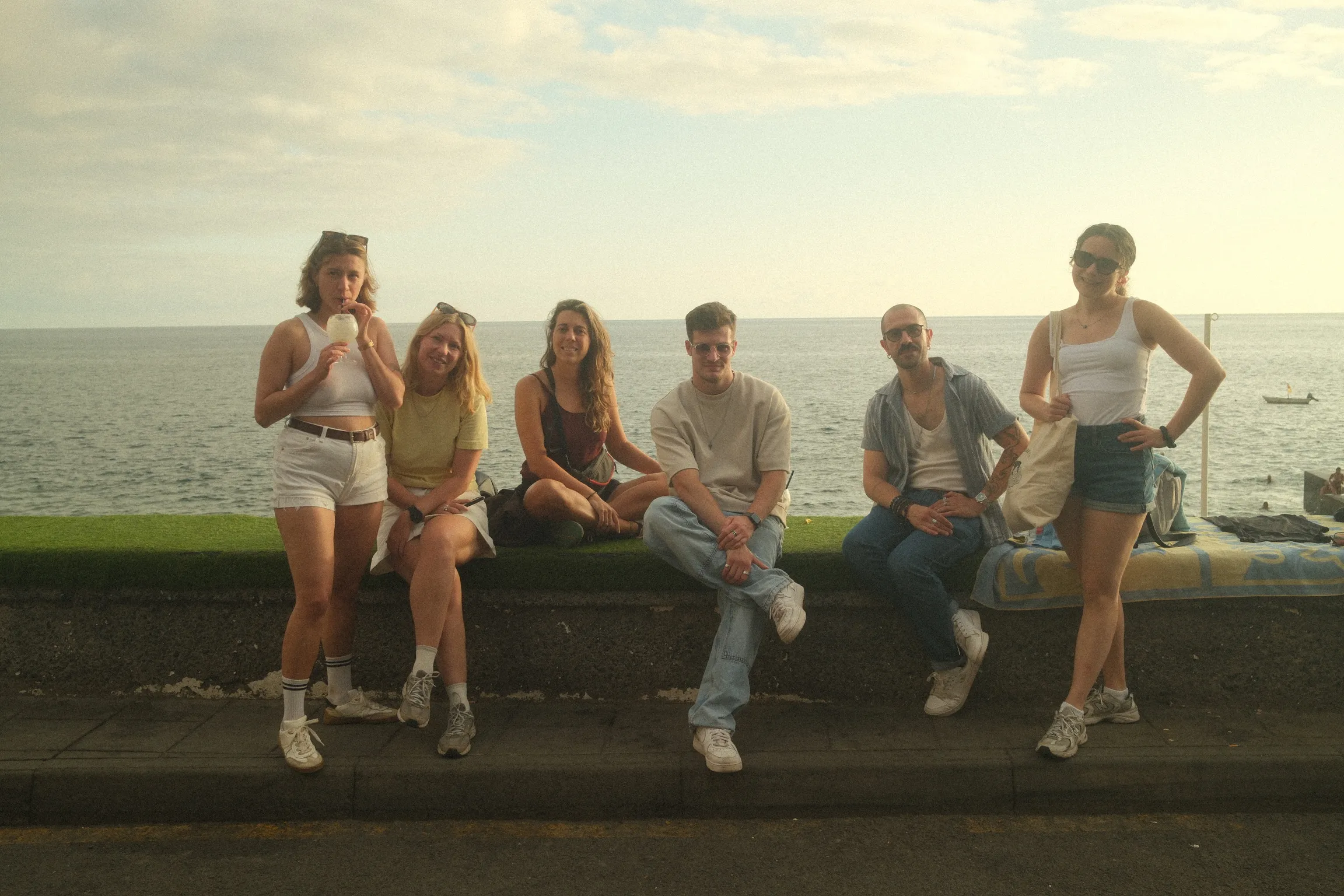
We ran a chapter in Madeira in 2025 and it remains one of the months people reference most when they talk about what Casa Basilico actually is. Something about the island does it. The geography forces a slowness that translates into better conversations, more dinners together, people actually switching off at the end of the day. We cooked lapas on the terrace. Someone taught the group how to make poncha from scratch. The community WhatsApp is still active a year later.
If you want to see what a Casa Basilico chapter in Madeira looks like, check the Madeira Chapter page.
Weather & Best Time to Visit
Madeira's nickname is the "Island of Eternal Spring" and it earns it. Temperatures stay between 16°C and 26°C basically year-round.
Spring (March–May): Beautiful. 18–22°C, flowers everywhere, including the famous Funchal Flower Festival in May.
Summer (June–August): Warm but never oppressive. 22–26°C, sunny, and the ocean is swimmable. Busiest tourist season.
Autumn (September–November): Sweet spot for nomads. Warm sea, fewer tourists, prices drop, harvest season for grapes and bananas.
Winter (December–February): Mild and a little rainy. 16–20°C, occasional storms, but you can still hike, swim on warmer days, and the city is at its quietest and cheapest. Some nomads pick this season specifically.
Safety in Funchal
Madeira consistently ranks among the safest places in Southern Europe. Petty crime is low, the city center is well-lit and busy most evenings, solo travelers (including solo women) report feeling comfortable. Standard travel awareness applies but Funchal is not a place where you spend energy worrying about safety. The bigger risks are environmental: levada hikes can be slippery in wet weather (proper shoes matter), and the Atlantic on the north coast is no joke (don't swim where locals don't swim).
The Honest Downsides
Madeira is one of the best nomad destinations in Europe right now. It's also not perfect.
- Island isolation. Flights to the mainland are €60–150 depending on season. You can't drive out. Some nomads find this peaceful, others find it claustrophobic after two months.
- Smaller nomad community than Lisbon or Las Palmas. Ponta do Sol is concentrated, but Funchal has a smaller, more spread-out community. If you need a constant flow of new faces, Madeira is quieter.
- Weather variability. Microclimates mean you can have sun in Funchal and rain in Santana the same hour. North coast is wetter than south. Plan accordingly.
- You'll want a car eventually. Buses cover the basics but the best parts of the island (levadas, viewpoints, north coast villages) need a rental.
- Apartments aren't insulated. Cool winters mean you'll notice the lack of central heating in older buildings. Look for places with good heating or electric blankets if you're coming December to February.
- Limited direct flights from outside Europe. Most non-European routes connect via Lisbon or Madrid.
Is Funchal Right for You?
Yes if: you want subtropical weather year-round, an active outdoors lifestyle (hiking, surfing, swimming), a smaller and more grounded nomad scene, world-class food that almost no one talks about, and a slower pace that fixes whatever burnout you arrived with.
Probably not if: you need a big-city scene with hundreds of nomads, you can't handle island isolation, or you're optimizing for proximity to mainland Europe for weekend trips. Madeira is its own world; if you want to bounce around capitals, base yourself in Lisbon or Barcelona instead.
Funchal vs. Other Nomad Hubs
| If you want… | Funchal | Las Palmas | Lisbon | Tarifa |
|---|---|---|---|---|
| Cheapest | Lower | Low | Mid | Mid |
| Biggest nomad community | Mid | Large | Largest | Smaller |
| Best food | Strong | Mid | Tied #1 | Mid |
| Beach / nature access | At door | At door | 30 min | At door |
| Year-round mild weather | Best | Best | Yes | Yes |
| Hiking / outdoor scene | Best | Good | Limited | Best for wind sports |
If you want a slightly bigger Atlantic island scene, Las Palmas. If you want mainland Portugal energy, Lisbon or Porto. If you want wind, surf and a tighter scene, Tarifa.
Frequently Asked Questions
Is Funchal good for digital nomads year-round?
Yes. The subtropical climate means there's no bad season. Temperatures stay between 16°C and 26°C across the year. Summer (July–August) is the busiest and most expensive period. The shoulder months (September–November and March–May) are the sweet spot: quieter, 15–25% cheaper on accommodation, and still excellent weather. January and February are the quietest and cheapest months, though you'll want a jacket in the evenings.
Do I need a car in Funchal?
Depends. In the city center and São Martinho, a car is optional. The bus network covers most of what you need and the city is walkable. For day trips into the mountains, levada hikes, or staying in Caniço or Ponta do Sol, a rental car or scooter opens up the island. Most nomads who stay a month rent a car for at least a few weekends. It's worth it.
What's the internet like outside of coworking spaces?
Good. Most accommodation aimed at longer stays in Funchal comes with fiber internet as standard, 100–300 Mbps is typical. Mobile data (NOS, MEO, Vodafone) is reliable across most of the city and main roads. You'll find dead spots on mountain trails, which isn't a problem unless you're trying to take calls on a levada hike.
Is the Portugal Digital Nomad Visa hard to get?
The process requires proof of income (at least €3,040/month), valid health insurance, and some paperwork. Timelines vary; some nomads report quick turnarounds, others wait months. If you're planning a stay longer than 90 days, start the process well in advance. EU citizens don't need to think about any of this.
Is Funchal safe?
Very. Madeira consistently ranks among the safest places in Southern Europe. Petty crime is low, the city center is well-lit and busy most evenings, solo travelers (including solo women) report feeling comfortable. The bigger risks are environmental (slippery levada trails in wet weather, strong Atlantic currents on the north coast).
Can I surf in Madeira?
Yes, but it's an intermediate-plus destination. The waves on the south coast (Jardim do Mar, Paul do Mar) are world-class but powerful. Beginners are better off learning in Las Palmas or Tarifa. There are surf schools that take beginners to gentler beaches.
Related Destinations
Planning a longer nomad run? These pair well with Madeira: