Coliving in Las Palmas, Gran Canaria for Digital Nomads
Las Palmas is the city you move to when you're done proving a point. You've done Southeast Asia, you've done Lisbon, you've done "living like a local in Bali", and now you want good weather, a real beach, a European time zone, and the ability to eat incredible food without your stomach staging a protest. Gran Canaria is a Spanish island technically closer to Morocco than Madrid, which explains a lot: the light is African, the food is somewhere between Spain and the Atlantic, and the pace is unhurried in a way that feels earned rather than forced. For digital nomads, Las Palmas hits a specific sweet spot: it's in the Schengen area (no visa stress for 90 days), it's an hour behind Central Europe (mornings are yours), rent is lower than Barcelona or Lisbon, and the average year-round temperature is 22°C. There are days when the Wi-Fi is patchy and the bureaucracy is Kafkaesque. But there's also a 3km urban beach, papas arrugadas with mojo rojo at lunch, and a sunset you won't bother photographing because no photo ever does it justice.
Key Stats
Cost estimates: Numbeo, 2025.
Best Neighborhoods for Remote Workers
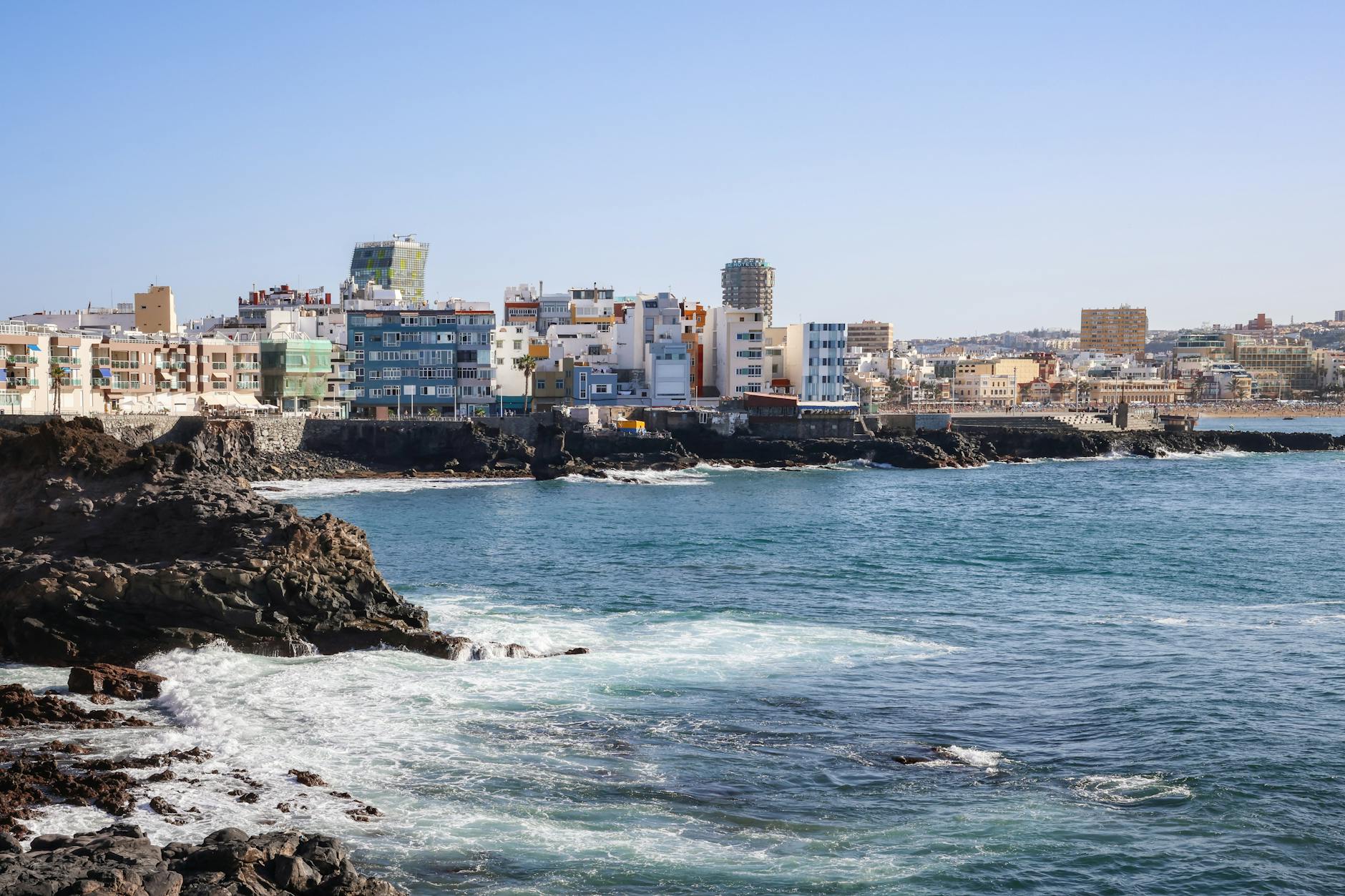
Las Canteras is the obvious choice, and for once the obvious choice is right. It sits right behind the main beach — a 3km stretch of calm, sheltered water — and has everything: supermarkets, cafes, restaurants, pharmacies, and a beachfront promenade that becomes your morning routine within three days. It's the most touristy part of the city, which also means the highest density of places with decent Wi-Fi and English menus. Accommodation here costs more than elsewhere, but you don't need a car or much of anything else.
Vegueta is the old town, and it's stunning in a way that makes you feel vaguely guilty for doing Slack messages inside it. Cobblestone streets, colonial architecture, the Casa de Colón (Columbus stopped here), and an excellent weekend farmers' market. It's quieter than Las Canteras and attracts a slightly more settled crowd — people on monthly stays rather than weekend city breaks. Cafes and restaurants lean toward local rather than tourist, which means better food and lower prices.
Triana is the neighborhood between the two — a pedestrianised shopping district that also happens to have some of the best café-con-leche spots in the city. It's particularly good if you need a base that's walkable to everything without being directly on the beach. More residential, less aggressively touristic, with a real neighborhood feel. The library here is legitimately beautiful if you need a free, quiet place to work.
Guanarteme sits between Las Canteras and the port, and it's where a lot of longer-term nomads end up once they realize they can get more space for less money while still being ten minutes from the beach on foot. Quieter streets, proper local restaurants, the kind of corner bar where the owner knows your order by week two. If you're staying a month or more, worth exploring.
Coworking Spaces in Las Palmas, Gran Canaria
Tallca Coworking is one of the better-known spots in the city, popular with the nomad crowd for its consistent internet, good natural light, and the kind of community that forms when people actually talk to each other. It's in Guanarteme, a short walk from Las Canteras beach. Day passes and monthly memberships available.
Kapita is a coworking space that also functions as an incubator for local startups, which makes it an interesting mix of international nomads and Gran Canaria-based founders. Good infrastructure, meeting rooms, and the occasional event. Worth a day pass to see if the energy suits you.
Coworking Las Canteras (the name is doing a lot of legwork here) sits close enough to the beach that on a slow afternoon you can justify a 20-minute swim as "creative break." Desks, private offices, good internet. Not fancy, but reliable and practical, which is mostly what you need when you have a 10am call and a deadline.
What to Eat in Las Palmas, Gran Canaria
This is where Las Palmas earns its place on the list. Canarian food is something older, stranger, and more interesting than the tapas you'd get in Barcelona. It sits at a crossroads of influences: Spanish colonial, West African, Latin American, and the Atlantic itself. Get it right and you'll be eating in a way that feels genuinely unlike anywhere else.
Papas arrugadas are the entry point and the benchmark. Tiny wrinkled potatoes boiled in heavily salted water until the skin dries and crystalizes. They come with mojo, either mojo rojo (red, made with dried peppers, garlic, cumin, and vinegar) or mojo verde (green, made with coriander, garlic, and olive oil). Both are absurdly good. Every restaurant serves them. The gap between a mediocre version and a great one comes down entirely to the mojo, and you'll start to have opinions about this within your first week.
Fresh fish is non-negotiable. The Atlantic fishing tradition here is serious, and the catch is different from mainland Spain — vieja (parrotfish, meaty and mild), sama (red snapper), cherne (wreckfish), and cabrilla (comber) are all regulars. Order them grilled (a la plancha) with papas arrugadas and mojo verde and you've got the best lunch available for under €15 in most local restaurants.
Gofio is the ingredient that separates people who've been here long enough from people who've just arrived. It's a roasted grain flour — made from wheat, corn, or barley — that's been part of the Canarian diet since the indigenous Guanche people. You'll find it in everything: stirred into soups as a thickener, mixed into desserts, rolled into a dough-like ball called gofio escaldado and served as a side with fish stew. It has a deep, nutty, slightly smoky flavour that's genuinely hard to describe until you eat it.
The Mercado del Puerto (Port Market) is the best food hall in the city and worth half a morning of your time. It's a converted 19th-century market building right near the port, with stalls selling fresh produce, cheese, charcuterie, and prepared food. Go hungry on a Saturday. The local cheese — especially the smoked goat cheese from the interior — is excellent.
Bienmesabe is the dessert you don't expect to like and then immediately order seconds of. It's an almond cream, made with ground almonds, honey, egg yolks, and lemon zest, served cold as a sauce over vanilla ice cream or fresh fruit. The name means "it tastes good to me," which undersells it considerably.
For proper local dining, head to Vegueta rather than the Las Canteras promenade, where the tourist markup is significant. The smaller restaurants around the Mercado de Vegueta, particularly for lunch, serve traditional Canarian plates at prices that feel almost unfair. Look for places with handwritten menus, locals eating at the bar, and zero English on the signage.
Casa Basilico in Las Palmas, Gran Canaria
Casa Basilico ran a chapter in Las Palmas in 2024 — one of the earliest ones, when the whole project was still figuring out what it wanted to be. It turned out Las Palmas knew exactly what it was: a city that's good at making people slow down, cook together, and extend their stay by three weeks. The combination of an urban beach, a serious food culture, and a nomad community that's been here long enough to have actual recommendations was a near-perfect fit for what we do.
If you want to know about future Las Palmas chapters, keep an eye on the chapter page.
Casa Basilico Las Palmas Chapter
Frequently Asked Questions
Is Las Palmas good for digital nomads year-round?
Yes, genuinely. The Canary Islands sit at a latitude where the temperature barely moves — roughly 20–24°C most of the year, with warmer summers and cooler winters. It doesn't get cold in any meaningful sense. The only real seasonal difference is that winter (November–February) brings more cloud cover and occasional Atlantic swells. For nomads, this means there's no bad time to go, which is rarer than it sounds.
How is the internet in Las Palmas?
Better than you'd expect for an island, not as fast as mainland Spain. Most coliving spaces and coworking spots will give you 100+ Mbps. Cafes are variable — some are excellent, some will test your patience. The overall infrastructure has improved a lot over the last few years. Worth testing your connection before a big video call, as you would anywhere.
Can I stay longer than 90 days as a US citizen?
Under standard Schengen rules, US citizens get 90 days within any 180-day period. Spain does have a Digital Nomad Visa (introduced in 2023) that allows stays of up to a year, renewable for up to five. The application requires proof of income (min ~€2,334/month as of 2024), remote work contract or freelance clients, health insurance, and clean criminal record. It's not trivial to apply, but for people who want to base themselves in Las Palmas long-term, it's the legitimate path.
What's the social scene like for nomads?
Las Palmas has an established nomad community — not as big as Medellín or Chiang Mai, but present and self-sustaining. There are regular meetups, a reasonably active NomadList community, and the kind of organic social life that forms around coworking spaces and the beach. The local Spanish population is also genuinely warm, which helps. You won't struggle to meet people, especially if you spend any time in the coworking scene.
Is Las Palmas affordable compared to other EU destinations?
By EU standards, yes. It's cheaper than mainland Spanish cities like Madrid or Barcelona, and much cheaper than Lisbon, Amsterdam, or any Scandinavian city. Rent is the biggest variable — a private room runs €500–€800/month depending on location and quality, a one-bed apartment €700–€1,100. Food and going out are reasonably priced, especially if you eat where locals eat rather than on the Las Canteras promenade.
Related Destinations
If Las Palmas is on your list, these are worth looking at too: