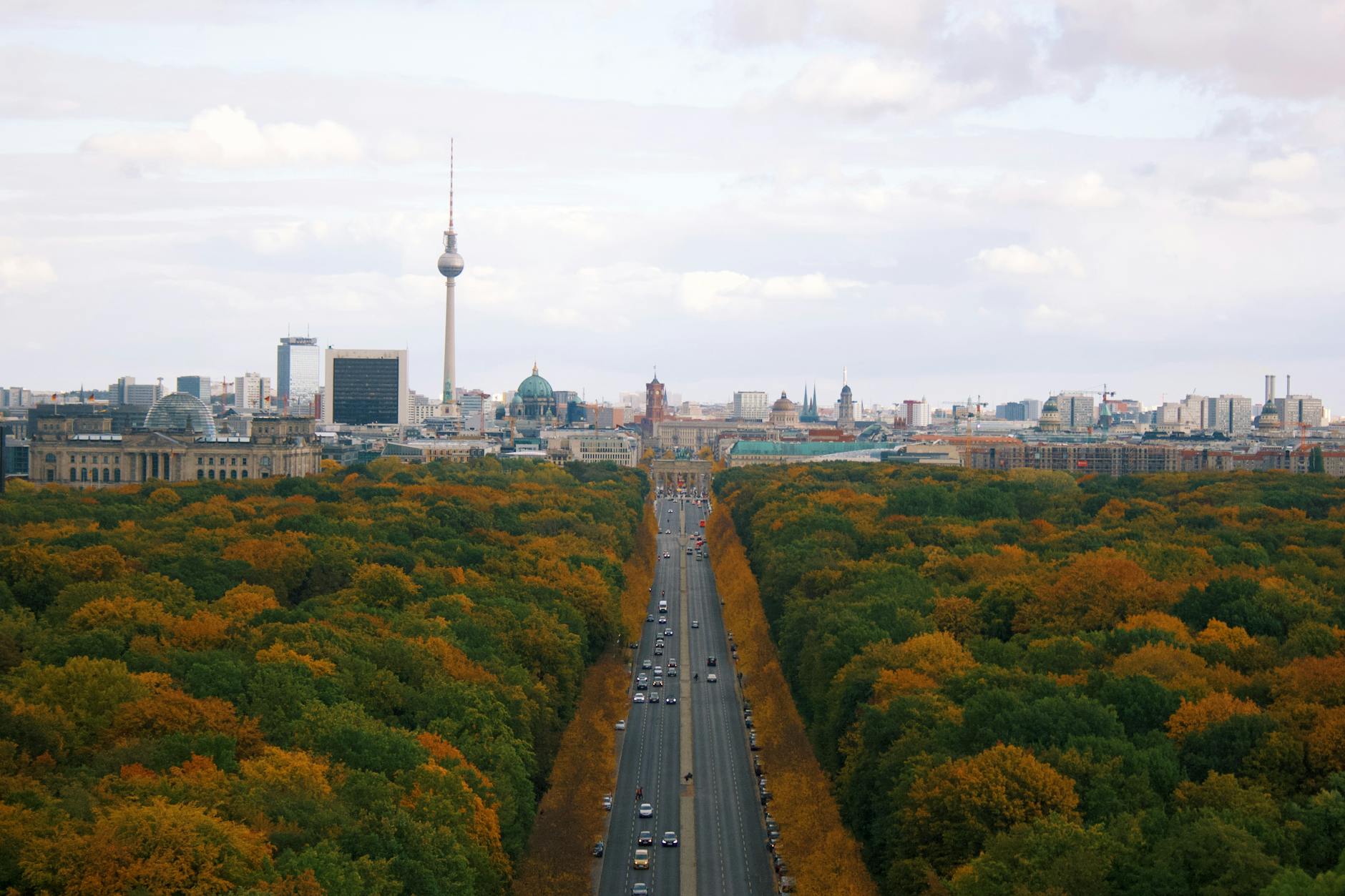
Coliving in Berlin, Germany for Digital Nomads
Berlin is one of Europe's most livable cities for digital nomads, combining a cost of living well below other Western European capitals with a creative, multicultural energy that draws remote workers from across the world. Average monthly costs run €1,500–2,200 for rent, food, transport, and coworking, depending on neighborhood. The city has excellent fiber infrastructure and 5G coverage, with typical download speeds of 100–300 Mbps. Berlin sits in the Central European Time zone (UTC+1, UTC+2 in summer). US citizens can live and work remotely here visa-free for up to 90 days under the Schengen agreement; EU citizens have no restrictions. The startup scene is massive, coworking spaces are everywhere, and the international community means you're never far from an English conversation. Berlin's variety is what keeps people here. Every neighborhood has its own personality and its own reason to stay another month.
Cost source: Numbeo Cost of Living Index, Berlin, 2025
Key Stats
Best Neighborhoods for Remote Workers
Prenzlauer Berg is the neighborhood that makes you say "okay, I get it now." Tree-lined streets, independent cafés on every block, and a vibe that's somehow both calm and full of people doing interesting things remotely. The coffee is excellent, the WiFi is reliable, and you can work from morning until the light turns golden without anyone asking you to leave. Rent runs higher than other east Berlin neighborhoods but is still reasonable by European capital standards. Come here if you want peace with personality.
Kreuzberg is multicultural, loud in the best way, and has an energy you won't find anywhere else in Europe. Massive Turkish community, food on every corner, a DIY creative scene, and enough coworking options to keep you productive all week. It's also where you'll find Betahaus, one of Europe's most beloved coworking spaces. Come here if you want Berlin to feel like Berlin.
Neukölln used to be "up-and-coming." Now it's just good. Affordable, young, full of expats and freelancers, with independent coffee shops and wine bars opened by people who moved here to live, not to Instagram. Rent is the most reasonable of the bunch. If you're staying a month and want to feel like a local rather than a tourist, Neukölln is your spot.
Mitte is central, convenient, and more expensive. Less neighborhood character, more urban efficiency. Good if you have client meetings or events, or just want everything within a short U-Bahn ride. It's not where you'd choose to set up your daily work routine, but it has its uses.
Coworking Spaces in Berlin
Betahaus Berlin (Kreuzberg) is the OG. One of Europe's first coworking spaces and still one of the best. Multiple floors, a ground-floor café that's genuinely excellent, and a community spanning startups, freelancers, and remote workers of all kinds. Day passes available, monthly memberships well-priced. Come for the vibe, stay because you keep extending your membership.
Sankt Oberholz (Rosenthaler Platz) has been around since 2005, which in coworking years is ancient history. The original Mitte location has a street-level café with solid WiFi and a quieter upper floor for actual focused work. Popular with journalists, developers, and anyone who wants to feel like they're working in the city rather than just near it. Multiple locations now across the city.
Mindspace Berlin (near Checkpoint Charlie) is the answer when you need a professional setup. Beautiful space, fast internet, meeting rooms. The kind of place you can bring a client and look like you have your life together. Premium pricing for a premium experience. Worth it if you're billing at a rate that makes it make sense.
What to Eat in Berlin 🥙
People will tell you Berlin doesn't have great food. They're wrong, or they haven't eaten in the right places.
Döner kebab. Full stop. Berlin has the best döner outside of Turkey, and some reasonable people argue it's better. A proper Berlin döner is a half-loaf of freshly baked bread stuffed with rotating meat (lamb, chicken, or veal), crisp salad, pickled red cabbage, and sauce that varies by shop. It costs €5–8 and takes about 45 seconds to make you feel better about everything. The debate over which Imbiss makes the best one is a sacred Berlin tradition. Join it immediately.
Currywurst. You have to. Sausage, sliced, doused in curry-spiced tomato sauce, served on a paper tray with a tiny plastic fork. Get it from a proper street stand, not a restaurant. Eat it standing on the pavement like everyone else.
Vietnamese food. East Germany had a significant Vietnamese immigrant community during the Soviet era, and that history produced a food scene that's legitimately excellent. Head to the Dong Xuan Center in Lichtenberg, a Vietnamese wholesale market with a food court that costs almost nothing and tastes like someone's grandmother made it. It will rearrange your priorities for the afternoon.
Turkish breakfast. The Sunday Turkish breakfast culture in Kreuzberg is a thing of beauty. Think 15 small plates: fresh bread, olives, four kinds of cheese, eggs cooked various ways, honey, simit, tomatoes, and tea that keeps appearing on your table. Budget three hours. Do not rush.
Markthalle Neun. Go on a Thursday evening for Street Food Thursday. Vendors from across Berlin and beyond set up inside a 19th-century market hall selling everything from Polish pierogi to Ethiopian injera to handmade pasta. The atmosphere alone is worth going for. Get there early. It fills up fast and the good stalls sell out.
Türkenmarkt. Every Tuesday and Friday along the Maybachufer canal in Neukölln. Fresh produce, Turkish cheeses, olives, pickles, fresh herbs, cheap and good and alive in a way supermarkets never are. Buy ingredients. Cook. Your coliving kitchen will thank you.
And for something sweet: Berliner Pfannkuchen, the local jelly doughnut. The good ones are plump, sugar-dusted, filled with jam or vanilla cream, and available at most bakeries. Yes, it's what JFK accidentally called himself in 1963. Order one anyway. It's delicious.
Frequently Asked Questions
Is Berlin a good city for digital nomads on a budget?
Yes, by European capital standards. You can live comfortably in Berlin for €1,500–1,800/month including a room in a coliving or flatshare, food, transport, and a coworking pass. It's not Chiang Mai cheap, but it's meaningfully more affordable than Amsterdam, Zurich, or Paris. Your euro goes further here than almost anywhere else in Western Europe.
How is the internet in Berlin?
Generally excellent. Fiber is widely available, coworking spaces reliably hit 100–300 Mbps, and cafés across Prenzlauer Berg, Kreuzberg, and Neukölln have solid WiFi as a baseline expectation. Older buildings in Mitte occasionally disappoint, but it's not a common problem.
Do I need to speak German to live in Berlin?
No. Berlin is one of the most English-friendly cities in continental Europe. Most expats and remote workers function entirely in English, especially in Kreuzberg, Prenzlauer Berg, and Neukölln. Learning a few phrases in German will make locals like you more, but you won't be helpless without them.
What's the coliving scene like in Berlin?
Berlin has a reasonable number of coliving options, mostly concentrated in Kreuzberg, Mitte, and Prenzlauer Berg. Quality varies more than in some other European cities. Look for places with verified WiFi speeds and actual community programming, not just a shared kitchen and a rooftop listed as an "amenity."
When is the best time to visit Berlin as a digital nomad?
May through September is the sweet spot. Summers are warm, the city comes alive with outdoor markets, street parties, and open-air everything. July and August can get surprisingly hot (Berlin is landlocked and has no sea breeze). Winter is grey and cold but the city doesn't slow down, and prices drop noticeably. If you can, skip January and February unless you're genuinely fine with 8°C and daylight ending at 4pm.