Coliving in Split, Croatia for Digital Nomads
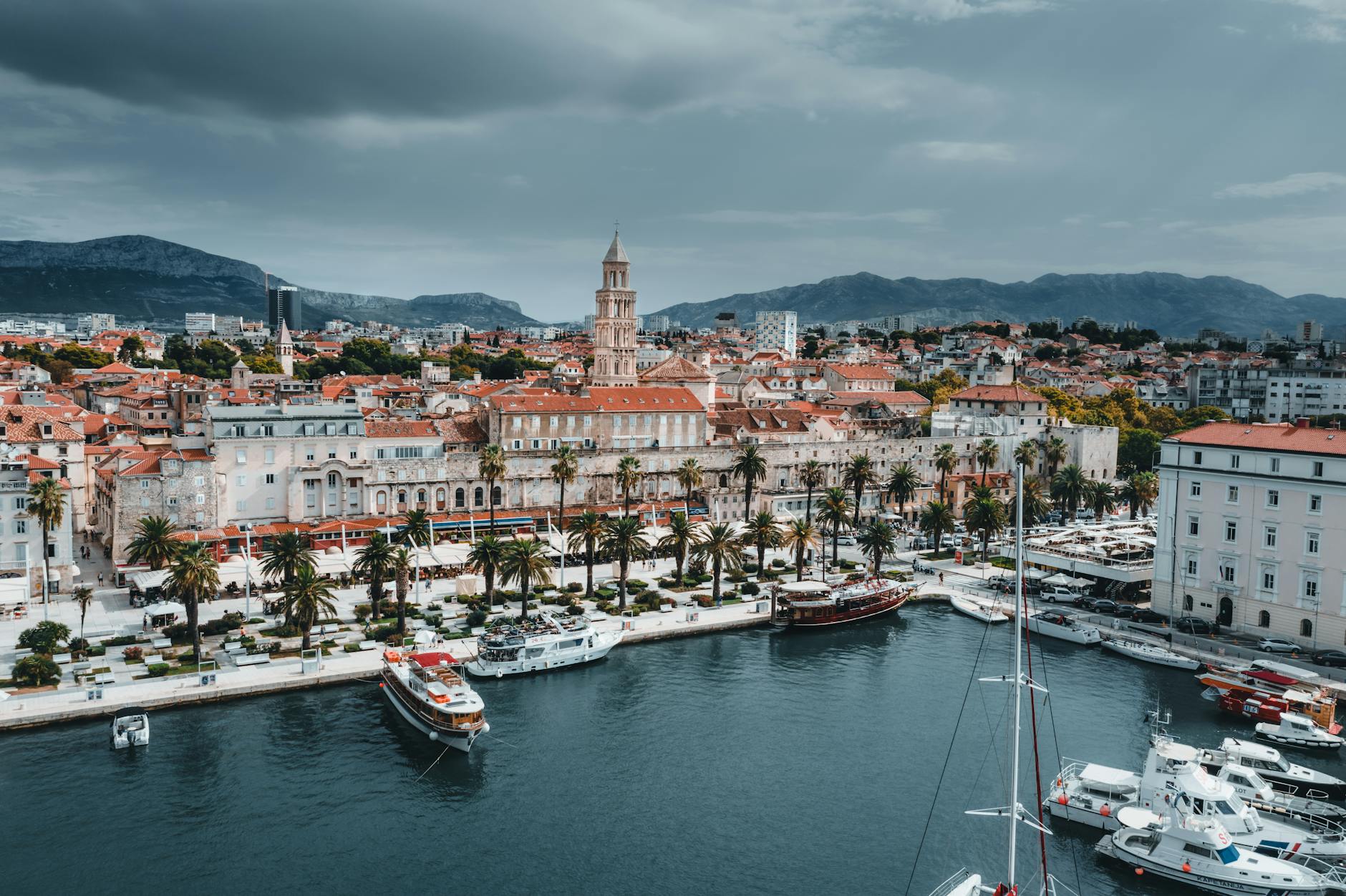
Split is one of those cities that doesn't feel real. You're eating lunch inside a 1,700-year-old Roman palace, your Wi-Fi is solid, the Adriatic is a ten-minute walk, and someone just invited you to a dinner party in an apartment carved directly into the ancient stone walls. This is daily life in Split.
Croatia joined the Schengen Area in January 2023, which made Split one of the best bases in Europe for digital nomads. The city has the character of a Southern Italian coastal town, loud markets, obsessive food culture, long lunches, but with a more affordable price tag and fewer tourists than Dubrovnik. Internet infrastructure has improved since the Schengen transition. The digital nomad community is small but growing fast. Remote workers are discovering what locals have known for decades: Split is a city that rewards slowness. You're not here for efficiency. You're here to eat grilled fish by the water and figure out the rest later.
Key Stats
Cost of living data sourced from Numbeo, 2025.
Best Neighborhoods for Remote Workers
Diocletian's Palace (Old Town)
Living inside a UNESCO World Heritage Site sounds like a gimmick until you actually do it. The old town is dense, walkable, and full of personality: coffee shops in ancient Roman courtyards, cats on every corner, and the Pazar market a five-minute walk from your front door. It's the most expensive area, but if you can get a flat here, you'll understand why people stay longer than planned. Internet varies building by building, so ask before you sign anything. Evenings get loud once the bars fill up, so light sleepers should know what they're signing up for.
Meje
The local answer to the old town. Quieter, greener, and genuinely residential in the best way — more families, fewer selfie sticks. It's a 15-minute walk to the palace and close to Kaštelet park if you need a lunchtime reset that isn't a coffee shop. Fewer cafes, but the ones that exist are good. You'll cook more here, which is not a bad thing given what the market sells.
Manuš (Near Pazar Market)
The neighbourhood around the Green Market is the city's beating heart. Noisy, lived-in, and real. You're minutes from the old town without paying old town prices. This is where locals actually shop, eat, and argue. For remote workers who want to integrate rather than observe, this is the sweet spot. The morning market energy alone is worth the walk.
Žnjan
If you need a longer stay on a tighter budget, Žnjan is the move. Suburban, but it has a decent beach, supermarkets, and rents €200–300 cheaper per month than the centre. You'll want a scooter or bus pass. Good for heads-down work periods when you don't need the old town energy every single day — and then you can go in for the market on weekends and feel like you earned it.
Coworking Spaces in Split, Croatia
Split's coworking scene is smaller than you'd expect for a city this size, but it's growing in the right direction.
HUB385 Split: Part of Croatia's main startup network, HUB385 has a Split presence drawing a mix of local founders and remote workers. The community is genuinely good if you're in tech or SaaS. Day passes and monthly memberships available. The events calendar is worth paying attention to.
Rimo Coworking: One of Split's longer-running dedicated coworking spaces. Solid internet, a mix of open desks and private offices, and a relaxed atmosphere. Central enough to walk to the market at lunch without losing your rhythm.
Hybrid cafes: Split has several cafes with reliable fast Wi-Fi and an unspoken long-stay etiquette built in. Ask a local or any nomad who's been there a week. Options shift seasonally and a good personal recommendation beats any listicle. In summer (July–August), dedicated coworking spaces fill up fast — show up in shoulder season or book in advance.
What to Eat in Split, Croatia
Okay, this is the part that matters.
Dalmatian food is what happens when Italian cooking principles meet the Adriatic coast: quality ingredients, almost no fuss, and a deep suspicion of anything too complicated. The cooking tradition here is older than most countries and prouder than most chefs would openly admit.
Peka is the first thing you eat. It's a slow-cooking method: meat or fish and vegetables are placed under a bell-shaped iron lid (also called peka) and buried under hot embers for two to four hours. The result is absurdly good — melting, smoky, outrageously tender. Lamb under peka is a Sunday religion in this city. Almost every restaurant that serves it requires advance notice. Order it the day before. Do not skip this.
Pašticada is Split's Sunday lunch. Slow-braised beef marinated in vinegar and dried figs, cooked for hours until it's falling apart, served over homemade gnocchi (njoki) with the braising sauce. It sounds like an odd combination. It tastes like someone's grandmother poured four generations of cooking knowledge directly into a pot. Every family has their own recipe and every family is convinced theirs is correct.
The fish market (Ribarnica) opens at dawn and closes when it sells out. That's usually by 9am. Get there early. The selection depends entirely on what came in that morning — sea bass (brancin), sea bream (orada), octopus, and whatever the boats brought in. Best move: buy the fish, take it home, olive oil, garlic, parsley, lemon, grill. That is all you need.
Pazar Market (the Green Market near the Golden Gate) is the other non-negotiable. Local farmers, olive oil producers, fig jam, dried figs, lavender honey from the islands, Pag cheese (Paški sir). That last one is a hard, salty sheep's milk cheese aged with olive oil and ash on the island of Pag. It is one of the better things you will eat in Europe. Go in the morning, talk to the vendors, try before you buy. They'll let you.
Soparnik is Dalmatia's most underrated food secret: a flatbread pie stuffed with Swiss chard, garlic, and olive oil, baked in a wood oven. It looks basic. It isn't. It's the kind of food that makes you slightly angry it isn't available everywhere.
Travarica is the local rakija (fruit brandy), infused with wild herbs from the Dalmatian hills. Someone at the bar will offer you a glass. Say yes. It is medicine, culturally speaking.
One last thing: if you spend a whole month in Split and don't figure out your favourite spot on the Riva promenade to drink coffee and watch the world go by, you did it wrong. The Riva is where the whole city comes to do nothing, and doing nothing there is excellent.
Frequently Asked Questions
Is Split good for digital nomads?
Yes, especially in spring and autumn. Solid internet infrastructure, a growing (if small) coworking scene, excellent quality of life, central European timezone that overlaps well with US East Coast mornings and most of Asia. July and August are beautiful but crowded and expensive. April–June and September–October are the window where Split makes complete sense.
How long can I stay in Croatia as a US citizen?
Croatia is Schengen since January 2023, so the standard 90-days-in-180-day rule applies. No dedicated digital nomad visa exists as of 2025. If you want to stay longer, you'll need a temporary residence permit (a bureaucratic process) or structure your time with a non-Schengen country in between. Plan ahead if you're considering an extended stay.
Is Split affordable compared to other European cities?
More affordable than Western Europe, though prices have risen with tourism. You can live comfortably on €1,200–1,500/month including accommodation and coworking. Cooking for yourself cuts that number — and you should cook for yourself, because the market is worth using every single week.
Is Split safe for solo travellers?
Very safe. Croatia consistently ranks among the safest countries in Europe. Violent crime is rare. The main risk is tourist-targeted pickpocketing in busy areas during summer peak. Solo female travellers generally report feeling comfortable and unbothered.
When is the worst time to visit Split?
July and August. The old town becomes a cruise ship processing zone. Prices spike, short-term accommodation is hard to find, and the city loses a lot of its character under the weight of mass summer tourism. The weather is perfect and the sea is warm. Actually living there during those months is less fun. Come before or after.
Related Destinations
Reading about Italy? We're moving there in September.
Puglia chapter, Sep–Oct 2026. Trulli houses, burrata for days, and new friends around one big table. Spots are going.
Show me Puglia 🇮🇹