
Month-by-Month: The Best Destinations for Remote Workers
The best destinations for remote workers shift with the seasons, and knowing when to go matters just as much as knowing where. January through March, Latin America dominates: Brazil, Mexico, and Colombia offer warm weather, low costs, and strong nomad communities while Europe is grey and grim. April to June is Europe's sweet spot: Portugal, Spain, and the Balkans before tourist hordes arrive. July to September means peak European summer but also peak prices, so the Balkans and Eastern Europe pull ahead on value. October to December belongs to Southeast Asia (dry season begins), the Canary Islands, and a return to Latin America before the holiday chaos. Across all seasons, a destination earns its spot on this list only if it passes three tests: reliable internet above 50 Mbps, a cost of living that doesn't punish remote workers on reasonable salaries, and a community where you can meet people without trying too hard.
Where you work changes everything
The city matters more than the apartment.
You can rent a beautiful place with a great desk setup in a city where nobody eats dinner until 10pm, everything closes on Sunday, and the nearest café with WiFi is a 40-minute bus ride. Your productivity will tank. Not because you're lazy. Because humans are social, and work-life balance in isolation isn't balance, it's just misery with a view.
We've run six chapters now, across four countries, 180+ guests. The destinations that worked? People left saying it was the best month of their life. The ones that didn't? It was usually something we couldn't fix: infrastructure that lied on the listing, a city with no walkable social life, or rainy season nobody warned us about.
So this guide is the honest version. Not a listicle of "35 cities you MUST visit!" Just the real story of when to go where, and what makes a place work for remote workers.
January, February, March: Escape Europe and go south
European winter is punishment. Grey, cold, short days, everyone indoors. If you have the freedom to be anywhere, there is no reason to be in Berlin in February.
Where to be: Latin America.
Brazil in January and February is the obvious answer, and yes, it's obvious because it's correct. Pipa (our personal favourite, we're biased and fine with it), Florianópolis, and Trancoso offer warm weather, reasonable internet, and a social scene that runs on açaí and caipirinha. Average cost of living in Pipa for a comfortable remote work setup: €1,400-1,800/month including accommodation, food, and a few too many coconuts. Internet speeds in decent coliving setups hit 100-200 Mbps consistently, better than most European capitals.
Everything we know about Pipa, Brazil for remote workers
Mexico in Q1 is equally strong. Oaxaca specifically runs at about €1,200-1,600/month all-in, has a food scene that will ruin you for every other cuisine permanently, and sits at a cooler altitude (1,550m) that makes it way more comfortable than coastal Mexico in heat terms. Digital nomad visa for Mexico is a 180-day tourist visa. Just show up. According to NomadList, Oaxaca averages a community score of 4.1/5, which tracks with what we saw when we scouted it for our 2026 chapter.
Our Oaxaca 2026 chapter and what makes it special
Colombia (Medellín especially) deserves a mention for March: perpetual spring, strong remote worker infrastructure, co-working spaces everywhere, and a nightlife that'll challenge your 9am standup. Average cost: €1,100-1,500/month. Fibre internet is widely available. Digital nomad visa launched in 2024, valid up to 2 years.
Southeast Asia is also valid in Q1. Thailand (Chiang Mai, Koh Lanta), Bali, and Vietnam (Hội An, Da Nang) are in dry season and crawling with nomads. Cost advantage is huge: Chiang Mai all-in €700-1,100/month. The tradeoff is timezone: if your team is in Europe or the US East Coast, the overlap windows are brutal.
April, May, June: Europe's best-kept window
There's about a 6-8 week window in late spring where southern Europe is perfect. Warm enough for terraces, empty enough that you're not fighting tourists for a table, and cheap enough before peak summer pricing kicks in.
Portugal is the classic answer and it deserves it. Lisbon, Porto, and the Algarve all hit their stride in May. Average temperature 18-22°C, café culture fully alive, NIF registration relatively straightforward, and it remains one of the most nomad-friendly bureaucratic environments in Europe. Internet average: 118 Mbps nationally (Ookla, 2024 data). Cost in Lisbon: €2,000-2,800/month with accommodation. Pricier than LATAM, still well below London or Amsterdam.
Spain in April-May is even better value if you avoid Barcelona and Madrid. Las Palmas de Gran Canaria (technically always good, more on that below), Valencia, Seville, and Málaga all hit sweet spots. We ran a chapter in Las Palmas and the quality of life there is shocking: city beach, 22°C year-round, fast internet, direct flights from half of Europe.
Why Las Palmas is the most underrated remote work city in Europe
The Balkans start coming alive in April too. Tbilisi, Georgia (technically not Balkans but same energy) is outstanding: visa-free for 365 days for most nationalities, low cost (€900-1,300/month), incredible food, and one of the fastest growing digital nomad communities in Europe. Average café WiFi in Tbilisi: 60-80 Mbps. The 2023 wave of relocation has stabilised and it's settled into a functional, walkable expat city with actual roots.
Bansko, Bulgaria gets April-May wrong for skiing but right for everything else. The ski crowd leaves, prices drop 40%, and the coworking scene (Coworking Bansko specifically) that put the town on the nomad map is still running. All-in cost: €700-1,000/month. Worth it? We think so, for the right person.
July, August, September: Peak Europe, peak prices, still worth it if you're smart
European summer is expensive and crowded. Every nomad content creator telling you to go to Lisbon in August has never tried to find a table in Lisbon in August.
But Europe in summer is also great. Go somewhere slightly off the main track.
Montenegro and Albania are your sleeper picks. Kotor, Budva, and Tivat in Montenegro; Saranda and the Albanian Riviera. Infrastructure has improved dramatically since 2022: you can get 50+ Mbps in most towns, digital nomad visa launched in 2024, and the cost is about 40-50% lower than Croatia across the water. The Adriatic is beautiful everywhere. You don't need to pay Dubrovnik prices to see it.
Eastern Europe generally: Warsaw, Krakow, Tallinn, and Vilnius all hit peak liveability in summer without the price spike of Western Europe. Estonia is the original digital nomad visa country (launched 2020). Tallinn old town in July is magical, and with a 12-month digital nomad visa, you can take your time. Cost: €1,400-1,900/month in Tallinn.
Slow down in Europe. This is when coliving in Europe makes the most sense. A home base gives you the joy of summer without the logistics: people to cook with, someone to watch football with, a table where your laptop is always welcome. Moving cities every fortnight in peak season is a grind. We've seen it break too many guests.
Greece gets an honourable mention: Athens (not the islands) in July-September is underrated. Local life continues normally, heat is manageable in the evenings, and the food, particularly if you find a good neighbourhood taverna, will ruin you completely. Fibre is widely available in Athens now, averaging 85 Mbps.
October, November, December: Southeast Asia opens, Canaries are always open, LATAM calls again
October is the month where remote workers collectively remember that Southeast Asia exists.
Thailand enters dry season in October (north first, south follows in November). Chiang Mai has the strongest infrastructure of any Southeast Asian nomad city: co-working spaces on every corner, average WiFi 80+ Mbps in cafés, all-in cost €700-1,100/month, and a local food scene that makes every meal a small event. Visa situation: tourist visa gives 60 days, extendable for another 30. Thailand Long-Term Resident visa covers up to 10 years if you qualify (income requirements: $80K/year or above).
Bali works in October-November before peak crowds arrive. Canggu remains the digital nomad centre of gravity. Not because it's the best neighbourhood in Bali (Ubud and Uluwatu have better arguments) but because the infrastructure and social scene are strongest there. Cost: €1,200-1,800/month depending on lifestyle. WiFi warning: always stress-test your villa WiFi at peak hours (7-9pm). We learned this lesson the hard way on a scouting trip where the listing said "100 Mbps fibre" and delivered 8 Mbps at dinner time. This is unfortunately common.
Vietnam from October: Da Nang and Hội An hit their best weather window (the central rainy season ends in October). Hội An specifically is one of the most beautiful small cities in Southeast Asia and remains relatively affordable: €800-1,200/month. It's a bit sleepy for some people. If you need nightlife, go to Da Nang or Hanoi instead.
The Canary Islands: always open. We're saying this again because it deserves repeating. Las Palmas, Lanzarote, Tenerife: 22°C year-round, EU infrastructure (same internet, same legal environment), direct flights from everywhere in Europe. If you're European and you haven't done a winter there, fix that. November to February in Las Palmas is some of the best value remote work living in the world.
Back to Latin America by December: Brazil opens back up (Pipa, Florianópolis), Mexico (Oaxaca, Playa del Carmen, Mérida) is ideal November through April, and Colombia stays consistent year-round. The one December trap: everywhere popular gets booked out for Christmas/New Year. If you're going to Latin America for Q1, book accommodation by November. Prices during the festive peak in popular nomad spots can triple.
What actually makes a destination good for remote work?
Not just vibes.
Three tests we use before considering a destination for a Casa Basilico chapter:
1. Internet: 50 Mbps minimum, stress-tested at peak hours. Most destinations can hit this number in the right café at 2pm. The question is: can you get it consistently in your accommodation, at 7pm, when everyone else in the building is on Netflix? We now require backup internet options: a second ISP or mobile data that actually works. No exceptions. According to Speedtest's 2024 Global Index, the top-performing nomad cities for internet were Singapore, Seoul, Chiang Mai, Lisbon, and Medellín, in that order.
2. Cost of living: comfortable at €2,000-2,500/month. This isn't about being cheap. It's about the destination not requiring you to make financial sacrifices that create background stress. A city where €2,500/month covers a nice private room, great food, and a social life is different from one where that budget means counting every coffee. Our rule of thumb: if Numbeo puts the cost of living over 70% of London, you'll feel it.
3. Community: can you meet people without a schedule? This is the one that's hardest to quantify and most important. Co-working spaces help. Coliving helps more. A strong existing nomad community (check NomadList scores above 3.8) means the infrastructure for meeting people is already there. Destinations with strong coliving cultures: Chiang Mai, Medellín, Lisbon, Las Palmas, Tbilisi, Oaxaca. Destinations that look great on Instagram but feel isolated when you arrive: many. We won't name them.
What coliving actually is and why remote workers choose it
Is cheap always better?
No. And we say this as people who specifically chose Pipa, Brazil (not exactly Milan) as a chapter destination.
There's a weird cult of cheapness in the digital nomad world where people optimize so hard for cost that they end up in a city they don't particularly like, surrounded by other people who are also just there because it's cheap. The vibe is different from places where people chose to be there.
The best destinations aren't necessarily the cheapest. They're the ones where the value equation works: what you get (weather, food, community, lifestyle) divided by what you pay (cost of living + flights + setup hassle) gives you the highest number. By that measure, Oaxaca, Pipa, Las Palmas, and Medellín consistently come out top. Tbilisi is exceptional. Lisbon works if your income supports it.
The cheapest cities in Southeast Asia (some parts of Vietnam, Cambodia, rural Thailand) sometimes fail on the community or infrastructure side. The balance matters.
FAQ
Which month is best for remote workers who have never tried a new destination?
May in Portugal or November in Chiang Mai. Both have excellent infrastructure, strong nomad communities, good weather, and relatively gentle learning curves for first-time location-independent workers. Neither will throw you into deep water immediately. Both will probably make you want to never go back to a fixed address.
Do I need a digital nomad visa or is a tourist visa fine?
For most destinations in this guide, tourist visas work fine for 30-90 days. If you're staying longer: Portugal (D8 visa), Spain (Digital Nomad Visa), Georgia (365-day visa-free for most nationalities), Colombia (digital nomad visa), Thailand (Long-Term Resident for high earners, otherwise 90-day tourist extensions). Always check current rules: visa regulations change frequently and we're not lawyers.
How do I find reliable internet before committing to an accommodation?
Ask specifically: "What is your speed at 7pm?" and "Do you have a backup connection?" Don't accept screenshots of speed tests taken at 10am. Check local Facebook groups for the destination (e.g., "Digital Nomads Oaxaca") and ask residents directly. At Casa Basilico, we stress-test every property's WiFi at peak hours during scouting. It's one of three things we never compromise on.
Is coliving worth it compared to renting an apartment independently?
If you're new to a destination: almost always yes. The time it takes to set up utilities, find furniture, figure out which grocery store is actually good, and meet people is significant. Coliving eliminates all of that and gives you an instant social infrastructure. If you've been to a city 3+ times and already have a community there, a long-term apartment rental often makes more sense. Coliving vs renting: an honest comparison
What's the single biggest mistake remote workers make with destinations?
Picking for aesthetics instead of infrastructure. The most beautiful villa in the world is a bad choice if the WiFi collapses at 3pm or if the nearest human interaction requires a 20-minute scooter ride. We made this mistake exactly once. It informed our entire scouting methodology. Trust the stress test over the photos.
Come find out for yourself
We're running our next chapter in Oaxaca, Mexico and we'd love to have you. 1+ month, a house full of people who work hard and eat better, and a city that consistently ranks as one of the best remote work destinations in the world for a reason.
If Oaxaca isn't your timing, get on the waitlist. We announce new chapters to the list first, with Tier 0 pricing (read: biggest discount, available only to people who were paying attention).
We cook together, we work hard, we explore. That's the whole thing.
Come join us. ❤️

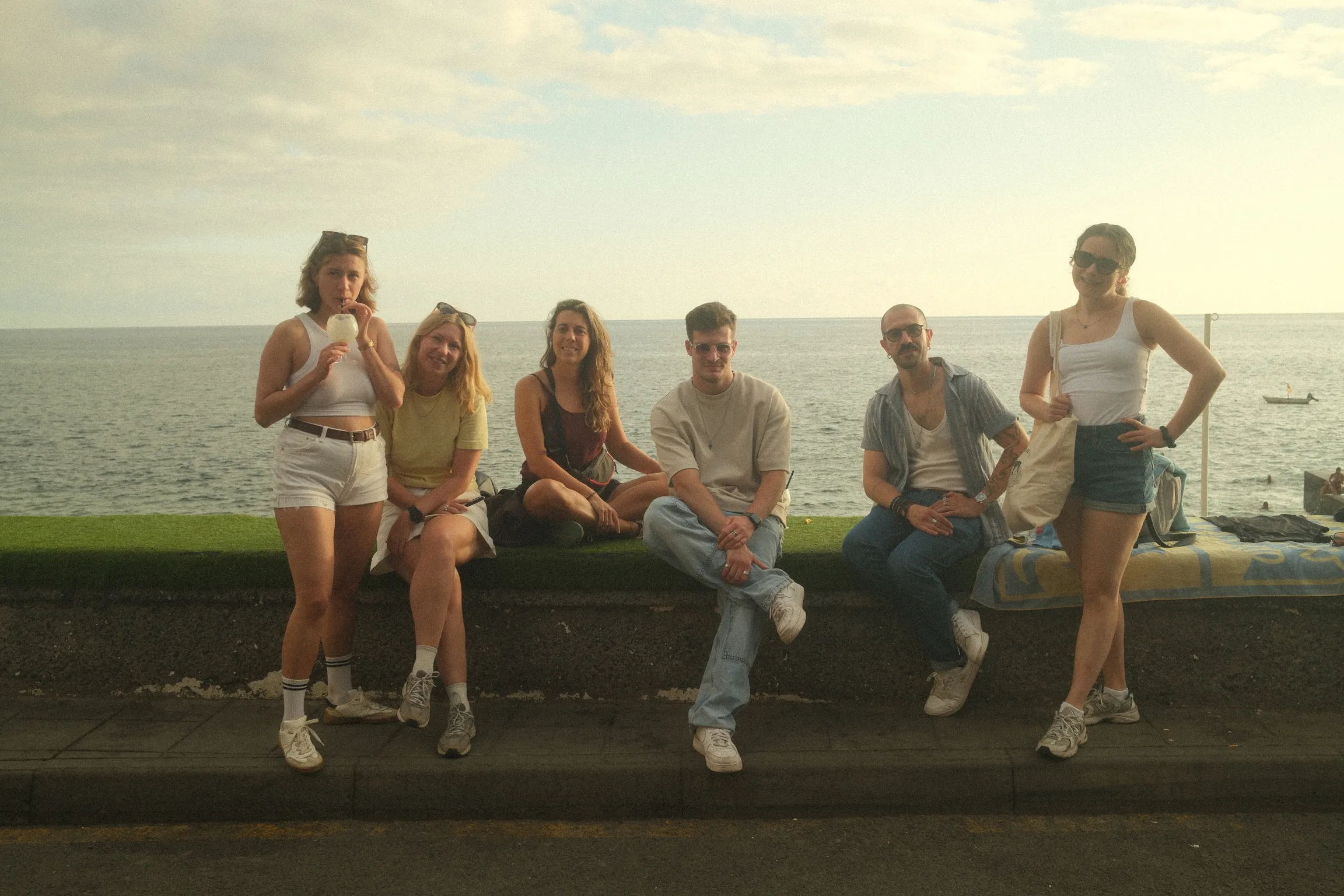
Spreading love through cooking & community.
© 2026 CasaBasilico OÜ (16850261)
All rights reserved.
Design & Branding by ahgoos.com
info@casabasilico.com