Coliving in Sardinia, Italy for Digital Nomads
What is it like to live in Sardinia as a digital nomad?
Sardinia is the kind of place that ruins you for everywhere else. The quiet kind, where every other city suddenly feels like it's trying too hard. This is an island that has been doing things its own way for centuries, and it shows. The food is unlike anything else in Italy, the sea is turquoise in a way you thought only existed in screensavers, and the cost of living is low enough that your savings account will visibly relax. Cagliari, the capital, is the main base for remote workers: a city of 150,000 with enough culture, cafés, and noise to keep things interesting, but small enough that you're never more than 20 minutes from a beach. Fiber in the center delivers 100+ Mbps, apartments are affordable by Italian standards, and the food market in town will make you cancel all your afternoon plans. The Schengen clock applies for non-EU nomads (Italy still doesn't have a proper digital nomad visa rolled out cleanly), but Sardinia converts people fast. Most who come for a month spend the next year figuring out how to come back.
Key Stats at a Glance
| Stat | Details |
|---|---|
| Monthly cost of living | €1,200–1,800/month in Cagliari (Numbeo, 2026) |
| Average internet speed | 50–150 Mbps in Cagliari center (fiber widely available) |
| Timezone | CET (UTC+1) / CEST (UTC+2) in summer |
| Visa — EU citizens | Free movement, no visa needed |
| Visa — US citizens | Schengen 90/180 days. Italy's Digital Nomad Visa was approved in 2024 (€28k/yr income) |
| Safety | Very safe. One of Italy's lowest-crime regions. |
Cost of Living in Sardinia
Sardinia is one of the most affordable regions in Italy, and Cagliari specifically is meaningfully cheaper than Rome, Milan, or even Bologna. Outside the peak summer months on the Costa Smeralda (which is its own planet, pricing-wise), you can live extremely well for under €1,800/month.
| Category | Solo Nomad (mid-range) |
|---|---|
| Private room in shared flat | €400–650 |
| Studio in central Cagliari | €700–1,100 |
| Coworking membership (hot desk) | €120–200 |
| Groceries (cooking 4-5x/week) | €180–250 |
| Restaurants & cafés | €200–350 |
| Public transport (CTM monthly) | €30 |
| Mobile data (local SIM, 50GB+) | €8–15 |
| Going out, beach days, weekend trips | €150–300 |
| Total | €1,200–1,800/mo |
The good news: a proper Sardinian lunch (antipasto, pasta, fish or meat, wine, coffee) at a local trattoria runs €15–22. Espresso at the counter is €1. The supermarket sells local wine at €4 a bottle that would cost €18 in London. Fresh seafood at Mercato di San Benedetto is the cheapest you'll find in Western Europe. Italian mobile plans are the cheapest in Western Europe: Iliad gives you 250 GB for €10/month. The expensive parts: flights to and from the island (Ryanair and easyJet to Cagliari and Olbia are reasonable in shoulder season, painful in July and August), and rent on the coast in summer. If you base yourself in Cagliari from October to May you'll comfortably come in around €1,300–1,500/month.
Where to Work in Sardinia
Coworking spaces
Coworking Cagliari in the Marina district is the central, reliable option. Fast fiber, meeting rooms, proper quiet zones. Day passes and monthly memberships available. Does the job for full workdays without drama.
Spazio Aperto is more community-oriented, with events and a local startup crowd. Good if you want to meet Sardinian entrepreneurs and not just other nomads passing through. The weekly aperitivo turns into actual friendships.
Open Campus at the university is open to non-students with the right setup, focused on startups, and surprisingly well-equipped. Free or very cheap depending on the program you join.
Impact Hub Sardegna in central Cagliari is the social-impact-leaning coworking space, with regular events on sustainability, food, and the local startup ecosystem.
Laptop-friendly cafés
Caffè degli Spiriti sits on the Bastione di Saint Remy with panoramic views over the whole city. Half your best work will happen here. Show up before 10am for a seat with an outlet.
Bistrot des Arts in Villanova does proper specialty coffee, has fast WiFi, and the staff don't mind if you stay three hours. The lunch menu is genuinely excellent.
Antico Caffè in the Marina is the historic spot. Less of a working café, more of an espresso ritual, but worth knowing for a midday break that feels properly Italian.
Caffè Florio in Cagliari has decent WiFi and a long wooden bar that works for solo focus time on a slow morning.
Internet situation
Italy's fiber rollout is patchier than Portugal's or Spain's, but Cagliari and Olbia have solid coverage. Most apartments aimed at longer stays come with 50–150 Mbps fiber. Older buildings in the historic center sometimes still run on slower ADSL, so always ask before signing. Coworking spaces deliver reliable 100+ Mbps. For backup, get an Iliad SIM (250 GB for €10/month is real). 4G/5G coverage across the island is good on main roads, patchy in rural areas and inland.
Best Areas to Stay in Sardinia
Villanova (Cagliari)
The neighborhood you want. Historic center but not in the "everything closes at 2pm and reopens at 4:30" way. Narrow streets, independent cafés where you can actually get a table with a power outlet, and enough going on that you'll accidentally stay out until midnight on a Tuesday. The best apartments in the city are here. Best for: nomads who want to walk to dinner and live in a place with character.
Marina (Cagliari)
Down by the port, buzzy and colorful. More expensive than Villanova and slightly touristy in peak season, but excellent for a first month when you want everything within walking distance. The aperitivo spots with port views are the kind of thing that makes your Zoom background unfairly good. Best for: first-month nomads testing the waters.
Castello (Cagliari)
The old fortified hill above the city. Steep streets, ancient walls, fewer apartments but the ones that exist are unforgettable. Quieter than the Marina, more residential than Villanova. Best for: people who want views and don't mind hauling groceries uphill.
Quartiere Sant'Avendrace (Cagliari)
The local residential area that tourists skip completely. Quieter, cheaper, authentic. If you're staying two months or more, this is where the people who actually know Cagliari end up renting. Best for: long stays on a budget who want real local life.
Alghero
For when you want slower, smaller, and a bit wild. Alghero has a strong Catalan identity (they still speak Algherese Catalan there, which is fascinating), beautiful walls over the sea, and a quiet remote-worker community. Rent is lower, the vibe is calmer. You'll need a scooter or car to feel connected to the rest of the island. Best for: a second-stay nomad who already knows Cagliari and wants slower.
Olbia / Costa Smeralda
The northeast. Olbia is the practical base for working remote in the north of the island, with the airport, decent infrastructure, and access to some of the best beaches in the Mediterranean. The Costa Smeralda nearby is glamorous and expensive in summer (avoid July and August unless someone else is paying). Best for: nomads who want to be close to the famous beaches and don't mind a smaller city.
Visa & Logistics
EU passport holders: nothing to do.
Americans, Canadians, Brits, Australians: 90 days within any 180-day Schengen window. Italy's Digital Nomad Visa was finally signed into law in 2024 and is rolling out properly. Income requirement is around €28,000/year, you need proof of remote work, health insurance, and a clean criminal record. Initial residence is 1 year, renewable. It's newer and less battle-tested than Portugal's D8 or Spain's DNV, but it works. For shorter stays the Schengen rule is fine.
A few logistics that save time:
- Codice fiscale (tax number): required for almost everything (phone plans, rentals, opening accounts). Get one at the Agenzia delle Entrate in Cagliari with your passport. Free, takes an hour.
- SIM card: Iliad. 250 GB for €10/month. The cheapest mobile plan in Western Europe and it works.
- Bank account: Revolut handles most things. For an Italian account, Hype or N26 are easier than the traditional Italian banks.
- Public transport: CTM covers Cagliari with a €30 monthly pass. Trenitalia connects Cagliari to Olbia, Sassari, and Oristano.
- From the airport: Cagliari airport is a 10-minute taxi (€15) or train (€1.30) ride from the center. Olbia's airport is a 5-minute drive from town.
Things to Do in Sardinia
This is an island where weekends genuinely transform your month. The short list:
- Spiaggia La Pelosa (Stintino). White sand, water so turquoise it doesn't photograph properly, shallow enough to walk out 50 meters. The single best beach in the Mediterranean. Go in shoulder season, not August.
- Cala Goloritzé and Cala Mariolu. Boat-access-only beaches on the east coast. Book a half-day boat from Cala Gonone and bring snorkel gear.
- Hike the Selvaggio Blu. Multi-day trek along the east coast cliffs, considered one of the hardest hikes in Italy. Or do day sections from Cala Sisine or Pedra Longa.
- Su Nuraxi di Barumini. UNESCO Bronze Age fortress, the best-preserved nuraghe in Sardinia. Worth the 1-hour drive from Cagliari.
- Drive the Costa Verde. The western coast. Wild, empty, dramatic. Camping or agriturismo overnight stays make for the best Sardinian weekends.
- Wine in the Vermentino region. Half a day around Gallura tasting Vermentino di Sardegna at family wineries.
- Sant'Efisio festival (May 1st). The biggest religious procession in Sardinia. Traditional costumes, music, food, and Cagliari at its loudest and proudest.
- Carbonia and the Sulcis mining area. Industrial history, abandoned villages, and some of the cheapest agriturismo lunches on the island.
What to Eat in Sardinia 🍝
Right. Sit down for this one.
Sardinian food is not Italian food. It shares a language (mostly) and the same obsession with fresh ingredients, but this is an island that spent centuries in semi-isolation developing its cuisine from scratch. What ended up here is wilder, more intense, and more interesting than anything on the mainland.
Start with culurgiones. Fresh pasta parcels stuffed with potato, aged pecorino, and mint, crimped by hand into the shape of a wheat ear. Every family has their own version. The best ones look slightly imperfect. Order them with butter and sage only, because when the filling is this good, you don't need anything else.
Then malloreddus alla campidanese: small ridged pasta, saffron yellow, tossed with slow-cooked sausage ragù and grated pecorino. It looks simple. It is simple. It will ruin you for other pasta for a while.
Porceddu is the whole suckling pig roasted over myrtle and juniper wood. The skin goes translucent-crispy, the meat stays impossibly tender. It smells like a forest on fire. You eat it with your hands at a wooden table. This is the correct way to spend a Sunday lunch in Sardinia. Drive inland to Agriturismo Su Recreu or any agriturismo in Barbagia and order it.
Seadas will confuse you in the best way: fried pastry filled with fresh pecorino, drizzled with bitter honey. Sweet and savory at once. Sardinians serve it as dessert. You will want it for every meal.
Bottarga is dried, cured mullet roe, grated over pasta or eaten in thin slices with olive oil and lemon. Briny, rich, and intense. This is Sardinia's answer to caviar and it costs a fraction of the price. Spaghetti con la bottarga is a five-ingredient dish and one of the great pastas of the Mediterranean.
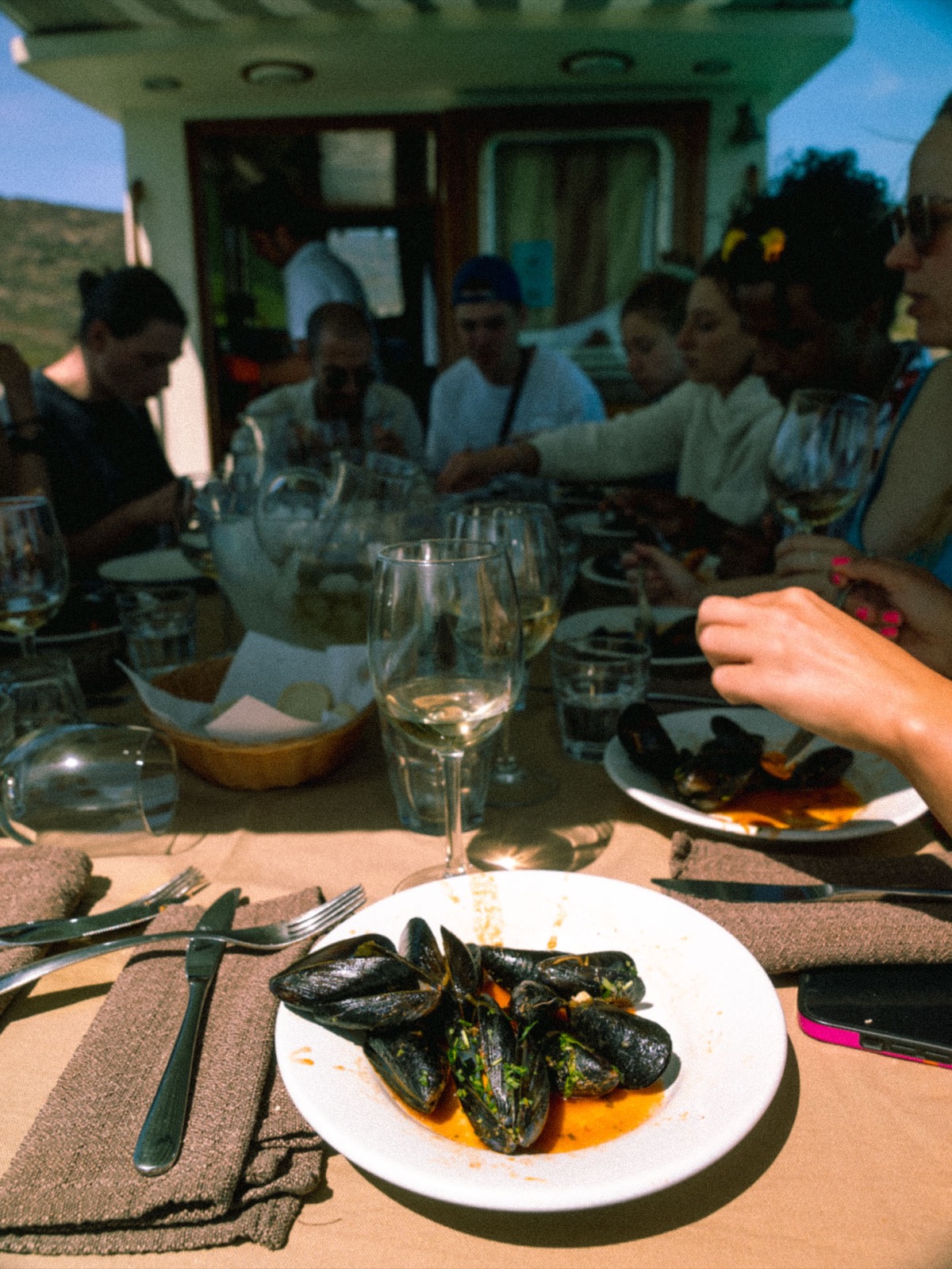
Fregola con arselle: toasted semolina pearls cooked with clams in a saffron-tomato broth. Closer to risotto in technique than pasta. Get it at a restaurant near the port in Cagliari and eat it next to people who fish for a living.
Pane carasau is the wafer-thin Sardinian flatbread, also called carta da musica (music paper) because it crackles like sheet music when you bite it. Eat it with olive oil and salt as an appetizer, or layered with tomato and pecorino as pane frattau.
For markets: Mercato di San Benedetto in Cagliari is one of the largest covered food markets in Europe. Two floors: fish above, everything else below. Show up before 9am on a Saturday, bring a bag, talk to the vendors, buy things you don't know how to cook yet. You'll figure it out.
For wine: Cannonau (the local red, apparently responsible for Sardinia being a Blue Zone, which we fully believe) is the year-round drink. Vermentino di Sardegna when it's hot, served cold with grilled fish on a Saturday lunch. Mirto, the myrtle-berry liqueur, served frozen as a digestivo. You'll be offered all three within your first week. Accept all three.
Weather & Best Time to Visit
Sardinia's climate is one of the best in the Mediterranean. Long, dry summers and mild winters.
Spring (March–May): The best version. 16–24°C, wildflowers everywhere, sea getting warm enough to swim by mid-May. Pack a jacket for evenings, sunscreen for afternoons.
Summer (June–August): Hot. 28–35°C, beaches fill up, prices on the coast double. July and August are the worst of the crowds and the heat. June is excellent if you can manage it.
Autumn (September–October): The other sweet spot. Sea still warm, prices drop, locals are back, you'll have the beaches half to yourself. October is genuinely magic.
Winter (November–February): Mild compared to mainland Europe. 8–16°C, occasional storms, sunny days mixed with grey ones. The city is quiet, restaurants take reservations, locals reclaim the spaces. Cheapest rents of the year.
Safety in Sardinia
Sardinia is one of the safest regions in Italy and one of the safer parts of Europe. Petty crime is low even in Cagliari, violent crime is rare. The standard urban awareness applies in tourist-heavy areas in peak summer (handbags on cafés, phones in back pockets). Solo female travelers report Sardinia as one of the easier Italian destinations to move around in. The bigger safety risks are environmental: strong sun in summer (real sunscreen, not the holiday kind), and the sea, which looks calm but has currents off the rocky beaches that catch out unwary swimmers.
The Honest Downsides
Sardinia is glorious, but it's not Lisbon. A few things to know before booking:
- Smaller nomad community. You won't be bumping into remote workers at every café. Some find this peaceful, others find it lonely. Build your own social life via coworking or just talking to locals.
- Flights matter. July and August flights into Cagliari and Olbia spike (€200–400 from London). Off-season is cheap (€40–80 from London on Ryanair).
- Italian bureaucracy. The Codice Fiscale is easy. Everything else (rentals, utilities, opening a bank account) involves more paperwork than you'd expect.
- Public transport outside Cagliari is limited. Buses connect main towns but rural Sardinia really needs a car. Rentals are cheap (€20–30/day) but it's an extra cost.
- The west and inland coast can be remote. Beautiful but properly quiet. Some apartments still have ADSL, not fiber. Always confirm internet speed before booking.
- English is less common than in Lisbon or Barcelona. Italian or even a few Sardinian phrases go a long way, especially outside Cagliari.
Is Sardinia Right for You?
Yes if: you want the Mediterranean lifestyle with food you've never tried before, beaches that don't look real, low cost of living, and a slower scene that lets you actually focus on work. You're fine with a smaller nomad community, you have an Italian SIM or your own setup, you can navigate a bit of Italian.
Probably not if: you need a big nomad scene with constant new faces (try Lisbon or Barcelona), you can't drive a stick-shift rental car (most of them are manual), or you need year-round beach weather (try Las Palmas or Madeira). Sardinia is at its best in spring and autumn.
Sardinia vs. Other Nomad Hubs
| If you want… | Sardinia | Sicily | Mallorca | Madeira |
|---|---|---|---|---|
| Cheapest | Low | Low | Mid | Lower |
| Biggest nomad community | Smaller | Smaller | Mid | Mid |
| Best food | Tied #1 (unique) | Strong | Strong | Strong |
| Beach access | World-class | Strong | Strong | At door |
| Year-round livable | Yes (winters mild) | Yes | Yes | Yes |
| Authentic regional culture | Highest | Highest | Mid | High |
If you want a similar Mediterranean island scene with more nomads, Mallorca. If you want subtropical island weather and bigger Atlantic energy, Funchal in Madeira. If you want a bigger Italian city as a base instead, central Italy is a different trip.
Frequently Asked Questions
Is Sardinia good for digital nomads?
Yes, especially Cagliari. Affordable, safe, connected enough for most work setups, and the quality of life is high for the price. The main caveat: it's not a nomad hub in the way Bali or Lisbon are. You won't be bumping into remote workers at every café. Some people find this a relief.
When is the best time to work remotely from Sardinia?
April to June and September to October are perfect. Warm enough to swim, prices are lower than peak summer, the island isn't overrun. July and August are beautiful but hot (35°C+), expensive, and you'll share every beach with all of Italy.
Can US citizens work remotely from Sardinia?
Yes, for up to 90 days within any 180-day period under Schengen rules. Italy's Digital Nomad Visa was approved in 2024 and is rolling out, with a €28,000/year income requirement. For shorter stays, the Schengen rule is enough.
How is the internet in Sardinia?
Good in Cagliari and Olbia, patchy in rural areas and smaller inland towns. Fiber apartments in Cagliari typically deliver 50–150 Mbps. Always confirm before booking. Get an Iliad SIM (250 GB for €10/month) as backup; 4G/5G coverage is solid across most of the island.
Is Sardinia expensive compared to other Italian cities?
No. It's one of the more affordable regions in the country. Rent, groceries, and eating out all cost less than Rome or Milan. The catch: flights into Cagliari and Olbia spike in summer, so booking early matters. Off-season flights are excellent value.
Do I need a car in Sardinia?
In Cagliari, no. The city is walkable and bus-served. To explore the island properly (beaches, inland villages, agriturismi), yes. Rental cars are cheap in shoulder season. Most nomads who stay a month rent one for at least two weekends.