Coliving in Câmara de Lobos, Madeira for Digital Nomads
What is it like to live in Câmara de Lobos, Madeira as a digital nomad?
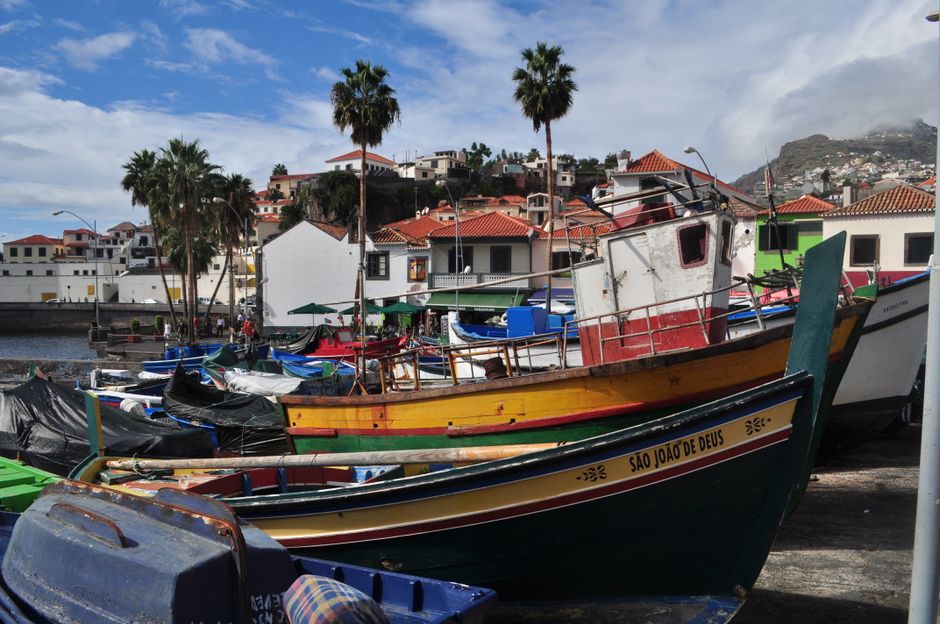
Câmara de Lobos is nine kilometers west of Funchal, and it doesn't feel like anywhere else on the island. This is a working fishing village. The boats are real, the fishermen get up before dawn, and the smell of grilling espetada hits you before you even find the restaurant. Winston Churchill came here specifically to paint, and once you stand at the harbor viewpoint you'll understand why he didn't just take a photo and leave.
For digital nomads, it occupies an interesting middle ground. You're close enough to Funchal to reach a proper coworking space in twelve minutes by car, but far enough from tourist infrastructure that your evenings feel Madeiran. Monthly costs run cheaper than the capital. The internet is solid. And if you want to eat the way a local fisherman's family eats, you will eat extremely well without spending much.
It's not a nomad hub. There's no dedicated coworking, no digital nomad Slack, no Thursday rooftop networking. What Câmara de Lobos has instead is an analog-reset quality that people who've spent too long in Bali or Lisbon tend to find they needed. Come for a month. Leave knowing what poncha tastes like at 11am on a Tuesday.
Key Stats at a Glance
| Category | Detail |
|---|---|
| Monthly budget | €1,300 – €2,200 |
| Internet speed | 100–500 Mbps fiber (most apartments) |
| Timezone | WET/WEST (UTC+0 / UTC+1 in summer, same as UK) |
| Visa | Schengen 90/180 days, or Portugal D8 Digital Nomad Visa |
| Language | Portuguese, but English works fine in most situations |
| Safety | Very safe. Portugal ranks top 10 globally (GPI 2024) |
| Population | ~9,000 in the village; ~35,000 in the municipality |
| Distance to Funchal | 9 km, 12–20 min by car or express bus |
Cost of Living in Câmara de Lobos, Madeira
Câmara de Lobos runs cheaper than Funchal. You're not sacrificing quality of life. You're just not paying the Funchal premium for a sea view that half the apartments here also have.
| Expense | Monthly estimate |
|---|---|
| Private room (coliving or shared flat) | €650 – €900 |
| 1-bedroom apartment (long let) | €850 – €1,200 |
| Groceries | €200 – €320 |
| Eating out at local tascas (3–4x/week) | €120 – €200 |
| Coffee (espresso) | €0.80 – €1.20 |
| Coworking in Funchal (monthly pass) | €150 – €280 |
| Public bus (10-trip card, Funchal routes) | €12 – €40 |
| Car rental (monthly, economy) | €350 – €500 |
| Gym | €20 – €40 |
| Total (lean) | ~€1,300 |
| Total (comfortable) | ~€1,800 |
The honest note on transport: Câmara de Lobos without a car or scooter means you're dependent on the bus to Funchal for coworking, bigger grocery runs, and most nightlife. The bus works. But if you want freedom, especially for hikes, day trips west toward Ponta do Sol, or spontaneous espetada runs, rent a car. Monthly rates around €350–400 are findable if you book ahead with local operators and ask about nomad discounts.
Where to Work in Câmara de Lobos, Madeira
Coworking spaces
Câmara de Lobos doesn't have its own coworking infrastructure, which is the honest answer. The nearest proper options are in Funchal, twelve minutes away:
Cowork Funchal: The most established spot in the capital, solid fiber, good AC, and a community of locals and long-term nomads. Day passes around €20, monthly memberships from €180.
NOS Innovation Center: More corporate atmosphere but excellent connectivity and meeting rooms if you're doing client calls.
Digital Nomads Madeira (DNMD): The community organization behind the island's nomad visa push runs events and connects people to workspace options. Worth joining their network if you're staying more than a few weeks.
Laptop-friendly cafés
Within Câmara de Lobos itself, you're working from cafés or your accommodation. A few that hold up:
Café do Museu: On the harbor square. Don't expect a WeWork. Do expect good coffee, a gorgeous view, and the kind of focused morning session that happens when there's no one to talk to in English.
Solar do Paínho: Slightly above the village, quieter, better wifi than the harbor spots. Good for half-day sessions when you want a change of scene without commuting to Funchal.
Your apartment terrace: If you rent a place with a sea view (not hard), this is where most of the work happens. Portuguese fiber internet is real. The light is absurd. No noise-canceling headphones needed.
Internet situation
Fiber internet is standard across Madeira now. The island has been investing in connectivity since the Digital Nomads Madeira program launched in 2021. Most apartments in Câmara de Lobos come with NOS or MEO fiber connections running 100–300 Mbps symmetrical. Always confirm upload speeds before booking if you're doing heavy video calls.
Mobile: NOS and MEO SIM cards give you solid 4G throughout the south coast. The north side of the island can be patchy. Câmara de Lobos sits on the sunny south coast, so you're fine.
Best Areas to Stay in Câmara de Lobos, Madeira
Câmara de Lobos is small. The village itself is walkable in fifteen minutes. But the municipality covers surrounding parishes, and where you base yourself shapes your daily experience.
The harbor village (Câmara de Lobos centro)
The photogenic one. Cobbled streets, fishing boats, tascas, poncha bars, Churchill's old painting spot. Loud in high summer, quieter than you'd think the rest of the year. Best for: the full fishing village experience, walking to dinner, waking up to harbor views.
Quinta Grande / Campanário (west parishes)
More residential, very local, even fewer tourists. You'll need a car for everything. Best for: proper long-stay immersion, lower rent, no tourist tax feel.
Estreito de Câmara de Lobos
The village above the harbor, about 3 km inland and uphill. This is where the famous espetada restaurants cluster: Churrasqueira do Estreito and a handful of locals' favorites that don't make it onto any "best of Madeira" listicle. Best for: long-stay nomads who want a car, altitude (cooler in summer), and the best grilled meat on the island five minutes from bed.
Along the EN101 toward Funchal
A few apartment complexes and long-let rentals sit on the coastal road between Câmara de Lobos and Funchal, giving you access to both without fully committing to either. Best for: flexibility, easy Funchal access without Funchal prices.
Visa & Logistics
EU/Schengen visitors: Portugal is Schengen. You get 90 days in any 180-day period. Many nomads rotate Schengen → non-Schengen (UK, Georgia, Balkans) to extend. Not the cleanest setup, but it works.
Portugal D8 Digital Nomad Visa: This is the one. Launched in 2022, renewed and improved since. You need to prove €3,480/month income (4× minimum wage as of 2024). Apply at a Portuguese consulate before arriving. Once in Portugal, you can convert to a 2-year residence permit. The process is slow and occasionally chaotic. Budget 3–5 months from application to approval.
NHR Tax Regime: Portugal's Non-Habitual Resident regime offers a flat 20% income tax on Portuguese-source income for 10 years. Foreign income can potentially be tax-exempt. Worth a proper conversation with a Portuguese tax advisor if you're planning to stay. Don't take internet forums as gospel on this one.
Getting there: Funchal Airport (FNC) is the only option. Ryanair, TAP, easyJet, and seasonal carriers connect to most European cities. Flights from London around €60–120 return. From mainland Portugal (Lisbon, Porto) TAP runs multiple daily flights. No direct connections from North America. Miami and Boston connect via Lisbon.
Getting around: Rent a car. The buses are fine for Funchal routes, but Madeira's terrain means the good stuff (viewpoints, hike trailheads, west coast villages) requires a car or organized transport. The roads are dramatic: tunnels, sea cliffs, single-lane mountain tracks. You'll be fine; just don't be the person who drives into a laurisilva cloud forest in a rainstorm at 10pm on your first day.
Things to Do in Câmara de Lobos, Madeira
The harbor at golden hour is the obvious one. Churchill set up his easel on a concrete block that now has a plaque on it. You'll understand the impulse.
Cabo Girão: Seven kilometers east of the village, one of the highest sea cliffs in Europe at 580 meters. There's a glass walkway. Looking straight down at the sea from it is unnerving in the best way.
Levada walks: The Levada do Norte passes through the municipality. These irrigation channel paths are Madeira's signature hiking format. You follow a narrow channel cut into the rock and the landscape does everything else. The Câmara de Lobos section passes through the vineyards that produce Madeira wine.
Poncha bars in the harbor: This is not optional. Poncha is Madeira's drink: aguardente (sugar cane spirit), honey, and orange or lemon juice. It's served in small clay cups. It tastes incredible at 11am when you're watching fishermen unload the morning catch. The harbor bars around Rua Nossa Senhora da Conceição are the right address. Don't order a beer your first time. That's not what you're here for.
Harvest season and wine: The Câmara de Lobos municipality sits on the edge of Madeira wine country. September sees the vindima (grape harvest). If you're here then, you will accidentally end up helping pick grapes on someone's terrace.
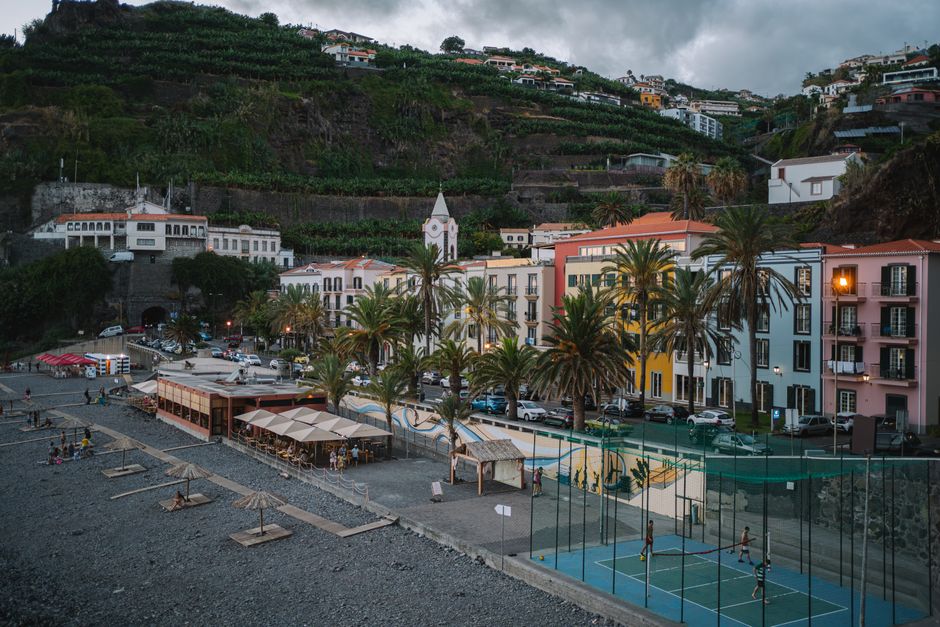
Casa Basilico runs coliving chapters nearby in Madeira, specifically at our Banana House base in Ponta do Sol, 30 minutes west. If you want the full community experience alongside the island, check our Madeira location. You'd be commuting between Câmara de Lobos-caliber fishing villages with a group of people who also know what poncha tastes like.
What to Eat in Câmara de Lobos, Madeira
The food deserves its own space. Most people walk right past the best of it.
Espetada is the thing. Long skewers of beef marinated in garlic and bay leaf, grilled over hot embers. The skewer is hung vertically over the table on a metal hook so the fat drips down as it cooks. You eat it with milho frito (crispy fried polenta cubes) and a bolo do caco (garlic butter flatbread that you will think about for months after leaving). The place to eat it is not in the harbor tourist zone. Drive four kilometers uphill to Estreito de Câmara de Lobos. The restaurant you want has plastic chairs and a woman who doesn't speak English and will bring you exactly what you need.
Peixe espada (black scabbard fish) is Madeira's other defining dish. These are deep-sea fish caught at 800–1,000 meters depth by the Câmara de Lobos fishermen, the people you watched this morning from your terrace. The classic preparation is grilled with banana and passion fruit. Sounds wrong, is correct. The sweetness cuts through the fish perfectly. Order it at one of the harbor tascas, where the distance from boat to plate is measured in hundreds of meters.
Lapas are grilled limpets. They arrive in their shells with garlic butter and a squeeze of lemon. You eat them with bread and beer or a glass of local Verdelho wine. If you've never had them, they're slightly chewy, deeply oceanic, and the kind of thing you start wanting at 10am by day three.
Bolo do caco deserves its own paragraph because it's everywhere and it's perfect. Flat bread made with sweet potato, split and loaded with garlic butter. It's served with everything or as a sandwich base filled with espetada leftovers. The best versions come from women cooking on stone slabs at village markets. Buy two. You will eat the second one before you reach the car.
Poncha: you know what it is now. The fishing village version is made with aguardente de cana, honey, and local orange. The "poncha de maracujá" (passion fruit version) is a gateway drug. Start with the classic.
Madeira wine: not for everyone, but you should understand what you're drinking. The fortified wine from this island develops a distinctive oxidized character from the heating process (estufagem). Sercial is dry and nervy; Bual and Malmsey are rich and sweet. A glass of Sercial with a plate of lapas is one of those combinations that doesn't make sense on paper and is obviously correct in person.
Mercado do Lavradores in Funchal (15 min away): the island's main market is worth a Tuesday morning trip for fruit alone. Passion fruits the size of your fist. Strawberry guava. Baby bananas that taste nothing like supermarket bananas. Buy a bag of everything and come back to the village.
Weather & Best Time to Visit
Madeira's nickname is "Island of Eternal Spring" and it mostly earns it. The south coast, where Câmara de Lobos sits, is the driest, sunniest side of the island year-round.
| Season | Conditions |
|---|---|
| Winter (Dec–Feb) | 16–20°C, some rain, dramatically fewer tourists, cheaper accommodation. Still pleasant. |
| Spring (Mar–May) | 18–22°C, the island blooms, Carnival and Flower Festival in Funchal. Best season. |
| Summer (Jun–Aug) | 22–26°C, sunny, busiest period, tourist prices peak. Still bearable compared to southern Europe. |
| Autumn (Sep–Nov) | 20–24°C, harvest season, crowds thin out. Second-best window. |
The north side of the island gets more rain year-round. The south coast can be sunny while the mountains are in cloud. This microclimatic split is real and useful: bad weather at the Banana House? Drive to Câmara de Lobos. It will probably be sunny.
Safety in Câmara de Lobos, Madeira
Portugal consistently ranks in the top 5–7 safest countries in the world (Global Peace Index 2024). Câmara de Lobos is not an exception. Petty theft exists at tourist hotspots in Funchal, but the village itself is relaxed. Leave your laptop at home when going to the harbor at 2am for poncha, not because of crime, but because it would get sea spray on it.
The only real safety consideration: driving on Madeira's roads. The tunnels, mountain switchbacks, and coastal cliffs are not inherently dangerous, but they demand attention. Don't let the scenery distract you. Go slow. The island will wait.
The Honest Downsides
Câmara de Lobos is not a great nomad base if community infrastructure, walkability, and a built-in social life are what you need. What you're giving up:
No coworking in the village. If you need a desk outside your apartment, you're commuting to Funchal every time. It's twelve minutes. But it's still a commute.
Small social scene. The island's nomad community concentrates in Funchal and, increasingly, in the west (Ponta do Sol). Câmara de Lobos doesn't have a nomad bar, a coworking with events, or a Thursday meetup. You will make local friends or spend evenings alone or drive to Funchal. All three are fine outcomes; just know which one you're signing up for.
You need a car. The bus to Funchal is real and works. The levada trailheads, the west coast villages, the good espetada restaurant in Estreito, the viewpoints: all require a car. Budget for it.
Tourist creep in summer. The harbor gets crowded from June to August. Not Lisbon-crowded, but the tascas fill with day-trippers and prices nudge up. Off-season is better.
Portuguese bureaucracy. This isn't specific to Câmara de Lobos. It's a Portugal-wide feature. Getting a NIF (tax number), opening a bank account, anything involving the state: slow, occasionally confusing, requires patience. Get your NIF before you arrive if you can.
Is Câmara de Lobos, Madeira Right for You?
You'll love it here if you want to slow down and eat well. If you're comfortable working solo from a good apartment, and fishing village + hiking trails + excellent fish + cheap wine sounds better than networking events and co-working lounges.
It's probably not your base if: you need co-working community, you want to walk to bars and restaurants and nightlife without thinking about it, or you're on a tight budget and can't absorb a car rental on top of accommodation.
The honest summary: Câmara de Lobos is one of the most beautiful places on a beautiful island. It costs less than you'd expect. The food is excellent. The light is extraordinary. If you can structure your work life around good internet at home and occasional Funchal trips, you will leave here wondering why you don't come back every year.
Câmara de Lobos, Madeira vs. Other Nomad Hubs
| Câmara de Lobos | Funchal | Ponta do Sol | Lisbon | |
|---|---|---|---|---|
| Monthly cost | €1,300–1,800 | €1,600–2,200 | €1,200–1,800 | €2,000–3,000 |
| Nomad community | Low | Medium | High | High |
| Coworking | None (Funchal 12 min) | Good | Good | Excellent |
| Food scene | Traditional, excellent | Varied, touristy | Traditional, growing | International, expensive |
| Beach/swimming | Rocky, sea pools | Pebble, sea pools | Yes | Limited |
| Hiking access | Excellent | Good | Excellent | Poor |
| Tourist feel | Low-medium | Medium-high | Low | Very high |
| Flights in/out | Via Funchal airport | Direct | Via Funchal | Direct, many routes |
Frequently Asked Questions
Is Câmara de Lobos good for digital nomads?
Yes, with the right expectations. It's a fishing village, not a nomad hub. If you want community infrastructure, base yourself in Ponta do Sol or Funchal and visit Câmara de Lobos for day trips and weekends. If you want a quiet, beautiful, affordable base with excellent internet and world-class food, it works very well for a month or two.
How do I get from Funchal Airport to Câmara de Lobos?
The easiest option is a car rental from the airport. You'll want one anyway. Bolt and taxis also connect the airport to Câmara de Lobos for roughly €25–35. There are bus connections via Funchal, but they add time.
Do I need a car in Câmara de Lobos?
Technically no. The express bus to Funchal runs regularly and costs next to nothing. Practically yes, unless you plan to stay mostly in the village and make planned Funchal trips. The island's real attractions (levada hikes, viewpoints, the west coast, Estreito's espetada restaurants) all need a car.
What's the best time of year to visit Câmara de Lobos?
March to May for the best combination of weather, low crowds, and island events (Flower Festival in Funchal). September and October are also excellent: harvest season, warm but not peak-tourist prices. Winter is mild and accommodation drops in price.
Is there reliable fast internet in Câmara de Lobos?
Yes. Madeira has invested heavily in fiber connectivity. Most rentals come with 100–300 Mbps connections. Confirm upload speed before booking if you do a lot of video calls.
What's poncha and do I need to try it?
Poncha is Madeira's local spirit: aguardente de cana (sugar cane spirit) mixed with honey and citrus. It tastes like a sophisticated, slightly earthy cocktail. You need to try it. Preferably at a harbor bar in Câmara de Lobos at mid-morning, watching the fishing boats, wondering why you don't live here permanently. That feeling is the point.
Can I use Câmara de Lobos as a base for the Digital Nomads Madeira program?
Yes. The DNM program is island-wide, with the community concentrated in Ponta do Sol but open to nomads based anywhere on Madeira. You'd commute to Ponta do Sol or Funchal for events, which is realistic given the island's size (45 minutes max, coast to coast).
Related Destinations
Looking at other places to base yourself for slow nomading?
- Coliving in Ponta do Sol, Madeira. The nomad village on the west coast. Casa Basilico's Madeira home.
- Coliving in Funchal, Madeira. The capital. More infrastructure, more tourists, more to do.
- Coliving in Lisbon, Portugal. The mainland option. Big city, great transport, higher cost.
- Coliving in Las Palmas, Gran Canaria. Atlantic island comparison. Bigger nomad community, different vibe.
- Coliving in Tarifa, Spain. Wind, kite surfing, North Africa views. A past Casa Basilico chapter.