Coliving in Mallorca, Spain for Digital Nomads
Mallorca is the Balearic Islands' worst-kept secret. Everyone knows it as a sun-and-sangria holiday destination, but the working crowd has quietly figured out it's actually one of the best Mediterranean bases for a month or two of slow-nomading. Palma de Mallorca, the capital, has a proper city buzz: good coffee, coworking spaces, a food market that will ruin you for all other food markets, and reliable internet that holds up whether you're on a video call from a terrace café or grinding deadlines in a Santa Catalina apartment. Cost of living runs €2,000–2,800/month depending on season. Summer inflates everything, but shoulder season (May–June, September–October) hits the sweet spot of warm weather, empty beaches, and sane rent. Most non-EU digital nomads use Mallorca as a Schengen stopover. The island is safe, walkable in Palma, and unhurried enough that you'll actually feel like you're living here, not just passing through.
Key Stats
Best Neighborhoods for Remote Workers
Santa Catalina is where you want to be. It's Palma's most alive neighborhood: independent restaurants, a brilliant food market, coffee shops with actual wifi passwords, and a 25-35 age bracket that skews strongly remote-worker. It's walkable, has character, and you won't feel like you're surrounded by tourists who are only there for two nights. If you're only picking one neighborhood, pick this one.
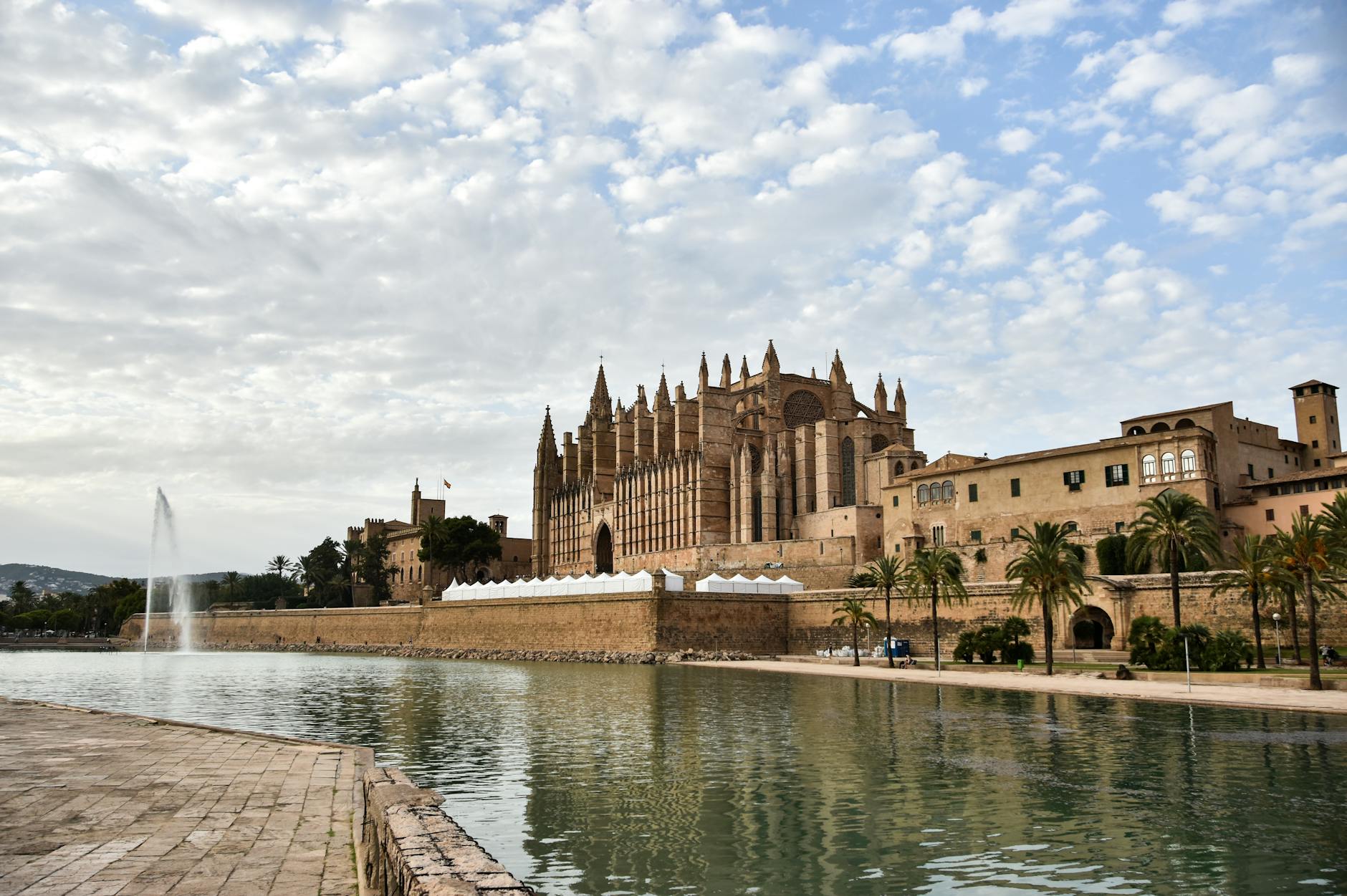
Palma Old Town (the historic centre around Catedral La Seu) is beautiful but more expensive and more tourist-facing. Good if you want to live inside a postcard. Less good if you want a neighborhood to belong to. That said, the old town has some excellent independent cafés with strong wifi and even stronger cortados.
Portixol is the one locals recommend when they want beach access without leaving the city. It's a quiet marina neighborhood 15 minutes from central Palma: residential, relaxed, a stretch of calm beach you can stroll at lunch without fighting through beach-towel crowds. It suits the focused, heads-down type of remote worker who wants the sea nearby but doesn't need to be in the middle of everything.
Sóller is for the person who needs to unplug between working hours. A mountain town in the Tramuntana range, 30 minutes north of Palma by vintage tram, Sóller is old stone buildings, orange groves, and a pace of life that recalibrates your nervous system. Internet is good enough in the centre. It's not for everyone, but if you've been bouncing between capitals for six months, it might be exactly what you need.
Coworking Spaces in Mallorca
Palma Hub is the anchor for the coworking scene in Palma. It's a proper full-service space with fixed desks, meeting rooms, and a steady community of freelancers, founders, and remote workers. It's the most established option and usually the first stop for nomads landing on the island.
Colab Mallorca offers a more boutique setup, popular with creatives and designers. Smaller, quieter, better coffee setup. Worth trying if Palma Hub feels too corporate for your taste.
If you'd rather work from a café, Santa Catalina has several that unofficially function as coworking spaces — places where ordering a second coffee is a socially accepted signal that you're staying for four hours. Nobody will chase you out. Just don't take up a table for eight with your laptop and a glass of water.
What to Eat in Mallorca 🫙
This is where Mallorca stops being a nice island and starts being a specific reason to book a flight.
Pa amb oli is the first thing you eat when you land and the last thing you think about when you leave. It's stupidly simple: thick-cut bread rubbed with ripe tomato, drizzled with local olive oil, and topped with whatever: sobrasada, local cheese, anchovies, air-dried ham. Every bar in Mallorca does a version of it. The version at a good Santa Catalina spot with proper Mallorcan tomatoes will stay in your memory.
Sobrasada deserves its own mention. This soft, spreadable cured sausage made from Mallorcan black pig is deeply spiced with sweet paprika, has an almost butter-like texture when warm, and is the kind of ingredient that once you understand it, you start putting it on everything. Try it melted over honey on toast. You're welcome.
Tumbet is Mallorca's answer to ratatouille: slow-cooked layers of aubergine, courgette, peppers, and potatoes in tomato sauce. It sounds modest. It isn't. It's the kind of dish that makes you wonder why every country doesn't have a version of this.
Arròs brut translates as "dirty rice", a hearty, slightly soupy rice dish cooked with game meat, vegetables, and whatever herbs grew nearby. It's rustic, filling, and exactly what you want after a morning hike in the Tramuntana. Not a summer dish. Perfect for October.
Llampuga (mahi-mahi) shows up September through November and is the island's most celebrated seasonal fish. Grilled simply or cooked in an onion-and-tomato sofrito, it's the kind of dish that locals look forward to all year. If you're there in the right season, order it at every opportunity.
Mercat de l'Olivar in central Palma is the main covered food market: fish, meat, cheese, produce, all under one roof. Go Tuesday or Thursday morning when it's busiest. Mercat de Santa Catalina is the neighbourhood market right in the thick of where you'll be living: a smaller, more artisan setup with good counter bars inside where you can eat whatever you just watched someone prepare.
Wash all of this down with hierbas mallorquinas, the local herbal digestif made from anise, rosemary, and a handful of other island plants. You'll be handed a glass after dinner whether you ask for it or not. It's part of the deal.
Frequently Asked Questions
Is Mallorca too touristy for digital nomads?
In July and August, yes: prices double, the beaches become unworkable, and you'll spend half your energy avoiding tour groups. But from September to June, Mallorca belongs to people who actually live there. The nomad community is real but not overwhelming. You'll meet people, but it doesn't feel like a nomad theme park the way some destinations do.
What is the internet like outside of Palma?
Palma has excellent fibre coverage. Outside the capital, it gets patchier. Sóller is fine in the centre; rural fincas can be unreliable. If your work requires stable connections and you're planning to live in a countryside rental, verify the speeds before committing. Don't assume.
When is the best time to go?
May–June and September–October are the sweet spots. Weather is warm, accommodation is affordable, the sea is swimmable, and Palma has its personality back. March and April are cooler but very liveable. November through February is quiet, occasionally rainy, but cheap and peaceful for focused work.
Do I need a car in Mallorca?
Not if you're based in Palma. The city is walkable and has a reasonable bus network. If you want to explore the rest of the island properly — the Tramuntana, the east coast beaches, smaller villages — a car or scooter opens everything up. Renting for a weekend is the move.
Is it easy to meet other remote workers?
More than you'd expect for an island. Palma Hub and the Santa Catalina café scene mean you'll bump into people quickly. There are occasional nomad meetups but nothing super structured, which is often preferable. You end up meeting people organically over pa amb oli rather than at a forced networking event.
Related Destinations
If Mallorca is your kind of place, you'll probably also like: